
A safety matches distribution business can deliver steady returns when operators combine competitive sourcing, reliable retailer demand, tight inventory control and disciplined cost management. Profitability, however, rests on far more than the gap between purchase and selling price. Freight, handling losses, credit cycles, storage conditions and working capital all determine whether the business generates sustainable cash flow.
Before committing capital, evaluate five core factors: local market demand, true landed procurement cost, realistic margins after expenses, inventory efficiency and working capital needs. This framework reveals genuine earning potential and reduces the risk of over-investment.
Understanding the Business
Safety matches remain everyday household and commercial consumables used for stoves, lamps, candles and outdoor purposes. Their recurring demand creates ongoing distribution opportunities across grocery stores, provision shops, hotels, restaurants, wholesale merchants and specialised retailers.
Distributors buy in bulk from safety matches manufacturers, mainly in Tamil Nadu clusters such as Kovilpatti, Sattur and Sivakasi, and supply regional retailers or secondary wholesalers. Their earnings come from the gap between the price charged to customers and the total cost of acquiring and delivering the product.
Typical customer segments include:
- Grocery and provision stores (regular household demand)
- Wholesale merchants (bulk for further distribution)
- Hotels and restaurants (kitchen use)
- Household goods and supermarket chains
- Specialised or outdoor retailers (kitchen, barbeque or longer-stick varieties)
Success depends on building repeat relationships rather than one-off bulk deals. Map the number of potential retailers in your territory, their approximate monthly volumes, existing suppliers and prevailing wholesale rates before projecting sales.
Product Selection
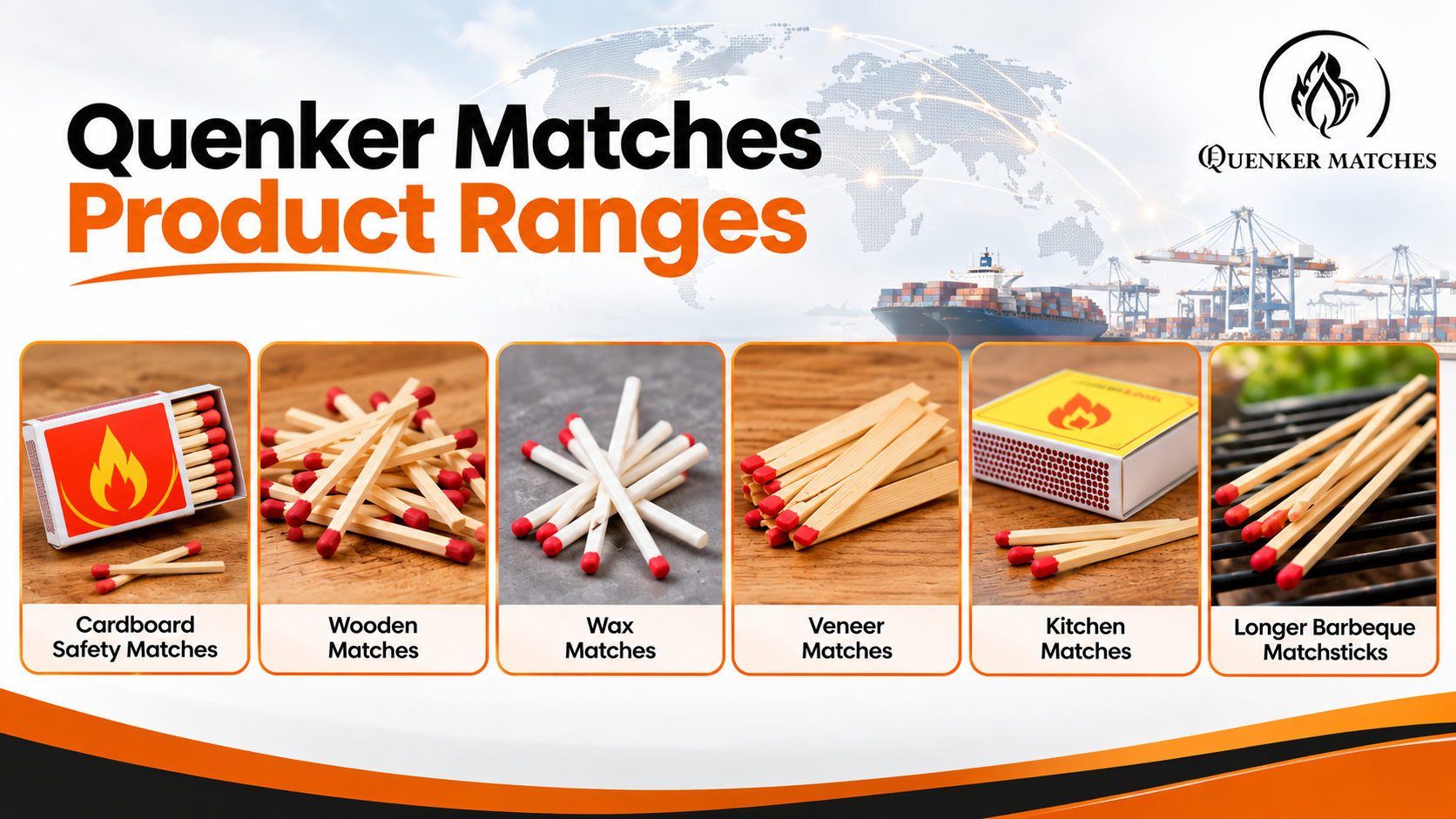
Choose products according to verified local demand rather than stocking every available type. Common categories include cardboard safety matches (high-volume household staple), wooden matches, wax matches, kitchen matches and longer barbeque matchsticks.
Before ordering, assess:
- Which varieties retailers reorder regularly
- Box size, stick count and packaging configuration (bundles and cartons)
- Minimum order quantities and bulk pricing tiers
- Storage space and moisture-sensitive handling needs
- Replenishment lead times from the manufacturing region
Start with high-turnover cardboard or standard household matches. Introduce specialised lines only after confirming consistent demand. This approach protects working capital and reduces slow-moving stock.
Major Costs in Match Distribution
A low match manufacturer quote does not guarantee profit. Calculate the full cost of getting usable stock into your warehouse and then to customers.
1. Landed Procurement Cost
Landed cost = Purchase price + Freight + Loading/unloading + Insurance (if any) + Other direct handling charges.
Divide total landed cost by the number of cartons (or sellable units) received to obtain cost per unit. Always compare matchbox suppliers on landed cost for equivalent specifications, not headline purchase price. Long-distance transport from southern manufacturing hubs can materially change the economics, especially when fuel or freight rates rise.
2. Inventory Damage and Wastage
Matchboxes are sensitive to moisture, rough handling and poor stacking. Damaged or unsaleable stock raises the effective cost of every sold unit. Maintain dry storage, inspect incoming consignments, record losses separately and use proper handling practices. Factor expected wastage into your cost model.
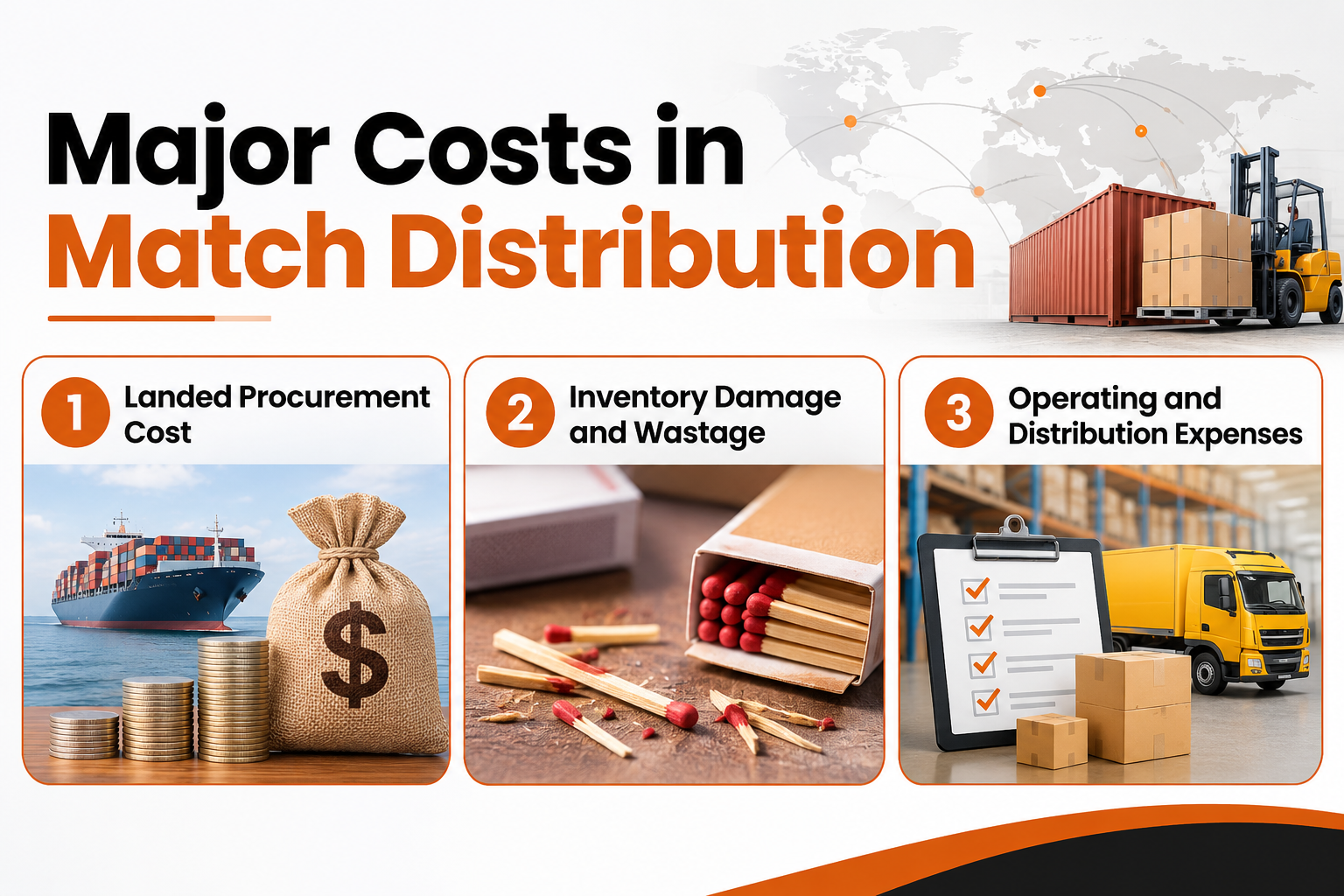 3. Operating and Distribution Expenses
Recurring costs typically include warehouse rent and utilities, local delivery fuel and vehicle expenses, labor for handling and sales, administration, and any interest on working capital. Track these monthly so you know the revenue required to cover overheads and produce a positive contribution.
Ready to start or expand your safety matches distribution business? Contact Quenker Matches for wholesale pricing, product details and bulk sourcing options.
Calculating Gross and Net Profit
Gross Profit = Net Sales Revenue − Cost of Goods Sold (landed cost of units sold).
Gross Profit Margin = (Gross Profit ÷ Net Sales Revenue) × 100.
Net / Operating Profit further deducts warehouse, transport, staff, administration, finance and other operating expenses.
A higher gross margin is only useful if it survives after these costs. Thin industry margins are common in high-volume FMCG-style distribution; net returns often settle in the low single digits once all expenses and credit costs are included. Volume, speed of turnover and cost discipline therefore matter more than headline percentage.
Illustrative Example
Suppose a distributor purchases 1,000 cartons:
Purchase cost ₹1,20,000 + Freight ₹8,000 + Handling ₹2,000 + Other ₹2,000 = Total landed cost ₹1,32,000 (₹132 per carton).
All cartons sold at ₹150 each → Sales revenue ₹1,50,000.
Gross profit = ₹18,000 (12% margin).
Allocated operating expenses for the cycle ₹10,000 → Operating profit ₹8,000.
This is purely illustrative. Actual purchase prices, freight, selling prices, damage rates and operating costs vary significantly by location, order size, payment terms and competition. Always run the numbers with your own quotations and local data. Never assume 100% sell-through or zero wastage.
Inventory Turnover and Working Capital
Inventory Turnover = Cost of Goods Sold ÷ Average Inventory.
Higher turnover generally indicates efficient stock movement, provided you do not run out of popular lines.
Working Capital = Current Assets − Current Liabilities.
Current assets include inventory, receivables and cash; liabilities include supplier payables and short-term borrowings.
Cash Conversion Cycle = Inventory Days + Receivable Days − Payable Days.
Long credit to retailers combined with prompt payment to manufacturers stretches working capital. Monitor the cycle closely and set clear credit limits and collection routines.
Five-Factor Profitability Assessment
| Factor | Key Questions to Answer | Desired Outcome |
| Market Demand | Number of retailers, monthly volumes, competition, preferences | Realistic, evidence-based sales forecast |
| Landed Cost | Full cost per carton after freight and handling | Accurate acquisition cost |
| Profitability | Gross margin, contribution after variable costs, break-even | Clear earning potential at different volumes |
| Inventory Efficiency | Turnover rate, damage percentage, slow movers | Minimal capital locked in stock |
| Working Capital | Credit terms, collection speed, liquidity buffer | Ability to replenish and cover expenses |
Calculate break-even quantity as Fixed Costs ÷ Contribution per Unit (Selling Price − Variable Cost per Unit). This shows the minimum volume needed to cover fixed overheads.
Risks and Success Factors
Common risks include thin margins after expenses, underestimated landed costs, inventory damage or slow movement, customer payment delays, over-reliance on a single supplier, and shifts in local demand or raw-material-driven price changes upstream.
Mitigate by:
- Sourcing from reliable manufacturers with consistent quality and transparent terms
- Maintaining accurate product-wise stock records
- Setting and enforcing credit limits
- Reviewing actual demand regularly before reordering specialised lines
- Building long-term retailer relationships for repeat volume
- Keeping a liquidity buffer for freight fluctuations and delayed collections
Choosing a Manufacturer
When evaluating potential suppliers such as Quenker Matches, consider their manufacturing experience, product range and specifications, quality consistency, bulk pricing and minimum order quantities, packaging options, and delivery lead times. Request samples, compare full landed costs across equivalent products, and confirm payment and dispatch terms in writing. Because India’s matchbox production is concentrated in the Kovilpatti-Sattur-Sivakasi belt of Tamil Nadu, proximity to the cluster or efficient logistics arrangements can meaningfully reduce landed costs.
Key Takeaways
- Validate local demand with retailer discussions and volume estimates before buying inventory.
- Always calculate and compare landed costs, not just purchase prices.
- Model both gross and net profitability, including realistic operating expenses and wastage.
- Track inventory turnover and the cash conversion cycle to protect liquidity.
- Maintain disciplined credit control and sufficient working capital.
- Focus on high-turnover core products first; expand assortment only on proven demand.
- Review performance periodically against actual numbers rather than optimistic projections.
A sustainable safety matches distribution business is built on volume efficiency, cost discipline, reliable supply and consistent retailer relationships rather than wide percentage margins. When these elements are managed carefully, the recurring nature of demand can support steady, long-term returns. Run your own detailed numbers with current quotations and local market data before investing.
Why Choose Quenker for Your Safety Matches Distribution Business?
 Choosing the right manufacturer is an important step in building a sustainable safety matches distribution business. A reliable sourcing partner can help distributors access suitable product options, maintain supply relationships and serve different customer requirements.
Quenker Matches, established in 1980 in Kovilpatti, Tamil Nadu, offers a range of safety matches for wholesale and distribution requirements. Distributors can consider Quenker Matches for:
- Product variety: Multiple safety match categories to serve different retail and commercial requirements.
- Manufacturer sourcing: Directly explore product options with an established match manufacturer.
- Wholesale requirements: Discuss bulk purchasing and product specifications based on distribution needs.
- Customisation options: Explore private-label and custom-printed matchbox requirements, subject to product and order specifications.
Before placing an order, distributors should compare product specifications, pricing, carton quantities, transportation costs and delivery terms to understand the total procurement cost.
For businesses planning to enter or expand in the safety matches market, Quenker Matches is a manufacturer worth considering for wholesale sourcing and distribution requirements.
