
Introduction
Small choices inside a kitchen can prevent serious accidents.
In 2026, kitchen safety is no longer limited to smart chimneys or flame‑failure devices. It extends to the most basic tool we use every day — how we light our stoves and burners. As awareness around fire hazards increases, safety matches are once again being recognized as a safer and more reliable alternative to lighters.
With rising concerns about burns, gas leakage, and accidental flare‑ups, wooden safety matches offer controlled ignition and predictable flame behaviour. Trusted Indian manufacturers like Quenker Matches, Kovilpatti, are helping households adopt safer, more responsible fire‑starting practices.
Why Kitchen Fire Safety Matters More in 2026
Modern kitchens are busier, smaller, and more fuel‑intensive than ever. LPG usage, multitasking, and compact layouts significantly increase the risk of fire accidents.
Recent safety assessments indicate that a large percentage of kitchen fire incidents originate from unsafe ignition methods and improper handling. For families choosing dependable household safety matches, the objective is clear:
✅ Prevent accidental ignition
✅ Reduce burn injuries
✅ Maintain controlled flame usage
✅ Improve overall kitchen safety
This renewed focus on prevention is why traditional wooden safety matches — manufactured with modern safety standards — are gaining trust again.
Hidden Risks of Using Lighters in Kitchens
Gas lighters may appear convenient, but their risks often go unnoticed in daily use.
Common Lighter‑Related Safety Concerns
- Gas leakage over time
- Sudden and uncontrolled flame bursts
- Explosion risk when exposed to heat
- Unsafe handling for children and elderly users
- Long‑term plastic waste generation
Unlike household safety matches, lighters rely on pressurized fuel and continuous flame control, which increases uncertainty during ignition.
Safety Note: Disposable lighters are pressurized products. Even a minor defect or prolonged heat exposure can result in dangerous flare‑ups.
Why Wooden Safety Matches Are the Safer Choice
Controlled Flame = Controlled Safety
Wooden safety matches ignite only when struck against a specially treated surface. This deliberate ignition mechanism dramatically lowers the chance of accidental fire.
One of the strongest safety matches benefits is flame control. The flame burns briefly and extinguishes naturally after use, eliminating unattended fire risks.
Key Safety Advantages
- No pressurized fuel
- No continuous flame
- No gas leakage
- Suitable for indoor kitchen environments
- Safe and simple disposal after use
This makes kitchen safety matches ideal for everyday cooking environments.
Safety Matches vs Lighters: Kitchen Safety Comparison
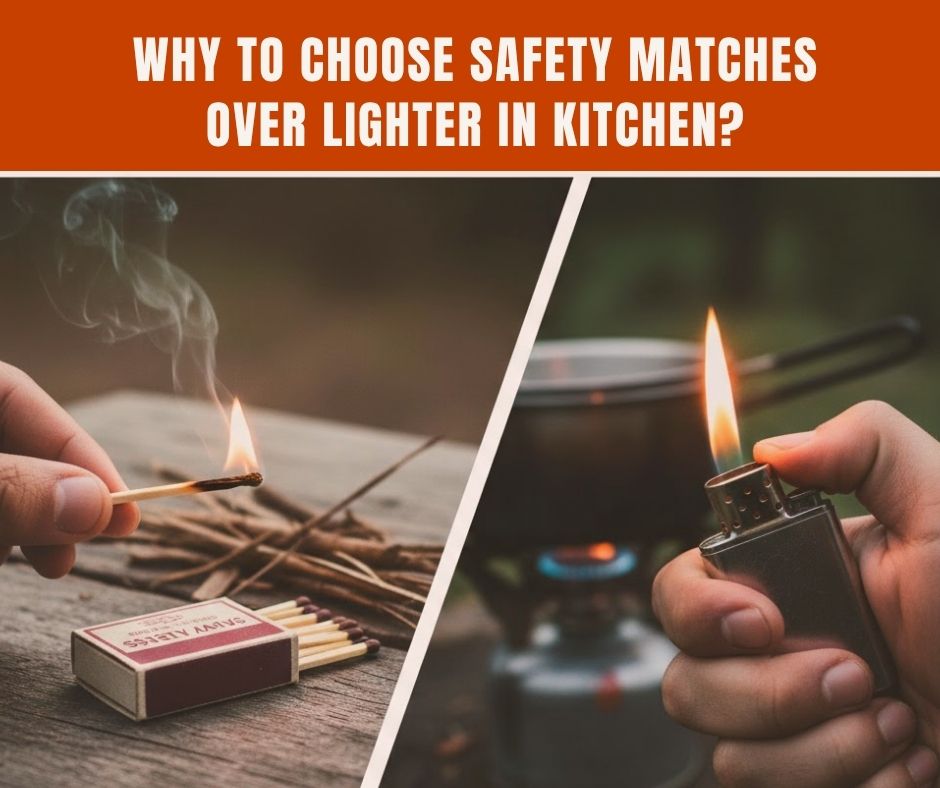
Choosing the right ignition tool directly affects kitchen safety. The comparison below highlights why safety matches are preferred in 2026 kitchens.
| Feature | Safety Matches | Gas Lighters |
|---|---|---|
| Ignition Control | High | Moderate |
| Explosion Risk | None | Present |
| Eco‑Friendliness | Biodegradable | Plastic waste |
| Child Safety | Higher | Lower |
| Cost Efficiency | Affordable | Recurrent fuel cost |
These differences clearly explain why household safety matches are becoming the preferred option for safety‑conscious families and professional kitchens.
Designed for Everyday Indian Kitchens
One major advantage of wooden safety matches is their adaptability. They perform reliably even in humid conditions — a common challenge in Indian kitchens where lighters often fail.
The wooden splints also offer a firm, natural grip, reducing accidental slips and burns. Elderly users find safety matches especially easy and secure to handle.
This usability factor plays a key role in the growing demand for kitchen safety matches across multi‑generational households.
Cost Efficiency Meets Sustainability
Modern households increasingly evaluate products based on both safety and environmental impact. Wooden safety matches perform strongly on both fronts.
Eco‑Friendly Benefits
- Made from responsibly sourced softwood
- Fully biodegradable materials
- No plastic or fuel residue
- Lower overall carbon footprint
Compared to disposable lighters, household safety matches align well with India’s 2026 sustainability goals while delivering dependable daily performance.
2026 Kitchen Safety Trends to Watch
Industry insights show a noticeable shift toward traditional yet safer kitchen tools. Fire‑safety educators and household safety advocates increasingly recommend safety matches over lighters.
Key Trends Driving This Shift
- Rising child‑safety awareness
- Growth in eco‑friendly household products
- Demand for non‑electronic safety tools
- Increased export of Indian‑made safety matches
These trends reinforce the long‑term relevance of kitchen safety matches in both domestic and global markets.
Simple Safety Tips When Using Matches in Kitchens
To maximize safety and reliability, follow these best practices:
✔️ Store matches in a dry, closed container
✔️ Strike matches away from the body
✔️ Use one match at a time
✔️ Keep out of children’s reach
Consistent handling practices significantly reduce fire hazards and promote safer cooking environments.
Final Thoughts
Choosing the right ignition tool may seem minor, but it plays a major role in preventing kitchen accidents. In 2026, safety‑conscious households are turning to Quenker Matches for reliable, eco‑friendly wooden safety matches.
With controlled flames, consistent quality, and sustainable materials, these household safety matches provide a smarter and safer alternative to lighters.
