Author: quenker-editor

Blog Matchbox company Safety Matches

Matchbox Company: Leading Indian Supplier for Bulk & Custom Matchboxes

Introduction
The demand for safety matchboxes continues to rise across global markets — from Africa and the Middle East to Latin America and Southeast Asia. As an importer, wholesaler, or private-label brand, choosing the right matchbox company in India is crucial for ensuring reliable supply, consistent quality, and long-term profitability.

That’s where Quenker Matches comes in.

Backed by years of manufacturing expertise and a strong export focus, Quenker Matches has become a trusted name in bulk matchbox supply and customized matchbox production. From standard safety matches to fully branded promotional matchboxes, the company caters to a diverse international clientele with professionalism, scale, and precision.
Why Quenker Matches Is the Best Matchbox Company in India
India is home to hundreds of matchbox manufacturers, but Quenker Matches stands apart because of its:

Specialization in exports: With dedicated export teams and global logistics partners, Quenker ships to over 25 countries with accuracy and on-time delivery.
In-house quality control: Every matchbox undergoes strict checks for ignition strength, stick quality, and moisture resistance.
Customization facility: Quenker offers in-house design, printing, and packaging customization for private labels, hotel chains, event brands, and supermarket lines.
Capacity & scalability: The company runs high-volume production units in Tamil Nadu, capable of fulfilling small to bulk orders — from 100,000 to over 10 million matchboxes per shipment.

Top Qualities to Look for in a Matchbox Company
Choosing a reliable supplier requires more than just comparing prices. Here are the key traits you should look for in a professional matchbox company:

1. Experience in international trade
Look for companies familiar with export paperwork, customs requirements, labeling regulations, and HS codes.

2. Consistent product quality
Sticks should ignite easily, burn evenly, and stay intact during transit. Boxes must be properly sealed and moisture-resistant.

3. Packaging flexibility
Whether you need local-language labels, barcode printing, or promotional boxes — your supplier should support full customization.

4. Material options
Good manufacturers offer wax-coated, wooden, and eco-friendly cardboard matches based on regional preferences.

Looking for bulk safety matches from a top matchbox company? Contact us today.

5. Supportive communication
A dependable supplier provides timely updates, clear documentation, and responsive communication from order to delivery.

Quenker Matches excels in all these areas, making it the go-to matchbox company for buyers across sectors and continents.
What Makes a Matchbox Company Suitable for Custom & Bulk Orders?
Custom and bulk orders demand precision, coordination, and production strength — not every manufacturer can deliver that.

A matchbox company ready for global business should have:
1. High-Capacity Manufacturing Facilities
A supplier must be equipped with multiple production lines, trained manpower, and scalable operations to handle bulk orders ranging from 100,000 to over 10 million boxes. Quenker Matches operates in Tamil Nadu’s major matchbox clusters, where decades of skilled production enable fast turnaround without compromising quality.
2. Design-to-delivery capability
Quenker Matches handles everything from artwork creation to final box packing under one roof.
3. Flexible MOQ & batch sizes
Whether you’re testing a new market or ordering in bulk, the company should accommodate varying volumes.
4. Box variants for different markets
Some countries prefer long kitchen matches; others need moisture-resistant wax matchboxes — a good company offers it all.
5. Export-Grade Packing & Shipping
Handling bulk orders also means protecting them in transit. Boxes should be packed in:

Moisture-resistant cartons (5-ply or 7-ply)
Shrink-wrapped or plastic-lined inner packs
Barcoded or labeled master cases for easier distribution
Palletized and containerized loads for sea or air freight

Quenker Matches takes care of all packing, labeling, and documentation — ensuring compliance with destination-country regulations.

With Quenker Matches, you get access to a match box partner who understands your market’s needs — and delivers accordingly.
How a Matchbox Company Supports Private Labeling & International Brands
Private-label matchboxes are gaining popularity among supermarkets, hotels, restaurants, and promotional gift brands. A top-tier manufacturer should enable:

Full branding options: From logo placement to box color and typography, everything must align with your brand guidelines.
Custom box sizes: Standard, jumbo, mini, or cigar-style matchboxes to suit your product portfolio.
Fast prototyping: Sample creation and approval must be quick and accurate.
Design assistance: Not every importer has a creative team — your supplier should be able to help with artwork if needed.

Quenker Matches has helped dozens of global clients launch their own branded custom matchbox lines. Whether you’re a resort in Dubai or a supermarket chain in Kenya, Quenker can make your brand visible — right in your customers’ hands.
Matchbox Company vs. Local Traders: Which Offers Better Value?
Many importers get stuck between choosing a manufacturer and a local trader or agent. While traders may offer low upfront effort, they often:

Add commissions, increasing your landed cost
Have no control over production quality or timelines
Can’t offer customization or direct packaging options
Lack transparency in pricing and sourcing

Choosing a direct supplier saves cost in the long run, improves quality control, and builds a sustainable sourcing partnership.
Types of Matchboxes Available to Export
Quenker Matches manufactures a wide range of matchbox types for domestic and international use:

✅ Wax Safety Matches – Moisture-proof and ideal for tropical climates

✅ Wooden Safety Matches – Durable, traditional, and widely accepted

✅ Cardboard Matches – Lightweight, eco-friendly, cost-efficient

✅ Kitchen Matches – Long sticks for safe use in cooking

✅ Hotel & Promotional Matchboxes – Customized for events, hospitality, or branding

✅ Custom Matches – Personalized or customized safety matches
Kovilpatti is often regarded as the matchbox manufacturing capital of India, known for its heritage and large-scale production.
Why Global Buyers Prefer Quenker Matches as Their Matchbox Company
Here’s why buyers from Nigeria, Sudan, Saudi Arabia, Kenya, Ghana, UAE, and beyond prefer working with Quenker Matches:

Export Expertise: End-to-end service from factory to port
Stable Production: Continuous availability for monthly orders
Branding Capabilities: Ideal for resellers and private-label clients
Sturdy Packaging: Matchboxes arrive intact, no product loss
Responsive Team: Timely replies, tracking updates, and support
Long-term Value: Better pricing, better quality, better margins

Quenker Matches delivers more than a product — it delivers confidence, reliability, and brand value for every client.
Conclusion
In today’s competitive export landscape, choosing the right matchbox company in India can define your success in international markets. With unmatched production capacity, customization options, and export reliability, Quenker Matches is your best choice for bulk, branded, and private-label safety matches.

 

Posted by quenker-editor
Blog Safety Matches Safety Matches Exporter

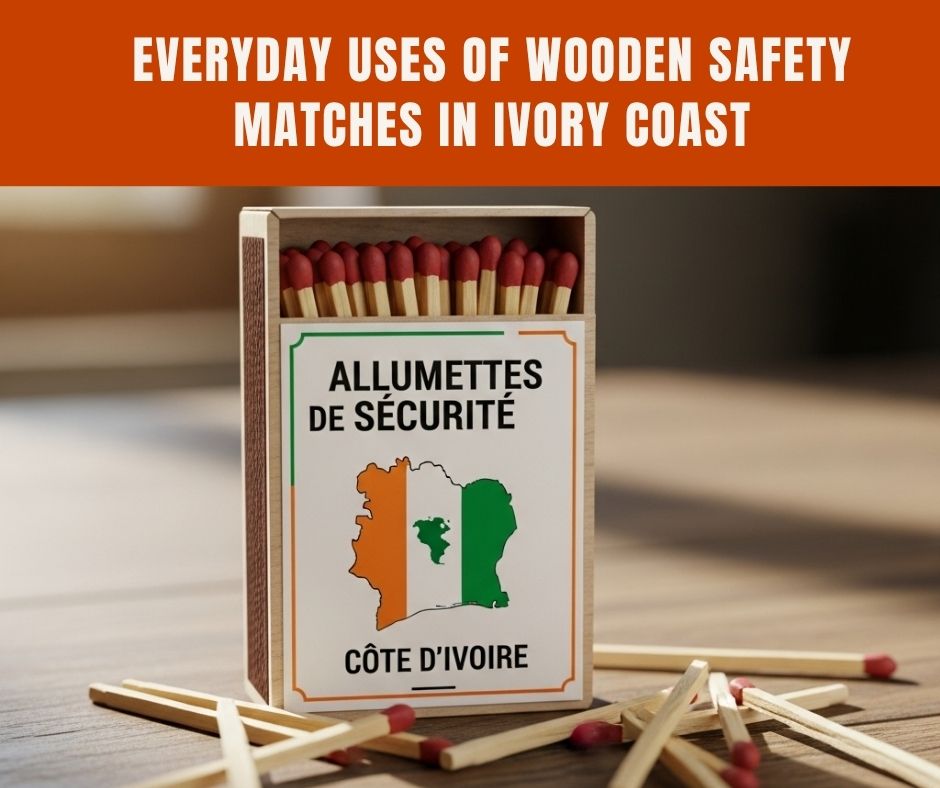
Top 7 Uses of Wooden Safety Matches in Ivory Coast

Introduction
Ivory Coast, officially known as Côte d’Ivoire, represents one of West Africa’s most dynamic markets for wooden safety matches. As a leading safety matches manufacturer and exporter, Quenker Matches has observed the diverse applications of wooden safety matches throughout this vibrant nation.

In Ivory Coast’s vibrant market ecosystem, where tradition meets modern commerce; wooden safety matches continue to be persistive part as an essential daily commodity. Whether it is a roadside vendor lighting a charcoal stove or a family preparing their evening meal, the tiny matchstick plays an essential role in everyday life.

In this blog, we delve into the top 7 practical uses of wooden safety matches in Ivory Coast.
What are the main uses of wooden safety matches in Ivory Coast?
Wooden safety matches serve seven primary purposes in Ivory Coast: household cooking and lighting (85% of usage), traditional ceremonies and rituals, small business operations, agricultural applications, emergency preparedness, artisanal crafts, and industrial applications.

Before diving into the applications, it’s important to understand why wooden safety matches are still widely preferred:

Affordable and accessible
Reliable in remote areas with limited gas or electricity
Eco-friendly matchbox options available
Easy to store, transport, and distribute

While price fluctuations and growing competition from gas lighters present challenges, the demand for match boxes imports remains high, especially when bulk supply and consistent quality are guaranteed by trusted exporters like Quenker Matches.
1. Household Cooking and Daily Fire-Starting
Across urban and rural households in Ivory Coast, wooden matchsticks are a kitchen essential. From lighting kerosene stoves to starting firewood burners, these matches are a part of every morning duty.

Even with the rise of modern stoves, many homes still rely on charcoal or wood-fired cooking, especially in areas like Bouaké, Yamoussoukro, and rural Abidjan suburbs. A single box of wooden match boxes can last weeks, making it an affordable and dependable solution.
2. Restaurants and Street Food Vendors
Ivory Coast’s street food culture is rich and widespread. Wooden safety matches are preferred for their quick ignition and natural burning properties, perfect for small grills, charcoal pans, and portable cooking setups. Even restaurants often keep a box or two handy in case of kitchen outages or lighter failures.

For FMCG micro-distributors and small retailers, this makes matchsticks a high-frequency, high-turnover product.
3. Emergency and Disaster Safety Kits
In both rural villages and coastal regions affected by seasonal rains, safety matches for Ivory Coast serve an essential role in emergency preparedness kits.

Whether responding to power cuts or flood-related disruptions, families, NGOs, and relief agencies commonly include wooden matches in:
☑️ First-aid kits
☑️ Emergency lighting setups (candles, kerosene lamps, lanterns)
☑️ Temporary shelters or disaster relief camps

Given Ivory Coast’s geographic vulnerability to natural hazards, wooden matches remain a trusted ignition source in the following emergency scenarios:

Storm Preparedness: When electricity fails, matches ensure quick ignition for cooking, heating, or lighting.
Flood Recovery: Used for warmth, boiling water, or lighting during flood aftermaths.
Emergency Communication: Signal fires can be lit in remote regions with no mobile or radio coverage.
First Aid Use: Matches help sterilize small instruments or provide localized heat in medical situations.

This consistent demand makes eco-friendly matchbox supplies especially relevant for NGOs, disaster response teams, and aid suppliers operating in Ivory Coast and across West Africa.

Import Wooden Safety Matches Today from Quenker Matches – A Trusted Exporter

4. Camping, Outdoor Markets, and Agricultural Use
From weekend camping near Mount Nimba to open-market setups in Korhogo or Man, matchsticks are a reliable companion for outdoor needs. Farmers also use them for:

Lighting lanterns or lamps in early hours
Controlled burning – Managing crop residues and clearing agricultural land through controlled burns
Pest control – Lighting smoke fires to deter insects and protect crops during critical growing periods
Tool maintenance – Heating and shaping farming implements and equipment repairs
Processing activities – Drying and curing agricultural products like cocoa, coffee, and tobacco

Their natural composition and biodegradability of eco-friendly matchbox make them a more eco-friendly alternative to plastic-based lighters, an important aspect for sustainable agro-practices.
5. Religious and Traditional Ceremonies
Wooden safety matches hold special significance in Ivorian traditional practices. Various ethnic groups throughout the country incorporate matches into:

Ancestral worship ceremonies – Lighting incense and sacred fires during spiritual observances
Coming-of-age rituals – Symbolic fire-lighting as part of traditional initiation ceremonies
Harvest celebrations – Community gatherings where matches light ceremonial torches and cooking fires
Marriage ceremonies – Traditional wedding practices involving the symbolic joining of families through shared fire

Religious and Spiritual Applications
Both traditional African religions and introduced faiths utilize wooden matches in their practices. Christian communities use matches for lighting church candles, while Islamic communities employ them for various ceremonial purposes. Traditional healers and spiritual practitioners often prefer wooden matches for their natural composition and reliable flame production.
6. Small Retail and FMCG(Fast-Moving Consumer Goods) Counters
From Abidjan’s open-air markets to corner shops in rural zones, wooden match boxes are an essential stock item. They are typically sold near:

Candles and lamps
Charcoal bags and firewood bundles
Kitchen essentials

Retailers prefer compact boxes with eye-catching design, long shelf-life, and low breakage during transit. That’s why match box importers in Ivory Coast trust exporters who offer:

Bulk purchase support
Branding customization
Weather-resistant cartons

Quenker Matches offers scalable production and packaging flexibility of Wooden Matchsticks to suit all retailer levels, from large wholesalers to micro-outlets.
7. Industrial and Commercial Utility
Beyond homes and markets, certain commercial sectors also rely on wooden safety matches:

Bakeries: Lighting traditional ovens
Tailors: Burning loose thread ends
Handicraft makers: Fire-based finishing
Welders: Lighting torches in absence of spark tools

These niche industrial needs require consistent-quality safety matches for export, with longer burn times and thick sticks to handle high-heat environments. Exporters like Quenker Matches cater to such demands by offering a variety of stick lengths and head types (wax, sulfur).
Why Choose Indian Wooden Safety Match Exporters?
India has long been a global hub for wooden matchsticks manufacturing and safety matches for export, and suppliers like Quenker Matches stand out for:

Consistent product quality
Export-grade packaging
Climate-resilient match boxes
Competitive bulk pricing
Custom branding for African importers

Indian safety matches manufacturers and exporters also understand the market dynamics of West Africa, ensuring timely deliveries of Wooden Matchsticks, compliance with safety norms, and strong after-sales support.
Safety Guidelines for Ivorian Users
Proper match usage requires attention to safety protocols, particularly important in Ivory Coast’s varied climate conditions. Users should store matches in dry locations, supervise children around open flames, and maintain appropriate ventilation when using matches indoors.
5-Year Market Projection for Ivory Coast

Year
Projected Consumption (Million Boxes)
Market Value (USD)
Growth Rate
Key Drivers

2024
125
$2.8 million
Baseline
Current demand

2025
135
$3.1 million
8%
Population growth

2026
146
$3.5 million
8.1%
Economic development

2027
158
$4.0 million
8.2%
Rural electrification gaps

2028
171
$4.6 million
8.2%
Cultural preservation trends

Final Thoughts
Wooden safety matches continue serving diverse and essential functions throughout Ivory Coast. The seven primary uses outlined demonstrate the enduring importance of this simple yet crucial tool in West African society.

As Quenker Matches continues expanding our presence in the Ivorian market, we remain committed to providing high-quality, reliable wooden safety matches that meet the varied needs of this dynamic nation.
Ready to import high-quality wooden safety matches to Ivory Coast?
Contact us – Your Trusted Export Partner from India.
Frequently Asked Questions
Are wooden safety matches safe to use daily?
Yes, they are designed for safe, everyday use in homes, shops, and outdoor settings.

What are the main uses of wooden matchsticks in Ivory Coast?
Cooking, street vending, rituals, camping, emergency lighting, and small industries.

Why are wooden matchboxes better than lighters?
They’re eco-friendly, cheaper, and work without refilling or batteries.

Can I import wooden matches in bulk to Ivory Coast?
Yes. Exporters like Quenker Matches offer bulk supply with export-grade packaging.

Do Indian wooden matches meet export quality standards?
Absolutely. Reputed brands ensure long burn, safe tips, and moisture-resistant boxes.

Posted by quenker-editor
Blog Safety Matches Safety Matches Exporter

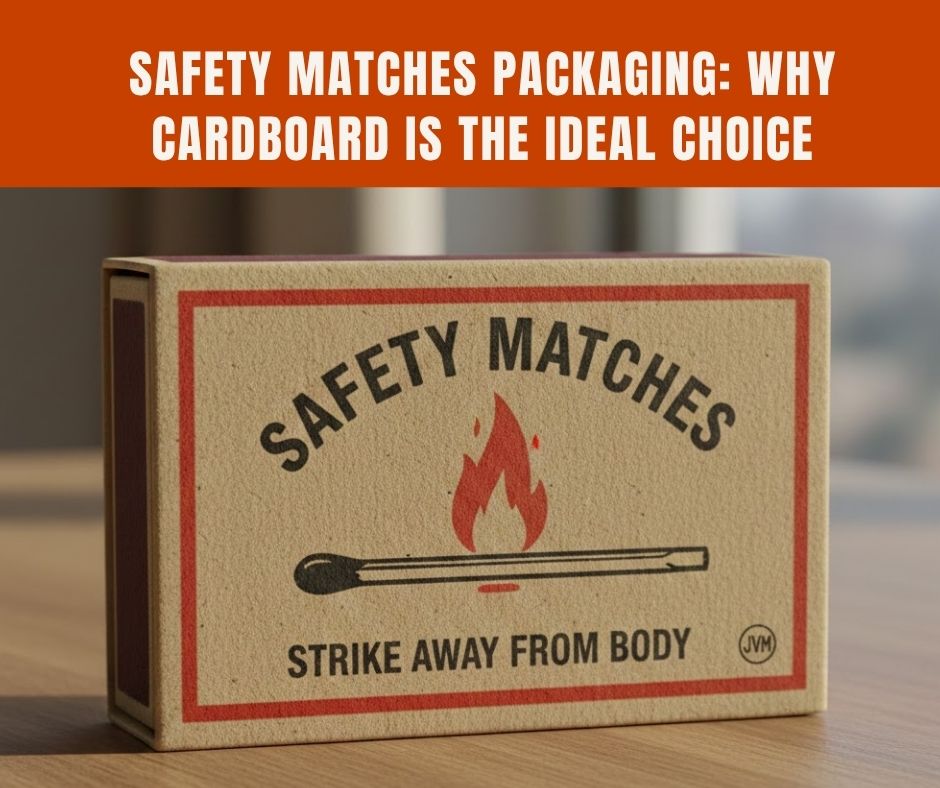
Safety Matches Packaging: Why Cardboard Is the Ideal Choice

Introduction
Safety matches are everyday essentials found in homes, restaurants, and businesses worldwide. Whether lighting a stove, candle, or campfire, these small sticks make starting a flame easy. However, the packaging that holds these matches is just as important as the matches themselves. Proper packaging keeps matches safe, fresh, and easy to use.

Among various packaging materials, cardboard stands out as the best choice for packing safety matches. In this blog, we’ll explain why cardboard is the ideal packaging material by discussing how it protects matches, enhances safety, is cost-effective, supports the environment, and improves branding and user experience.
What Are Safety Matches and Why Packaging Matters
Safety matches are small sticks made from wood or cardboard, with a chemical-coated tip that ignites when struck against a specific rough surface. 
Because matches are flammable, their packaging plays several vital roles:

Protect matches from breaking or damage during transport

Reduce the risk of accidental ignition

Keep matches dry and ready to use

Provide convenience to users for carrying and striking matches

Display branding and safety instructions clearly

Cardboard meets all these needs effectively, making it the ideal packaging material.
Benefits of Cardboard in the Safety Match Industry
Cardboard packaging is strong and sturdy enough to protect fragile matches inside. Matches can easily break or bend if packed in weak materials like thin paper or plastic. The thickness and rigid structure of cardboard keep matches safe from crushing and physical damage during shipping and handling.

Besides physical protection, cardboard helps shield matches from dirt, dust, and moisture. Humidity is a major enemy for matches since wet match heads won’t light properly. Cardboard boxes can be treated with moisture-resistant coatings, ensuring matches stay dry and reliable even in damp environments.
1. Cardboard: The Safer Packaging Material
Safety is a priority when packaging flammable products like matches. Cardboard has several safety advantages over materials like plastic or metal:

It does not build up static electricity or sparks, which lowers fire risk.
Cardboard matchboxes often include a built-in striking surface made from rough material for safe ignition.
Compared to slippery plastic packaging, cardboard offers a better grip and safer handling.
It can be treated with fire-retardant chemicals for extra safety.

These qualities make cardboard packaging a safer choice for both manufacturers and consumers.
2. Cost-Effective and Easy to Source
Cost plays a big role in packaging choices, and cardboard is a smart option for many reasons:

It is inexpensive to produce and easy to manufacture.
Cardboard can be cut, folded, and shaped into boxes of various sizes and designs without much added cost.
Using cardboard helps manufacturers keep prices affordable for consumers.

This balance between cost and quality makes cardboard packaging very popular for safety matches.
3. Environmental Benefits of Cardboard Packaging
With growing awareness about environmental protection, choosing sustainable packaging is important. Cardboard is a highly eco-friendly choice:

Made from natural wood pulp, it is biodegradable and breaks down safely in the environment.
It is widely recyclable, and many cardboard boxes are produced from recycled materials.
Choosing cardboard over plastic helps reduce landfill waste and pollution.
Companies using cardboard packaging appeal to environmentally conscious customers.

4. Attractive and Functional Packaging Design
Packaging plays a big role in marketing. Cardboard is easy to print on and customize, helping products stand out:

High-quality printing supports logos, product details, and safety instructions.
It can be coated with matte or glossy finishes for a premium look.
Cardboards can be folded into custom shapes and sizes to attract customers.
It allows embossing and other special effects to create unique packaging.

By combining protection and design, cardboard packaging helps brands connect with customers effectively.
5. Convenience and Ease of Use for Consumers
Consumers appreciate packaging that is easy to open, close, and carry. Cardboard matchboxes are lightweight and designed for convenience.

Most cardboard matchboxes include a built-in striking surface, so users don’t need extra materials. The boxes are small and fit easily in pockets, bags, or kitchen drawers.

Because cardboard is easy to stack and store, retailers and customers find it practical to keep matches organized and accessible.
6. Ideal for Manufacturers and Exporters
From a business viewpoint, cardboard packaging benefits safety matches exporters and manufacturers by:

Being easy to mass-produce and customize
Lowering shipping costs due to its lightweight nature
Providing sturdy protection that reduces product damage during transport
Meeting export and safety standards in various countries

This combination supports efficient supply chains and happy customers.
7. Customization Options for Brand Differentiation
One major benefit of cardboard packaging is how easily it can be customized to help brands stand out. In a crowded market, unique packaging designs make a big difference in attracting customers. Cardboard allows brands to combine creativity with functionality in several ways:

Vibrant printing: Cardboard surfaces support high-quality, colorful printing that showcases logos, product images, and brand colors clearly.

Special finishes: Brands can choose gloss, matte, embossing, or foil stamping to create a premium look and feel.

Custom shapes and sizes: Cardboard can be cut and folded into unique box shapes, with options like windows to display matches inside.

User-friendly features: Easy-open tabs, integrated striking surfaces, and secure closures improve customer experience.

Clear safety instructions: Important usage and safety guidelines can be printed directly on the packaging, increasing user confidence.

This combination of design and practicality not only protects the matches but also strengthens brand identity and customer loyalty.
How Cardboard Compares to Other Packaging Materials
Here is a quick comparison of cardboard against other materials commonly used for match packaging:

Material
Advantages
Disadvantages

Cardboard
Affordable, sturdy, recyclable, printable
Can weaken if exposed to moisture without treatment

Plastic
Waterproof, durable
Expensive, not eco-friendly, risk of static sparks

Metal
Very strong, fire-resistant
Heavy, costly, less recyclable

Paper
Cheap, lightweight
Weak, tears easily, poor protection

Tips for Choosing the Best Cardboard Packaging for Matches
If you are a safety matches manufacturer or exporter, consider these tips to choose the best packaging:

Use moisture-resistant coatings to protect matches from humidity.
Include a high-quality striking surface for easy ignition.
Design the box for easy opening and secure closing.
Print clear safety instructions and branding information.
Choose appropriate cardboard thickness to match shipping and storage needs.

Following these guidelines will ensure your matches reach customers safely and look professional.
The Future of Safety Match Packaging: Trends in Cardboard Use
Cardboard packaging is set to remain the top choice for safety matches as new trends focus on sustainability, innovation, and consumer engagement. Here are some key developments shaping the future:

✅ Eco-friendly materials: Increased use of biodegradable and recyclable cardboard meets rising consumer demand for green packaging.

✅ Advanced coatings: Moisture-resistant and fire-retardant treatments enhance durability and safety without relying on plastics.

✅ Minimalist designs: Brands are moving toward thinner, lighter cardboard packaging that uses fewer materials but maintains strength.

✅ Digital integration: Printing QR codes and interactive elements on cardboard boxes connects consumers to videos, instructions, and promotions.

✅ Reusable packaging concepts: Some companies explore packaging that can be reused or repurposed, reducing waste further.
Conclusion
In summary, cardboard packaging is the ideal solution for safety matches because it provides strong physical protection, keeps matches dry, reduces fire risks, and is cost-effective. For manufacturers, suppliers, and exporters who want top-quality safety matches with reliable packaging, Quenker Matches is the best choice.
Need premium safety matches with custom packaging? Contact Us now!
Quenker matches produce premium safety matches packed in sturdy, moisture-resistant cardboard boxes that meet international safety standards. Choosing Quenker means getting matches that are safe, durable, eco-friendly, and convenient for users. Their packaging not only protects the product during transport but also enhances brand visibility and customer satisfaction.

Posted by quenker-editor
Blog Safety Matches Safety Matches Exporter

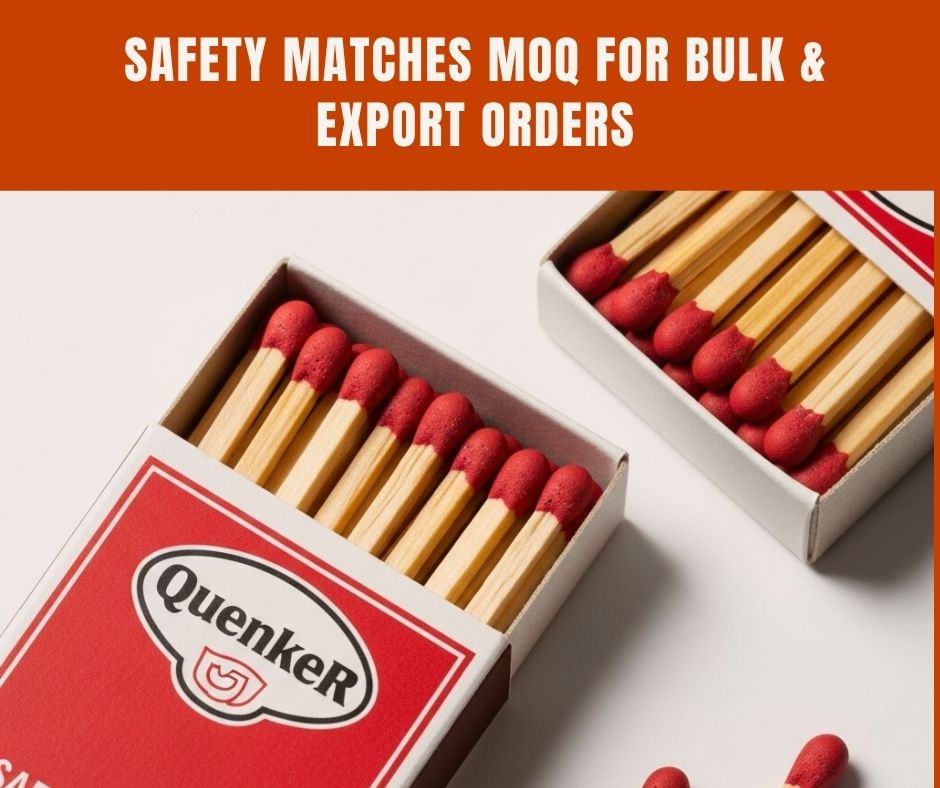
What Is the Minimum Order Quantity for Safety Matches Wholesale Orders?

Introduction
The minimum order quantity (MOQ) for safety matchboxes typically starts at 500 cartons and can go up to 10,000 cartons, depending on the type of matchbox, customization needs, and export destination.

If you’re planning to buy safety matches wholesale, one of the first questions you’ll ask is: “What’s the minimum order quantity?”. Whether you’re a distributor or a bulk buyer in markets like Africa, the Middle East, or Asia, understanding MOQ is crucial to making cost-effective purchases.

At Quenker Matches, we guide bulk buyers and exporters through these initial but vital decisions. In this blog, we explore everything you need to know about Minimum Order Quantity, how it’s determined, and how you can plan your bulk matchbox order effectively.
Why MOQ Matters in Safety Matches Wholesale Orders?
1. Keeps Production Economical
Matchbox manufacturing requires setup for cutting, printing, dipping, and drying processes. A certain minimum quantity ensures the factory can run the production efficiently without wastage.
2. Impacts Your Price Per Unit
Generally, larger orders get better prices. Manufacturers factor in material usage and energy consumption, so low-quantity orders often cost more per unit.
3. Determines Customization Possibilities
Want your brand name, logo, or language-specific packaging? Most factories only offer branding if you meet their MOQ thresholds (usually 5,000 cartons or more).
4. Affects Shipping Method
Larger MOQs allow you to optimize container loads (FCL), which is more cost-effective than LCL (Less than Container Load).
5. Ensures Consistent Quality
High-MOQ production batches are more consistent in size, finish, and quality. Smaller runs may result in more variability.
MOQ for Different Types of Safety Matches Wholesale Orders
At Quenker Matches, we produce a wide range of safety matchboxes tailored for various applications—from retail shelves to international shipments. Here’s a breakdown of Minimum Order Quantity based on product type:
1. Cardboard Matchboxes
Cardboard safety matchboxes are the most popular and economical choice, especially for FMCG and retail use. The Minimum Order Quantity typically starts at 100,000 to 200,000 boxes for standard sizes.

These are widely used due to:

Cost efficiency
Lightweight packaging
Easy branding with digital printing

Explore our Cardboard Matchboxes here

2. Wooden Safety Matches
Known for durability and longer burn times, wooden safety matches are often exported for household and commercial use. Minimum Order Quantity for wooden matchboxes usually begins at 50,000 to 100,000 boxes, depending on the stick length, packaging type, and destination.

Export compliance and wood certification may also influence the Minimum Order Quantity and lead time.

3. Custom or Private Label Matchboxes
Private label matchboxes are in high demand among retailers and hospitality brands. These require unique printing, packaging, and sometimes even product size modifications.

For such custom jobs, Minimum Order Quantity typically starts at 100,000 to 250,000 units, depending on:

Number of color variants

Print process (digital vs offset)

Packing format (inner trays, outer sleeves, bundles)

Request a quote for customized matchboxes here
What Influences Minimum Order Quantity for Matchbox Orders?
Minimum Order Quantity is not a fixed number, it can change based on specific project details. Here are some key factors that influence Minimum Order Quantity in the safety matchbox industry:
1. Material Type
Cardboard matchboxes are easier to mass-produce, allowing for a lower Minimum Order Quantity. Wooden safety matches, especially those with custom-cut sticks, often demand a higher base quantity due to the processing involved.
2. Printing and Packaging
If you’re opting for digital printing or personalized branding, the setup cost may require a higher Minimum Order Quantity to justify the expense. On the other hand, if you’re using a pre-existing template or standard print, Minimum Order Quantity can be relatively lower.
3. Destination Market
For export orders, additional factors like fumigation, certifications, and bulk shipping logistics might raise the Minimum Order Quantity. Local orders within India are more flexible and can often accommodate lower volumes for regular buyers.
4. Production Capacity and Lead Times
Busy manufacturing seasons, like festival months or export windows, can affect the minimum quantity accepted. Some manufacturers prefer batching bulk orders to maintain efficiency.
Bulk Matchbox Orders: Plan with the Right MOQ Strategy
Here’s how to ensure you get the best value while working with Minimum Order Quantity limits:
1. Determine Your Usage Pattern
If you’re a matchbox distributor or retailer, calculate your average monthly movement. This will help you place an order that avoids overstocking while meeting demand.
2. Request Minimum Order Quantity Flexibility for New Buyers
At Quenker Matches, we often provide lower Minimum Order Quantity options for first-time buyers, especially those exploring our product for resale or export sampling.
3. Opt for Popular SKUs First
Start with high-demand models like standard-size cardboard matchboxes. These often have the lowest Minimum Order Quantitys and fastest turnaround times.
4. Choose Manufacturers Over Middlemen
Working directly with matchbox manufacturers in India ensures more transparent Minimum Order Quantity policies, better pricing, and access to real-time inventory status.
Quick Fact Table: Minimum Order Quantity for Safety Matchboxes

Parameter
Details

Cardboard Matchboxes MOQ
100,000 – 200,000 boxes

Wooden Safety Matches MOQ
50,000 – 100,000 boxes

Custom/Private Label Orders MOQ
100,000 – 250,000 boxes (varies by design and packaging)

Digitally Printed Matchboxes MOQ
As low as 50,000 units (ideal for short runs or test orders)

Export MOQ (Safety Matches Wholesale)
Starts at 100,000+ boxes (higher due to logistics, compliance, and international shipping)

Domestic Orders MOQ
Generally more flexible – begins around 50,000 to 100,000 boxes

Lead Time for Standard Orders
2–3 weeks

Lead Time for Custom/Export Orders
4–6 weeks (depending on design complexity and shipping requirements)

New Buyers’ MOQ Strategy
Start with standard SKUs and request sample or pilot orders to verify quality and market fit

Cost Efficiency Tip
Higher MOQs tend to lower per-unit costs and reduce packaging and freight overhead

Minimum Order Quantity vs Cost
Minimum Order Quantity directly impacts your cost per unit. While a higher Minimum Order Quantity might seem intimidating, it can drastically lower your total cost over time. Here’s why:

Lower per-unit packaging cost

Bulk printing discounts

Fewer shipping cycles

Reduced reordering hassle

That said, if you’re new to the industry or want to test market response, ask about trial runs or starter Minimum Order Quantity packages.

Conclusion
Minimum order quantity is not a barrier, it’s a guide to better planning and better pricing. If you’re an importer or distributor trying to expand into markets like Africa, the Middle East, or Southeast Asia, understanding MOQ helps you strike the right balance between cost, quality, and customization.
At Quenker Matches, we offer flexible MOQs tailored to your business scale — whether you’re launching a private label or fulfilling a high-volume tender. Our team can guide you through carton specs, export documentation, and branding options to ensure smooth delivery and compliance.

Ready to order? Contact Quenker Matches today for a customized quote.

Frequently Asked Questions (FAQ)
1. What is the standard Minimum Order Quantity for cardboard matchboxes?
The standard Minimum Order Quantity for cardboard safety matchboxes ranges between 100,000 to 200,000 units, depending on size and print type.
2. Can I place a small order for testing?
Yes. We offer sample Minimum Order Quantity or pilot batches for new buyers who want to test the product before committing to a full-scale order.
3. Do digital printed matchboxes require a higher Minimum Order Quantity?
Digital printing allows for lower Minimum Order Quantity compared to offset printing, but custom designs may still require a minimum of 50,000 to 100,000 units to be cost-effective.
4. How is Minimum Order Quantity different for domestic and export orders?
Export orders may have a higher Minimum Order Quantity due to packaging, documentation, and logistics requirements, especially for wooden safety matches.
5. What’s the average delivery time for a bulk matchbox order?
Lead times vary based on the order type. Standard products can be shipped within 2–3 weeks, while custom or export orders may take 4–6 weeks.


Posted by quenker-editor
Blog Safety Matches Safety Matches Manufacturer

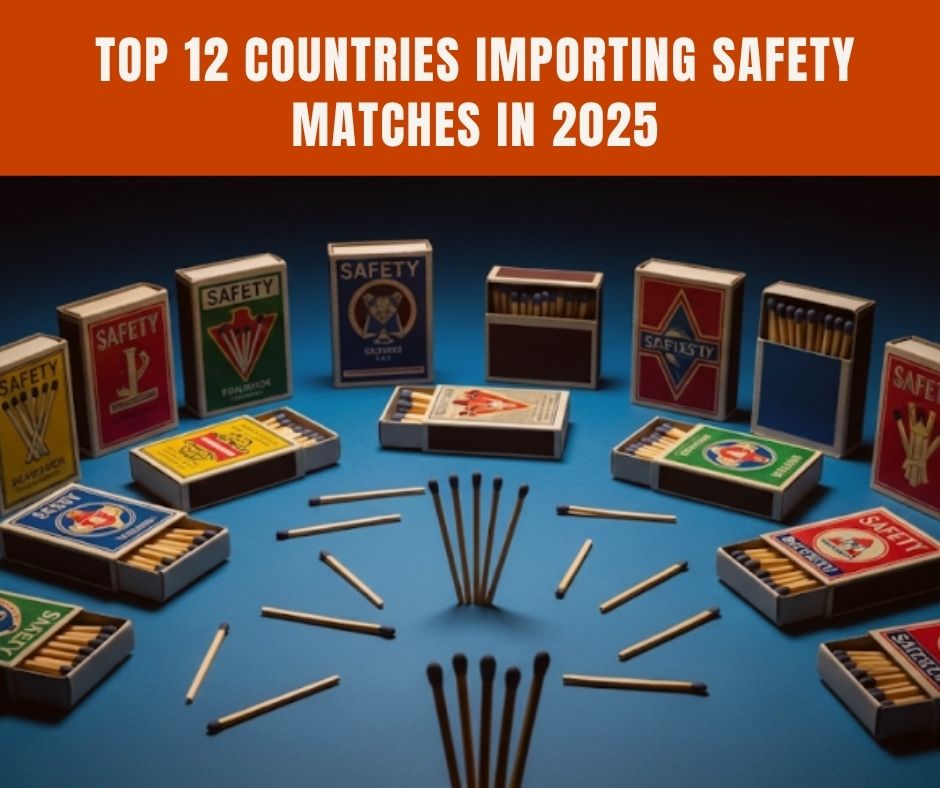
Top 12 Countries Import Safety Matches (2025 Update)

Safety matches may be small, but their global demand is massive. From lighting candles in homes to sparking flames in industrial and hospitality settings, these matchboxes are essential across many regions. In this blog, we explore the Top 12 leading countries that import safety matches in bulk. Whether you’re a wholesale matchbox supplier or an exporter, this list offers valuable insights into where global demand is strongest and why these countries are at the forefront of the safety match import market.
Global Safety Matches Import Market 
The global safety match industry has witnessed remarkable growth, with the market valued at approximately $4.6 billion in 2023 and projected to reach $6.7 billion by 2033, reflecting a compound annual growth rate (CAGR) of 4.0%. 

According to the latest Volza trade statistics, Nigeria leads as the world’s largest safety match importer, accounting for 17% of global imports with 472 shipments, while the United States dominates in terms of shipment volume with 7,264 shipments, followed by Nigeria with 3,179 shipments and France with 2,590 shipments.
Top 12 Countries Import Matchboxes

Rank
Country
Key Reasons for Import
Primary Exporting Country
Major Part of Entry

1
Nigeria
Large population, rural cooking
India
Lagos

2
United States
Emergency kits, hospitality branding
India, China
Los Angeles

3
South Africa
Low-income households, camping, traditional fire-starting
India
Durban

4
United Kingdom
Hospitality, survival/outdoor segment
India, Sweden
London

5
Germany
Luxury branding items
India
Hamburg

6
France
Design-forward, promotional giveaways, limited domestic output
India
Marseille

7
Canada
Outdoor camping, cold weather utility
India
Toronto

8
United Arab Emirates
Ethnic demand, re-export hub, hospitality sector
India
Dubai

9
Yemen
Essential fire source, limited production
India
Aden

10
Zambia
Rural usage, cost-effective fire source
India
Lusaka

11
Peru
Household cooking, rural regions, limited lighter use
India, China
Callao

12
Togo
Low-cost fire solution, informal economy
India
Lomé

1. Nigeria: World’s Top Importer of Safety Matches
Nigeria stands as the continental leader in safety match imports, with estimated imports exceeding 1.2 billion matchboxes in 2025. This massive demand stems from Nigeria’s population of over 223 million and a vast informal economy where reliable fire-starting tools are essential for households and small businesses. 
Who buys safety matches in Nigeria?

Distributors and wholesalers supplying local stores and open markets

Retail chains and supermarkets looking for reliable branded stock

Religious institutions for ceremonial use

Hotels, restaurants, and street food vendors needing consistent lighting tools

Which brands of safety matches are popular in Nigeria?
Nigerian buyers often look for trusted export brands from India, such as those offering cardboard matches, wax matches, and wooden matches with customizable box sizes (20s, 40s, 50s). High-friction, long-burning sticks are particularly in demand.

Why is demand for safety matches growing in Nigeria?

Frequent power outages increase dependency on candles and kerosene stoves
Rural cooking habits still prefer fire-based ignition
Low-cost and essential household use make it a daily commodity
Rise in micro-businesses such as roadside tea stalls, grilled meat vendors, etc.

📊 SAFETY MATCHES MARKET SCORECARD

Import Volume: 1.2+ BILLION matchboxes annually
Profit Rating: ⭐⭐⭐⭐⭐ (EXCELLENT)
Payment Terms: L/C, 30-60 days
Entry Difficulty: Easy

MOST COMMON SAFETY MATCH SPECIFICATION

Popular Size: 40-50 sticks per matchbox
Carton Configuration: 10 x 10 x 10 = 1,000 pieces per carton
Wholesale Price: $12-18 per carton (1,000 pieces)
Container Capacity: 1,900 cartons per 20ft container, 4,200 cartons per 40ft HQ container

Why Nigeria Prefers Indian Safety Match Exporters
Nigeria’s unmatched demand for safety matches is driven by daily usage across millions of households and small businesses. 

India is the #1 exporter to Nigeria, holding over 65–70% market share in safety match imports.
Major manufacturing hubs: Kovilpatti and Sivakasi, Tamil Nadu
Flexible MOQs and 20ft/40ft HQ container loads suited to varying needs
Known for cost-effective production, custom branding, and consistent supply volumes

2. United States: Leading Matchbox Importer by Volume
The United States maintains its position as the world’s largest safety match importer by shipment volume, with 7,264 shipments recorded in recent trade data. 

Metric
Details

Rank in Imports

#2 globally (by shipment volume)

Estimated Imports

7,000+ recorded shipments annually

Major Entry Ports

Los Angeles, New York, Houston

Top Exporting Countries

India, China

End Users

Retailers, supermarkets, survival stores

Compliance Required

CPSIA, ASTM D6196, labeling & fire safety

Who Uses Safety Matches in United States?
Safety matches in the United States are used across various sectors:

Retail Chains (for household use)
Hotels & Restaurants (custom-branded matchbooks)
Emergency & Outdoor Kits (weatherproof safety matches)
Event Planners (as promotional items or collectibles)
Distributors & E-commerce Sellers (buying in bulk for resale)

Are Safety Matches Legal in the U.S.?
Yes. But the matches must meet:

CPSC Safety Standards (Child-resistant packaging if needed)
Flammability & Labeling Regulations
State Fire Codes (especially for commercial/resale purposes)

If you are importing safety matches into the United States, ensure your supplier provides:

MSDS (Material Safety Data Sheet)
Proper HS Code classification
Packaging and labeling per U.S. customs

In the United states, safety matches must comply with federal safety regulations and are commonly labeled as “strike-on-box” matches.
3. South Africa: Wholesale Matchbox Buyers
South Africa serves as a crucial regional distribution center for safety matches across Southern Africa. The country’s well-developed infrastructure and strategic location make it an ideal hub for receiving bulk imports of safety matches and redistributing them throughout the region.
Important Market Facts

Estimated Imports (2025): Nearly 700 million matchboxes
Main Import Sources: India, China, Indonesia
Distribution Channels: Container traders, rural wholesalers, spaza shops, hardware stores

Even as gas and electric alternatives become more popular in cities like Johannesburg and Cape Town, lower-income neighborhoods and townships still rely heavily on safety matches for cooking, lighting, and resale. Matchboxes are also vital for resale microbusinesses operating in informal markets.

📊Stats to Know

Over 50% of imported matchboxes are distributed through wholesale channels serving informal markets.

Match imports have grown 1.5x since 2020, tied to domestic fuel price volatility and rising rural consumption.
Indian brands dominate because of customizable branding, moisture-resistant coatings, and container-load availability.

4. United Kingdom: Bulk Buyer of Safety Matches
The United Kingdom maintains steady safety match imports, serving both domestic consumption and European distribution networks. British consumers demonstrate preference for high-quality, long-burning safety matches, particularly for luxury applications like candle lighting and fireplace use. 

Popular Safety Matches Specification

Premium Quality: 30-40 long-burning sticks per box
Luxury Pricing: $35-55 per carton for premium matches
Eco-Friendly Options: Sustainable wood and cardboard packaging
Regulatory Compliance: CE marking and British safety standards

Safety Matches in United Kingdom
The United Kingdom has consistently been a leading importer and bulk buyer of safety matches due to several industry needs:

Sustainable packaging trends: UK consumers increasingly prefer wooden safety matches with recyclable or FSC-certified boxes.

Hospitality sector demand: Hotels, pubs, and restaurants often customize matchboxes for branding and guest use.

Home fragrance & luxury brands: Many candle and incense makers use long-stem or extra-long safety matches for aesthetic and safety value.

Regulatory compliance: Safety matches comply with UK fire safety and import norms, unlike other ignition options.

5. Germany: Match box Importers from India
Germany may not top the list in volume, but it leads in precision-driven demand. The country imports 180–200 million matchboxes annually, with the majority sourced from India, Poland, and Sweden. Key ports like Hamburg, Bremen, and Frankfurt handle most of the inflows.
Top Sourcing Countries:

India – Known for low-cost high-volum