Author: quenker-editor

Safety Matches
Blog Safety Matches Safety Matches Exporter

Regulatory Standards for Safety Matches in Ukraine

Rules and Regulations will differ in every country according to their geographical conditions. In Ukraine, regulatory standards for safety matches are implemented to ensure consumer safety and environmental protection. These standards comprise various aspects of match production, including composition, packaging, labeling, and manufacturing processes.

Key regulations typically cover the use of non-toxic chemicals in match head composition to prevent health hazards and proper packaging requirements to minimize fire risks during storage and transportation. Additionally, labeling regulations ensure clear and accurate information for consumers regarding usage instructions, safety precautions, and disposal methods.

Compliance with these standards is necessary for Safety Matches Exporters to Ukraine to gain market approval and maintain public trust. By adhering to strict regulatory guidelines, the Ukrainian government aims to safeguard the citizens and the sustainability of its environment.

This introduction provides a clear overview of the landscape surrounding safety matches in Ukraine, highlighting the importance of adherence to these standards for consumer safety and well-being.
Usage Of Matchboxes in Ukraine
Matchboxes are ubiquitous in Ukraine, essential for lighting fires, candles, stoves, and other everyday needs. Their widespread usage permeates Ukrainian life, from domestic settings to industrial applications.

Matchboxes are a convenient and accessible way to start fires for cooking, heating, and lighting in households, especially in regions where access to electricity or other ignition sources may be limited. They are also commonly used during outdoor activities such as camping or picnicking, providing a reliable means of starting campfires or lighting portable stoves.

Furthermore, matchboxes are extensively used in commercial and industrial settings across Ukraine. From restaurants and cafes to factories and construction sites, these small yet indispensable items are vital in facilitating tasks that require controlled ignition. In restaurants and hospitality establishments, matchboxes are often provided to patrons alongside candles or gas stoves, increasing the dining experience while ensuring practicality in case of power outages. In industrial settings, they are employed for various purposes, including lighting pilot flames, igniting equipment, and initiating controlled burns

Overall, matchboxes are widely used in Ukraine, offering a convenient, portable, and cost-effective solution for igniting fires and fulfilling diverse ignition needs across both residential and commercial sectors.
Benefits of Following the Regulations of Matchboxes in Ukraine
If the Safety Matchbox Manufacturers and the exporters adhere with the rules and regulations in Ukraine, they will get more benefits which will help them to level up their career to the next level.

Consumer safety
Product Quality
Legal Compliance
Market Access
Public Trust and Reputation

Regulatory Standards of Matchboxes in Ukraine
Regulatory standards for safety matches in Ukraine contain various sets of guidelines and requirements to ensure the safety, quality, and compliance of matches produced, distributed, and used within the country.

These standards are vital for safeguarding consumer health and well-being, preventing accidents, and mitigating potential hazards associated with match usage. In this article, we will learn about the regulatory landscape surrounding safety matches in Ukraine, covering various aspects such as matchstick composition, packaging materials, labeling requirements, manufacturing processes, and enforcement mechanisms
Matchstick Composition
Regulatory standards in Ukraine dictate strict requirements for the composition of matchsticks to ensure their safety and reliability. Typically, safety matches are composed of a matchstick head and a matchstick body. The matchstick head contains a mixture of chemicals, including an oxidizing agent (such as potassium chlorate), sulfur, and an adhesive binder. These chemicals facilitate ignition when struck against a rough surface, such as the striking strip on the matchbox.

Ukrainian regulations specify permissible limits for the concentration of hazardous substances in matchstick compositions, such as sulfur and phosphorus. Excessive levels of these substances can pose health risks to consumers and contribute to environmental pollution. Therefore, manufacturers must adhere to these limits to ensure safety and compliance of their products.
Packaging Materials
The packaging of safety matches is also subject to regulatory standards in Ukraine. Matchboxes must be constructed from materials that are durable, non-flammable, and resistant to moisture to prevent accidental ignition or deterioration of the matches. In addition, the packaging should be designed to protect the matches from external factors such as humidity, sunlight, and mechanical damage during storage and transportation.

Moreover, Ukrainian regulations may specify requirements for labeling and marking on matchbox packaging. This includes information such as the manufacturer’s name and address, batch number, expiration date, and safety warnings regarding proper usage and storage of the matches. Clear and prominent labeling helps consumers make informed decisions and increases product traceability and accountability.
Labeling Requirements
In addition to packaging materials, safety matches must comply with labelling requirements mandated by Ukrainian regulatory authorities. Matchbox labels should provide essential information regarding the product’s composition, usage instructions, safety precautions, and regulatory compliance. This information helps consumers understand the risks associated with match usage and adopt appropriate safety measures.

Moreover, labels may include pictograms or symbols to convey safety information effectively, especially for consumers who may have limited literacy or language proficiency. For example, symbols indicating flammability, toxicity, or environmental hazards can alert users to potential risks and encourage responsible handling and disposal of matches.
Manufacturing Processes
The manufacturing of safety matches in Ukraine must adhere to strict quality control procedures and production standards to ensure product consistency and compliance with regulatory requirements. Manufacturers are responsible for implementing stronger quality assurance measures in the entire production process, from raw material sourcing to matchbox assembly and packaging.

Key aspects of manufacturing processes include:

The preparation of matchstick compositions.
Dipping or coating of matchstick heads.
Drying and curing processes.
Assembly of matchboxes.
Quality testing procedures.

Quality control checkpoints should be established at various stages of production to promptly identify and rectify any deviations from specified standards.

Additionally, manufacturers may be required to maintain documentation and records of production activities, including batch records, testing results, and quality assurance certificates. These records will provide evidence of compliance with regulatory requirements and may be inspected by relevant authorities.
Enforcement Mechanisms
Regulatory enforcement mechanisms play a crucial role in ensuring compliance with safety standards for matches in Ukraine. Government agencies, such as the State Emergency Service of Ukraine, the State Consumer Protection Service, and the State Environmental Inspectorate, are responsible for monitoring and enforcing regulations related to match production, distribution, and usage.

Enforcement activities may include routine inspections of match manufacturing facilities, testing samples for compliance with safety standards, investigating consumer complaints or incidents related to match safety, and imposing penalties or sanctions for non-compliance. Violations of regulatory standards may result in fines, product recalls, suspension of manufacturing licenses, or legal action against manufacturers or distributors.

Additionally, regulatory authorities may collaborate with industry associations, consumer advocacy groups, and other stakeholders to raise awareness about match safety regulations, promote best practices in match production and usage, and facilitate information exchange and dialogue.
End Words
The regulatory standards for Safety Matches in Ukraine are essential for protecting safety factors by reducing the risk of various accidents, and ensuring the quality and compliance of match products.

By establishing clear guidelines for matchstick composition, packaging materials, labeling requirements, manufacturing processes, and enforcement mechanisms, Ukrainian authorities aim the Safety Matches Exporters to Ukraine to uphold the highest standards of match safety and promote responsible match usage across the country and other parts of the countries.


Posted by quenker-editor
Businessman overlooking shipping containers, cargo planes and a port at sunset
Blog Safety Matches Exporter

Top 6 Challenges Faced by Exporters and How to Overcome Them

The ever changing face of global trade, exporters encounter a variety of challenges that can impede their success. From navigating complex regulatory frameworks to managing logistics and market fluctuations, the journey of exporting goods presents a diverse set of hurdles. In this article, we learn the top six challenges faced by exporters worldwide and provide actionable strategies to overcome them.

Whether it is grappling with shifting trade policies, overcoming cultural barriers, or ensuring compliance with international standards, exporters must equip themselves with knowledge and effective solutions. By understanding these challenges and implementing proactive measures, exporters can mitigate risks, streamline operations, and capitalize on opportunities in the global marketplace. This blog will take us to international trade and equip exporters with the tools they need to thrive amidst adversity.
What are the Challenges faced by the Exporters?
Exporters face different kinds of challenges in their day-to-day operations, ranging from logistical hurdles to geo-political uncertainties. One of the primary obstacles is navigating the international regulations and compliance requirements. Ensuring adherence to trade laws, tariffs, and customs regulations across various jurisdictions demands meticulous attention to detail and often necessitates the involvement of legal experts and consultants.

Logistical challenges also emerge larger, facing various issues such as transportation delays, documentation errors, and supply chain disruptions. Coordinating the movement of goods across borders while optimizing cost and efficiency demands reliable logistical management systems and contingency plans.

Moreover, exporters contend with currency fluctuations and volatile market conditions, which can impact pricing strategies and profit margins. Economic instability, trade disputes, and geo-political tensions further create uncertainties, requiring exporters to continuously monitor global developments and adapt their strategies accordingly.

Cultural differences and communication barriers add another layer of complexity, particularly when negotiating contracts and building relationships with foreign partners and clients. Overall, exporters must navigate a challenging landscape, adaptability, and strategic foresight to succeed in the global marketplace.
6 Challenges and How the Exporters have Overcome
Exporting safety matches across international borders opens up a world of opportunity for businesses, enabling them to get into new markets, diversify revenue streams, and expand their global footprint. However, this journey is not without its challenges.

From navigating complex regulatory frameworks to managing logistical complexities and market uncertainties, exporters encounter a myriad of hurdles along the way. Here are the top six challenges faced by safety matchbox exporters in India and their solutions and strategies to overcome them, empowering businesses to thrive in the global marketplace.

Regulatory Compliance
Quality Assurance
Currency Fluctuations and Financial Risks
Market Access and Competition
Technological Advancements and Innovation
Logistical Challenges

Regulatory Compliance
One of the foremost challenges confronting safety matchbox exporters is navigating the intricate web of regulatory compliance. Exporting safety matchboxes involves adherence to a myriad of international standards, trade regulations, and safety certifications imposed by importing countries. Failure to follow these regulations can result in shipment delays, fines, or even the rejection of goods at customs.

To overcome this challenge, exporters must stay abreast of evolving regulations and ensure strict adherence to compliance requirements. Investing in comprehensive regulatory research and seeking guidance from legal experts specializing in international trade can help exporters navigate the complex regulatory landscape effectively. Additionally, establishing reliable quality control processes and obtaining necessary certifications such as ISO 9001 and CE marking can facilitate smoother export transactions.
Quality Assurance
Maintaining consistent quality standards is paramount in the safety matchbox industry where product safety and reliability are of utmost importance. Ensuring that exported matchboxes meet stringent quality requirements is necessary for building trust with customers and safeguarding brand reputation.

To address this challenge, exporters should implement reliable quality assurance protocols throughout the production process, from raw material sourcing to final packaging. Conducting regular inspections, quality tests, and audits can help identify and rectify any deviations from desired specifications promptly. Collaborating with reliable suppliers and manufacturers who prioritize quality control can also mitigate risks and ensure the consistency of product standards.

Furthermore, obtaining relevant quality certifications, such as the International Organization for Standardization (ISO) certification, can provide independent validation of product quality and improve market competitiveness.
Currency Fluctuations and Financial Risks
Currency fluctuations and volatility in exchange rates pose significant financial risks for safety matchbox exporters engaged in international trade. Fluctuations in currency values can impact pricing strategies, profit margins, and overall export competitiveness, leading to financial uncertainty.

To hedge against currency risks, exporters can consider utilizing financial instruments such as forward contracts, options, or currency futures to lock in exchange rates at favourable levels. Developing a reliable risk management strategy tailored to specific market dynamics and currency exposures can help mitigate potential losses arising from adverse currency movements.

Furthermore, diversifying revenue streams across multiple currencies and markets can help spread risk and reduce reliance on any single currency. Collaborating with financial advisors or banks with expertise in foreign exchange management can provide valuable insights and support in navigating currency-related challenges effectively.
Market Access and Competition
In an increasingly globalized market, safety matchbox exporters face heavy competition from both domestic and international rivals. Moreover, relying heavily on a single market exposes exporters to heightened risks in the event of economic downturns or geo-political tensions.

To take this risk, exporters should prioritize market diversification and look forward to opportunities in emerging markets with untapped potential. Conducting market research to identify target demographics, consumer preferences, and competitive landscapes can inform strategic market entry decisions. Adopting digital platforms and e-commerce channels can also facilitate access to new markets and expand customer reach beyond traditional boundaries.

Additionally, differentiating products through innovation, branding, or value-added features can help exporters carve out a niche and stand out amidst competition. Building strong relationships with distributors, retailers, and local partners in target markets also establishes a primary place in diverse regions.
Technological Advancements and Innovation
In the world of quicker technological advancements, safety matchbox exporters must utilize innovation and adapt to changing market trends to stay competitive. Failure to adopt emerging technologies or innovate product offerings can result in stagnation and loss of market relevance.

To address this challenge, exporters should invest in research and development initiatives aimed at improving product design, functionality, and sustainability. Incorporating eco-friendly materials, improving safety features, or introducing value-added innovations can differentiate products and appeal to environmentally conscious consumers.

Moreover, leveraging digital technologies such as data analytics, artificial intelligence, and automation will optimize production processes, increase operational efficiency, and drive cost savings. Utilizing e-commerce platforms and digital marketing strategies can also open up new sales channels and reach customers directly, bypassing traditional distribution channels.
Logistical Challenges
Efficient logistics management is critical for ensuring timely delivery and minimizing costs in the export of safety matchboxes. However, exporters often encounter logistical challenges such as transportation delays, customs clearance bottlenecks, and inventory management inefficiencies.

To overcome these challenges, exporters should adopt a holistic approach to logistics optimization, encompassing route planning, warehousing, and inventory control. Partnering with reputable freight forwarders and logistics providers with expertise in international trade can streamline transportation processes and mitigate risks associated with cross-border shipments.

Investing in advanced tracking and monitoring systems can provide a better visibility into the movement of goods, enabling proactive intervention to address potential delays or disruptions. Moreover, implementing just-in-time inventory management practices can optimize storage space and minimize carrying costs while ensuring adequate stock availability to meet customer demand.
Conclusion
From these above challenges and solutions, safety matchbox exporters face different challenges to succeed in the global marketplace. From regulatory compliance and quality assurance to market competition and logistical complexities, navigating these obstacles demands strategic planning, innovation, and resilience.

By understanding the top challenges outlined in this guide and implementing proactive measures to address them, safety matchbox exporters can position themselves for sustainable growth and long-term success. Adapting to market diversification, prioritizing quality assurance, optimizing logistics management, and leveraging technological advancements are key strategies for overcoming challenges and getting opportunities in the current world of matchbox exports.


Posted by quenker-editor
safety matches in South Africa
Blog Safety Matches Safety Matches Exporter

How to Choose the Best Safety Matches for Your Needs in South Africa

Safety matches are becoming an essential product for many households in South Africa. With a variety of options, choosing the best match can be daunting. This blog gives an overview of the types available, helping you make an informed decision.

By understanding the importance of safety matches through this blog and knowing what to look for, you can make a choice confidently that ensures both convenience and safety in your everyday use of matches.
Why is there a Demand for Matchboxes Higher in South Africa?
Safety matchboxes play a vital role in South Africa, ensuring the safety of its environment. As a nation with diverse backgrounds, access to reliable sources of fire for igniting is necessary. They provide a convenient and safe means of lighting the fires for cooking, heating, and lighting, particularly in areas with limited access to electricity or alternative means.

Additionally, they contribute to preventing accidental fires by requiring a specific striking surface for ignition, reducing the risk of sparks. Overall, safety matches uphold essential standards of safety and accessibility, making them indispensable in South Africa’s daily life.
Factors to Consider When Selecting Safety Matches in South Africa
When selecting safety matches in South Africa several factors warrant consideration. Firstly, assessing the matchstick’s quality and durability is crucial to ensure reliable ignition. Compatibility with local climate conditions, such as humidity levels, is essential to guarantee effective performance.

Additionally, examining the safety features, including child-resistant packaging, contributes to accident prevention. Evaluating the environmental impact, such as using sustainable materials and adherence to regulations, promotes eco-conscious choices.

The final step is that affordability and accessibility are vital factors, ensuring that safety matches remain accessible to all segments of the population.
Navigating the Match Brands in South Africa
In South Africa, navigating safety match brands involves considering various factors. Firstly, assessing the reputation and reliability of the brand is important for ensuring product quality and performance.

Additionally, examining the range of safety features each brand offers, such as child-resistant packaging and adherence to safety standards, is essential for accident prevention. Evaluating customer reviews and feedback can provide valuable insights into user experiences.

Finally, considering affordability and availability helps make informed decisions while selecting the most suitable safety match brand.
What are the Criteria for Selecting the Matchbox in South Africa?
Choosing the best safety matches for your needs in South Africa involves considering several factors to ensure you choose a product which fulfills your safety, reliability, and convenience requirements. Here’s a comprehensive guide to help you make an informed decision
Safety Features
Look for safety matches with features such as child-resistant packaging. This is particularly important if you have children to prevent accidental fires.

Check if the matches comply with safety standards set by regulatory authorities. Products that meet these standards are more likely to have undergone rigorous testing for safety and quality.
Quality and Durability
Assess the quality of the matchsticks and the striking surface. Ensure that the matchsticks are sturdy and won’t break easily.

Consider the durability of the matches, especially if you need them for outdoor activities or in humid conditions. Matches that are more resistant to moisture are preferable.
Ignition Performance
Test the ignition performance of the matches. They should light quickly and consistently with a single strike.

Check if the matches suit various conditions, including windy or damp environments. Opt for matches that perform well in challenging situations.
Environmental Impact
Evaluate the environmental impact of the matches. Go for brands that use sustainable materials in their production process.

Consider the packaging of the matches and opt for products with minimal plastic or excessive packaging to reduce waste.
Brand Reputation
Research the reputation of different safety match brands. Brands with a long history of producing quality products may be more reliable.

Go through the reviews and feedback from other consumers to have the overall satisfaction with the brand’s matches, which will give you better clarity.
Affordability and Accessibility
Consider your budget when choosing safety matches. While quality and safety are essential, you don’t want to overspend on matches that may not offer significantly better performance.

Ensure that the matches are readily available in stores or online, making it convenient for you to purchase them when needed.
Specialized Needs
If you have specific requirements, such as needing matches for camping or outdoor activities, look for specialized safety matches designed for these purposes.

Consider natural factors such as wind resistance, waterproofing, and long burn time when choosing matches for specialized applications.
Consultation with Experts
Seek advice from experts in fire safety or outdoor enthusiasts who may have experience with different safety match brands.

The insights and recommendations can help you make a more informed decision and can provide:

-Valuable insights into matchbox selection.
-Offering guidance on factors like durability.
-Ignition performance.
-Suitability for specific environments or activities.
Government Regulations
Ensure that any regulations or restrictions regarding safety matches are imposed by local authorities.

Ensure that the matches you choose comply with these regulations to avoid legal issues. They include safety standards, such as child-resistant packaging, and may also address environmental concerns, like restrictions on certain materials or packaging practices.
How Widely Are Safety Matches Used in South Africa?
In South Africa, safety matchboxes are widely used for various purposes, including lighting candles, stoves, and fires for cooking, heating, and illumination. They are essential in urban and rural areas, providing a convenient and reliable ignition source.

Their safety features, such as child-resistant packaging, contribute to accident prevention, making them a staple in households and businesses nationwide.
Final Thoughts
When choosing the best safety matches for your needs in South Africa, it is essential to consider factors such as the striking surface, the quality of the matchstick, and the overall safety features.

In conclusion, finding the best safety matches in South Africa involves considering essential factors such as the striking surface, matchstick quality, safety features, and intended use. By making a thoughtful and well-informed decision, you can ensure that you have suitable matches for your needs, providing peace of mind and enhanced safety.

“Quenker Matches” serve as reliable matchboxes and match products in South Africa, offering durable ignition for various applications while prioritizing safety and convenience. As prominent matchbox manufacturers in South Africa, we are committed to quality and adherence to safety standards, making our products trusted choices for households, businesses, and outdoor purposes with the best quality at an affordable price.


Posted by quenker-editor
Manufacturing Cost
Blog Safety Matches Manufacturer

10 Tips on Reducing the Manufacturing Cost for your Business

Reducing manufacturing costs is a top priority for businesses, including safety matches manufacturers and match box manufacturers, seeking to improve profitability and competitiveness.

Cost-efficient production processes help maximize and enable businesses to offer competitive pricing in the market. To achieve this, companies can implement various strategies to optimize efficiency and minimize technology to automate procedures wherever feasible, which is a crucial tactic.

Labour expenses can be decreased and efficiency raised as a result. Using renewable energy sources and energy-efficient equipment upgrades is another strategy to increase energy efficiency. Significant cost reductions can also be achieved by establishing long-term relationships with suppliers and negotiating discounts on bulk orders.

Key performance indicators (KPIs) are another valuable tool for tracking progress towards cost-saving objectives and identifying areas for improvement in performance monitoring.

Businesses may improve their financial standing and set themselves up for long-term success in the cutthroat manufacturing sector by putting these suggestions into practice and keeping a laser like focus on cost-cutting.

In this article, let us look into ten tips on reducing the manufacturing cost for your business
Conduct a Cost Analysis
Start by going over every cost associated with your manufacturing process. Determine where expenses might be cut without sacrificing quality. This research will offer insightful information on possible areas for cost savings.
Optimize Inventory Management
Minimize excess inventory by implementing efficient inventory management practices. Consider adopting just-in-time inventory practices to reduce carrying costs and waste.
Explore Outsourcing Options
Evaluate the possibility of outsourcing non-core activities to specialized third-party vendors. Compare the costs of in-house production versus outsourcing to determine the most cost-effective solution
Invest in Technology
Investing in technology can significantly enhance operational efficiency and reduce costs in the manufacturing sector. By using software for production planning and scheduling, businesses can streamline processes, minimize errors, and optimize resource utilization.

Additionally, automation lessens the need for physical labour, which eventually saves money. Additionally, technology enables better tracking and management of inventory, ensuring that materials are ordered and used efficiently.

Overall, embracing technology can lead to increased productivity, improved quality control, and, ultimately, higher profitability for manufacturing businesses
Improve Energy Efficiency
Reducing expenses and minimizing effects require improving energy efficiency in the industrial industry. Electricity usage may be significantly reduced by switching to energy-efficient gear and lights, such as LED models.

Incorporating renewable energy sources, like wind or solar electricity, can further save operating expenses and further lessen dependency on conventional energy sources.

Implementing these tactics enhances financial performance and demonstrates a commitment to sustainability, which may win over clients who have environmental concerns
Negotiate with Suppliers
Negotiating with match box manufacturers  is a critical strategy for reducing manufacturing costs. By seeking discounts for bulk purchases, businesses can secure lower unit costs, resulting in substantial savings.

Developing enduring connections with important suppliers can also result in better conditions, such as longer payment periods or special offers. These connections may also provide you access to insightful industry information and cutting edge ideas that can boost productivity even further and cut expenses.

Effective negotiation skills and maintaining good supplier relationships are essential for ensuring a stable supply chain for manufacturing operations
Streamline Production Processes
Streamlining production processes is essential for reducing safety matches manufacturing costs and improving overall efficiency. Identifying and eliminating bottlenecks, or areas of congestion, is a crucial step in this process. By addressing bottlenecks, businesses can improve workflow and minimize downtime to increase productivity.

Lean manufacturing techniques, such as just-in-time production and continuous improvement, can be used to cut waste and increase efficiency.

Lean concepts emphasize maximizing waste to improve process effectiveness and economy.

In general, huge cost reductions and increased market competitiveness can result from optimizing to remove bottlenecks and using lean concepts
Train Employees for Efficiency
Provide training to your employees on cost-saving measures and encourage them to suggest improvements. Engaged employees can help identify opportunities for cost reduction.
Monitor and Measure Performance
Monitoring and measuring performance is crucial for identifying areas of improvement and achieving cost reduction goals in manufacturing. By setting clear key performance indicators (KPIs) related to cost reduction, such as production costs per unit or energy consumption, businesses can track their progress over time.

Regular reviews of these KPIs allow for adjustments to strategies as needed, ensuring that cost-saving efforts remain on track. Analyzing analyzing data also helps identify trends and patterns that can inform future cost-saving initiatives. Overall, a proactive approach to monitoring and measuring performance is essential for achieving sustainable cost reductions in manufacturing operations.
Conclusion
Implementing these ten strategies will help you reduce manufacturing costs to maintain competitiveness and improve stability.

By using technology, improving energy efficiency, negotiating with suppliers, and monitoring performance, businesses can streamline operations and minimize term cost reductions, which also result from supporting a continuous improvement culture and funding staff training.

Businesses may increase their bottom line, strengthen their capacity to invest in growth prospects, and secure long-term success in the dynamic manufacturing sector by giving priority to cost reduction initiatives.


Posted by quenker-editor
safety matches
Blog Cardboard Safety Matches Wooden Safety Matches

Cardboard Matches vs. Wooden Matches: Which Is the Better Choice?

We are all familiar with using the matchboxes to light the flames, ignite the chimneys and cigarettes, etc. Considering the old-school usage and environmental concerns, using the matchboxes will be easier and produce gasses with fewer toxic fumes.

Among these matches, they are classified into several categories, which are cardboard matches and wooden matches. Based on their usages and their purposes, the matchboxes can be categorized.

This blog will explain to you the categories of the matchboxes, what type of matchboxes can be used, how they are classified, and the pros and cons of those match products.
Cardboard Matches and Wooden Matches – The Difference
Before using the cardboard and wooden matches it is better to learn the overview of the cardboard and wooden matchsticks. These are categorized based on the sage and safety factors of the matchboxes, such as the base materials, match heads and the striking surfaces.

Here are the cardboard matches, which will be used for easier and safer use, whilst the wooden matchsticks are easier to use and they produce a uniform level of flames with better efficiency and safety.
Structure of the Matchsticks
Wooden Matches are made up of wood, which are wooden sticks. The wooden materials are specially extracted from either pine or aspen trees.

On the other hand, cardboard matches are made of thick paper or cardboard, which will lighten for some time.
Emission of the Flames
The wooden matches do emit fire for a prolonged time, as the match heads are made up of thicker materials, and these match heads are made up of sulfur and phosphorus.

Meanwhile, the cardboard matches are ineffective compared to the wooden matchsticks which will be extinguished in less duration. They will not emit flame uniformly when compared to wooden matchsticks, as they are easily subjected to moisture
Igniting the Matchsticks
For igniting the cardboard matchsticks, it is recommended to fold the cover strip over the striking surface and pinch the matchsticks between the stripes and the covers, which will help these matchsticks enhance safety by preventing tear-off.

But for igniting the wooden matchsticks, there is no need to do further processes, as the wood and the match heads are made up of more robust materials so that it can be done with a single strike, and thus, it will get ignited rapidly.
Recycling of the Matchsticks
One of the best benefits of cardboard matchsticks is that they are more reliable and easily recycled. As they are sent for recycling purposes, it will be helpful to manufacture the matchsticks with recycling materials. Also, this will cut down the manufacturing costs from the regular prices.

Wood is a natural resource that will quickly decay underground within a few days. So, you do not need to be worried about the environment. In some cases, the wood is also recycled; this will be useful for avoiding landfills
Holding the Matchsticks
The cardboard Matchsticks are made with lighter materials, which are wisely helpful for quick use and provide better usability. Yet, they cannot produce brighter and long-lasting flames, making them not easier to hold with a grip.

On the other hand, wooden matchsticks consist of more robust wood materials, which are coated with wax, which will give the users a better grip, and the flames will burn efficiently and for a longer time.
Usage of Matchsticks based on Categories
Use of Wooden Matchsticks

The Wooden Matchsticks are widely used to ignite the fire for more enormous chimneys, stoves and heavier boilers.
These wooden sticks are primarily used in various industries, such as applying glue by melting them with fire.
For aesthetic purposes, wooden matchsticks are used in craft-making for decorative purposes, making some aesthetic accents, etc.
The Wooden matchsticks can ignite the campfire in the forests, as the matchsticks produce the flames longer than usual.
Another primary benefit of using cardboard matches is that they are widely used in woodworking, where they can apply stains to small areas to bring the finished quality.

Use of Cardboard Matchsticks

The Cardboard Matchsticks are widely used in lighting the stoves in restaurants, households, candles and cigarettes, etc.,
As they are made of lighter materials, they do not remain brittle so that the matchsticks will burn with a single strike.

Cardboard matches are also used in pharmaceutical industries, as they produce lighter flames, which are safer.

Additionally, cardboard matches are widely used in agriculture, food processing and chemical manufacturing, as they are safer than wooden matches.
In the more prominent chemical industries, using cardboard matchsticks is advisable, as they will not burn for longer and will get extinguished because of the moisture around them.

Closure Thoughts
Both the wooden and cardboard matchsticks are helpful in various aspects, as they have different unique properties. For lighting heavier machinery such as ovens, boilers, etc, it is recommended to use wooden matchsticks.

On the other hand, cardboard matchsticks are used in chemical, agriculture, and food processing industries, where the products are easily sensitive to fire, and these cardboard matchsticks will get quickly extinguished.

In a nutshell, even though cardboard matchsticks are safer to use, for more practicality, it is better to use wooden matchsticks, as they provide easier ignition and the flame will be burnt uniformly. For a permanent solution, it is advisable to use wooden matchsticks.

Accordingly, the demand for wooden matchsticks is rising worldwide, so matchbox manufacturers prefer wooden matchsticks. Several wooden match exporters worldwide provide the best quality matchsticks to various countries.

Posted by quenker-editor
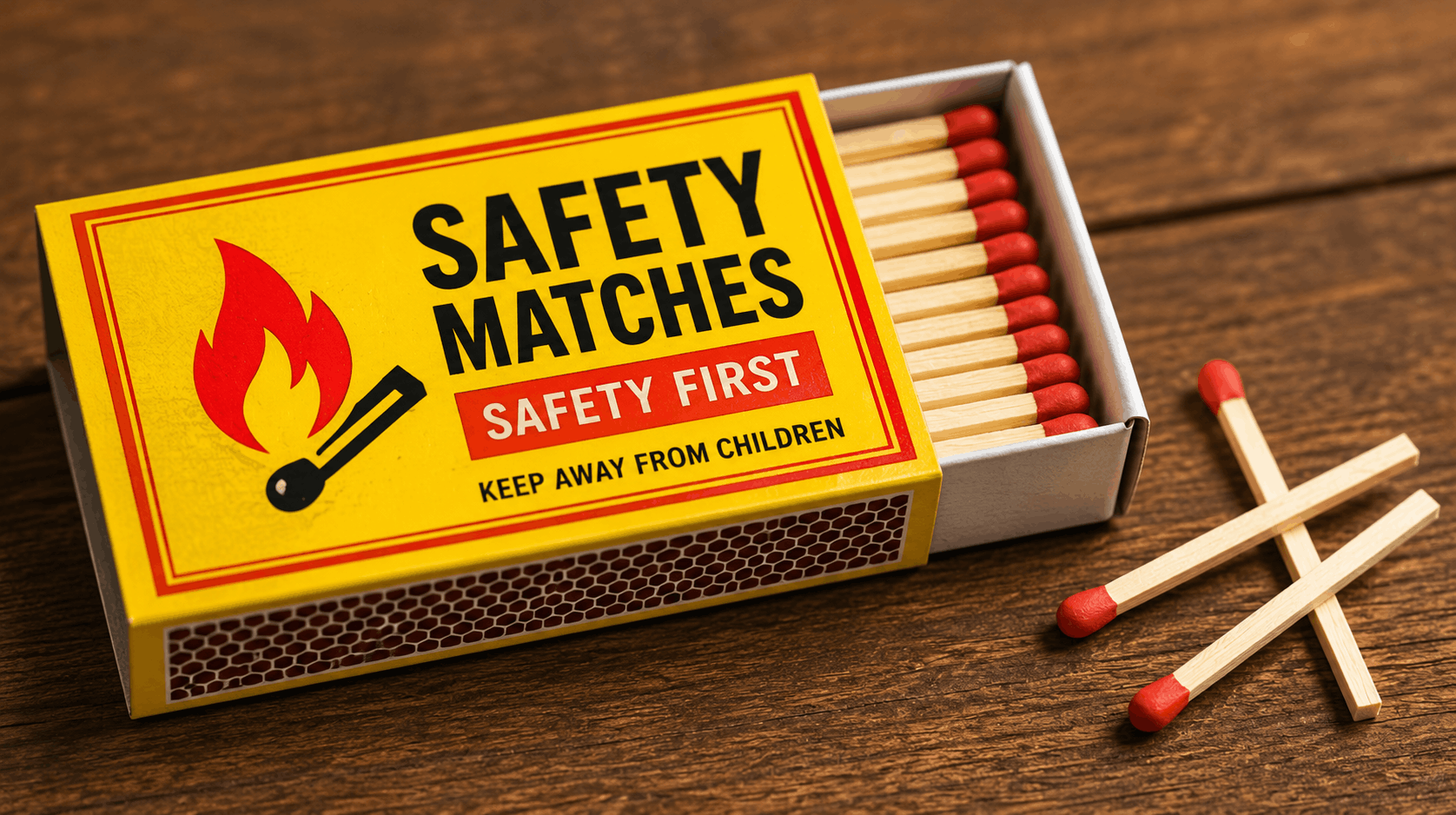
Yellow safety matches box with “Safety First” label and red-tipped matches on wooden table
Blog News Wooden Safety Matches

Comparing the Environmental Impact of Wooden Matches vs. Lighters

Concerning environmental safety is now a challenging task for every human being, as new inventions and the industrial revolution have made various impacts on the ecosystem.

Focussing on those criteria, Manufacturers have started to prepare the products with environmental concerns or the raw materials will pollute less.

Some business firms still use conventional products that last long periods and do not significantly impact the environment. Here safety matches are one of the environmentally friendly products, and this blog will say how impactful it is when comparing wooden matches and lighters.
Impact of Wooden Matches over Lighters

The usage of safety Matches and lighters creates the impacts from their respective sides, yet the amount of effects created to the environment and human beings is the primary criterion.
The wooden matches are made up of either wood or paper, which causes a slighter impact on the environment. Though wooden matches do p