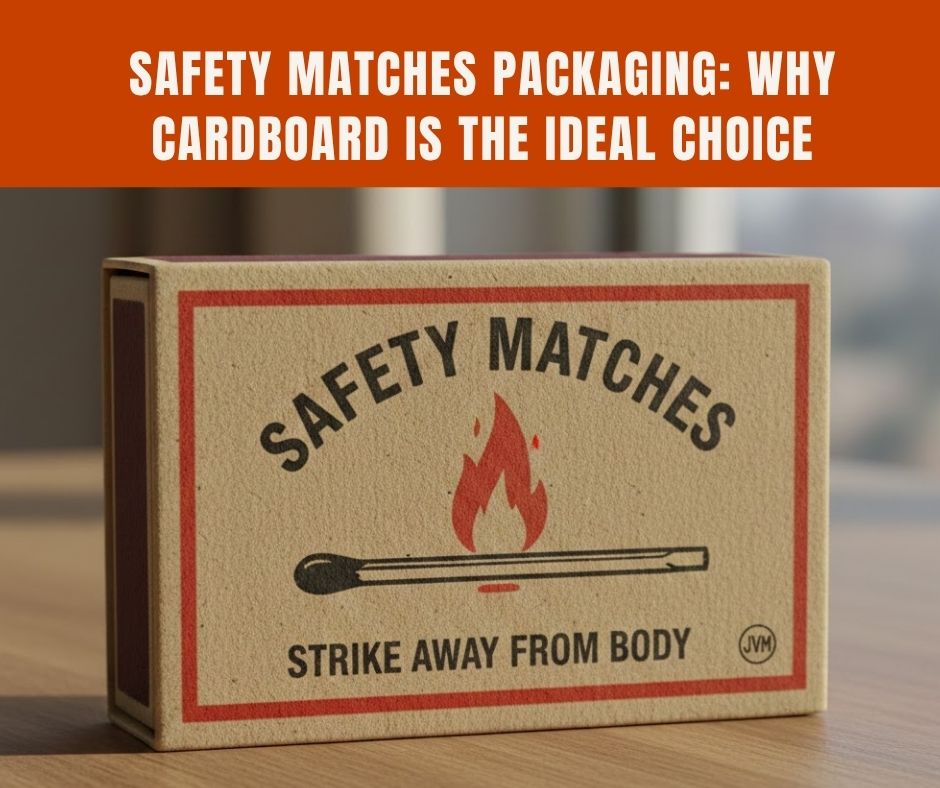
Category: Safety Matches

Blog Safety Matches Safety Matches Manufacturer

Top 12 Countries Import Safety Matches (2025 Update)

Safety matches may be small, but their global demand is massive. From lighting candles in homes to sparking flames in industrial and hospitality settings, these matchboxes are essential across many regions. In this blog, we explore the Top 12 leading countries that import safety matches in bulk. Whether you’re a wholesale matchbox supplier or an exporter, this list offers valuable insights into where global demand is strongest and why these countries are at the forefront of the safety match import market.
Global Safety Matches Import Market 
The global safety match industry has witnessed remarkable growth, with the market valued at approximately $4.6 billion in 2023 and projected to reach $6.7 billion by 2033, reflecting a compound annual growth rate (CAGR) of 4.0%. 

According to the latest Volza trade statistics, Nigeria leads as the world’s largest safety match importer, accounting for 17% of global imports with 472 shipments, while the United States dominates in terms of shipment volume with 7,264 shipments, followed by Nigeria with 3,179 shipments and France with 2,590 shipments.
Top 12 Countries Import Matchboxes

Rank
Country
Key Reasons for Import
Primary Exporting Country
Major Part of Entry

1
Nigeria
Large population, rural cooking
India
Lagos

2
United States
Emergency kits, hospitality branding
India, China
Los Angeles

3
South Africa
Low-income households, camping, traditional fire-starting
India
Durban

4
United Kingdom
Hospitality, survival/outdoor segment
India, Sweden
London

5
Germany
Luxury branding items
India
Hamburg

6
France
Design-forward, promotional giveaways, limited domestic output
India
Marseille

7
Canada
Outdoor camping, cold weather utility
India
Toronto

8
United Arab Emirates
Ethnic demand, re-export hub, hospitality sector
India
Dubai

9
Yemen
Essential fire source, limited production
India
Aden

10
Zambia
Rural usage, cost-effective fire source
India
Lusaka

11
Peru
Household cooking, rural regions, limited lighter use
India, China
Callao

12
Togo
Low-cost fire solution, informal economy
India
Lomé

1. Nigeria: World’s Top Importer of Safety Matches
Nigeria stands as the continental leader in safety match imports, with estimated imports exceeding 1.2 billion matchboxes in 2025. This massive demand stems from Nigeria’s population of over 223 million and a vast informal economy where reliable fire-starting tools are essential for households and small businesses. 
Who buys safety matches in Nigeria?

Distributors and wholesalers supplying local stores and open markets

Retail chains and supermarkets looking for reliable branded stock

Religious institutions for ceremonial use

Hotels, restaurants, and street food vendors needing consistent lighting tools

Which brands of safety matches are popular in Nigeria?
Nigerian buyers often look for trusted export brands from India, such as those offering cardboard matches, wax matches, and wooden matches with customizable box sizes (20s, 40s, 50s). High-friction, long-burning sticks are particularly in demand.

Why is demand for safety matches growing in Nigeria?

Frequent power outages increase dependency on candles and kerosene stoves
Rural cooking habits still prefer fire-based ignition
Low-cost and essential household use make it a daily commodity
Rise in micro-businesses such as roadside tea stalls, grilled meat vendors, etc.

📊 SAFETY MATCHES MARKET SCORECARD

Import Volume: 1.2+ BILLION matchboxes annually
Profit Rating: ⭐⭐⭐⭐⭐ (EXCELLENT)
Payment Terms: L/C, 30-60 days
Entry Difficulty: Easy

MOST COMMON SAFETY MATCH SPECIFICATION

Popular Size: 40-50 sticks per matchbox
Carton Configuration: 10 x 10 x 10 = 1,000 pieces per carton
Wholesale Price: $12-18 per carton (1,000 pieces)
Container Capacity: 1,900 cartons per 20ft container, 4,200 cartons per 40ft HQ container

Why Nigeria Prefers Indian Safety Match Exporters
Nigeria’s unmatched demand for safety matches is driven by daily usage across millions of households and small businesses. 

India is the #1 exporter to Nigeria, holding over 65–70% market share in safety match imports.
Major manufacturing hubs: Kovilpatti and Sivakasi, Tamil Nadu
Flexible MOQs and 20ft/40ft HQ container loads suited to varying needs
Known for cost-effective production, custom branding, and consistent supply volumes

2. United States: Leading Matchbox Importer by Volume
The United States maintains its position as the world’s largest safety match importer by shipment volume, with 7,264 shipments recorded in recent trade data. 

Metric
Details

Rank in Imports

#2 globally (by shipment volume)

Estimated Imports

7,000+ recorded shipments annually

Major Entry Ports

Los Angeles, New York, Houston

Top Exporting Countries

India, China

End Users

Retailers, supermarkets, survival stores

Compliance Required

CPSIA, ASTM D6196, labeling & fire safety

Who Uses Safety Matches in United States?
Safety matches in the United States are used across various sectors:

Retail Chains (for household use)
Hotels & Restaurants (custom-branded matchbooks)
Emergency & Outdoor Kits (weatherproof safety matches)
Event Planners (as promotional items or collectibles)
Distributors & E-commerce Sellers (buying in bulk for resale)

Are Safety Matches Legal in the U.S.?
Yes. But the matches must meet:

CPSC Safety Standards (Child-resistant packaging if needed)
Flammability & Labeling Regulations
State Fire Codes (especially for commercial/resale purposes)

If you are importing safety matches into the United States, ensure your supplier provides:

MSDS (Material Safety Data Sheet)
Proper HS Code classification
Packaging and labeling per U.S. customs

In the United states, safety matches must comply with federal safety regulations and are commonly labeled as “strike-on-box” matches.
3. South Africa: Wholesale Matchbox Buyers
South Africa serves as a crucial regional distribution center for safety matches across Southern Africa. The country’s well-developed infrastructure and strategic location make it an ideal hub for receiving bulk imports of safety matches and redistributing them throughout the region.
Important Market Facts

Estimated Imports (2025): Nearly 700 million matchboxes
Main Import Sources: India, China, Indonesia
Distribution Channels: Container traders, rural wholesalers, spaza shops, hardware stores

Even as gas and electric alternatives become more popular in cities like Johannesburg and Cape Town, lower-income neighborhoods and townships still rely heavily on safety matches for cooking, lighting, and resale. Matchboxes are also vital for resale microbusinesses operating in informal markets.

📊Stats to Know

Over 50% of imported matchboxes are distributed through wholesale channels serving informal markets.

Match imports have grown 1.5x since 2020, tied to domestic fuel price volatility and rising rural consumption.
Indian brands dominate because of customizable branding, moisture-resistant coatings, and container-load availability.

4. United Kingdom: Bulk Buyer of Safety Matches
The United Kingdom maintains steady safety match imports, serving both domestic consumption and European distribution networks. British consumers demonstrate preference for high-quality, long-burning safety matches, particularly for luxury applications like candle lighting and fireplace use. 

Popular Safety Matches Specification

Premium Quality: 30-40 long-burning sticks per box
Luxury Pricing: $35-55 per carton for premium matches
Eco-Friendly Options: Sustainable wood and cardboard packaging
Regulatory Compliance: CE marking and British safety standards

Safety Matches in United Kingdom
The United Kingdom has consistently been a leading importer and bulk buyer of safety matches due to several industry needs:

Sustainable packaging trends: UK consumers increasingly prefer wooden safety matches with recyclable or FSC-certified boxes.

Hospitality sector demand: Hotels, pubs, and restaurants often customize matchboxes for branding and guest use.

Home fragrance & luxury brands: Many candle and incense makers use long-stem or extra-long safety matches for aesthetic and safety value.

Regulatory compliance: Safety matches comply with UK fire safety and import norms, unlike other ignition options.

5. Germany: Match box Importers from India
Germany may not top the list in volume, but it leads in precision-driven demand. The country imports 180–200 million matchboxes annually, with the majority sourced from India, Poland, and Sweden. Key ports like Hamburg, Bremen, and Frankfurt handle most of the inflows.
Top Sourcing Countries:

India – Known for low-cost high-volume options

Poland – Preferred for proximity and EU standards

Sweden – Supplies eco-certified wooden matches

Why Safety Matches Matter in German Industry
Unlike consumer-heavy markets, Germany’s match imports primarily support industrial and technical uses:

Welding & metal fabrication (for pilot ignition)

Scientific laboratories (controlled ignition)

Survival and field kits (military-grade waterproof matches)
Testing environments (flame retardant assessments)

6. France – Premium Market for Safety Match Exporters

France represents a sophisticated market with 2,590 shipments recorded in recent trade data. French consumers demonstrate strong preference for premium-quality matches, particularly for culinary applications and luxury home use. The market shows interesting segmentation between everyday utility matches and specialized products for specific uses.
The below tabular breakdown of France’s top 5 safety match supplier countries, showing each country’s market share in France’s imports and the type of match products they typically export to the French market.

Rank
Country
% Share of France’s Imports
Product Type

1
India
34%
Luxury & general utility matches

2
Sweden
27%
Eco-labeled matches, FSC certified

3
Germany
14%
Candle-lighting, designer matchsticks

4
Indonesia
11%
Moisture-resistant kitchen matches

5
Vietnam
6%
Long-stem matches for home decor

7. Safety Matches in Canada 
Canada’s safety match imports serve both domestic consumption and cross-border trade dynamics with the United States. The country’s vast rural areas and outdoor recreation culture drive consistent demand for reliable fire-starting solutions. Canadian winters particularly boost demand for emergency preparedness supplies, including safety matches.

Safety Matches Import Market Analysis

Recent data shows 38,000 Import shipments, involving 5,261 Buyers and 1,566 Suppliers, with direct contact information of Decision Makers. Canada imports significant quantities to meet domestic demand and cross-border distribution

Key Import Characteristics

Primary Sources: Asian manufacturers (India)
Packaging: Usually packed in bulk match cartons, often in 400 to 600 carton batches, depending on the buyer’s order size. The packaging is designed to be moisture-resistant and comply with international shipping norms
Seasonal Patterns: Increased imports before winter months and camping season

Strategic Location Benefits

Cross-Border Access: Easy distribution to US markets
Port Infrastructure: Major ports in Vancouver, Montreal, Halifax
Transportation Networks: Efficient rail and trucking connections
Regulatory Alignment: Compatible safety standards with US market

8. United Arab Emirates: Safety Matches Market
The United Arab Emirates serves as the premier distribution hub for safety matches and matchboxes in the Middle East, North Africa, and South Asia (MENASA) region. With Dubai and other emirates acting as strategic gateways, the UAE facilitates both domestic consumption of safety matches and extensive re-export activities of matchboxes across regional markets, leveraging world-class infrastructure and business-friendly trade policies.
UAE Safety Match Trade Position

Regional Gateway: UAE serves as the primary entry point for safety matches into the GCC region
Import-Export Hub: Balances domestic matchbox consumption with significant re-export volumes
Quality Standards: Maintains high safety match quality standards for both local and regional markets

Re-Export Hub for Safety Matches
Regional Distribution Network

GCC Countries: Saudi Arabia, Kuwait, Qatar, Oman, Bahrain
South Asian Markets: Re-export to Pakistan, Bangladesh, Sri Lanka
North African Routes: Distribution to Egypt, Sudan, Libya
East African Markets: Kenya, Tanzania, Uganda, Ethiopia

Trade Statistics and Matchbox Patterns 📈

Safety Match Category
Annual Volume (Est.)
Growth Rate
Key Suppliers

Cardboard Safety Matches
2.5M boxes
12%
India, Pakistan

Kitchen Safety Matches
1.8M boxes
15%
India, China

Wax Safety Matches
800K boxes
18%
India, Sweden

Promotional Matchboxes
1.2M boxes
25%
India, China

Long stick Safety Matches
600K boxes
10%
India, Pakistan

With proper market entry strategies and compliance with local regulations, the UAE safety match market presents significant opportunities for importers, distributors, and manufacturers seeking to establish or expand their presence in the Middle East and broader MENASA region’s safety match industry.
Looking to Import Personalized or Custom Matchboxes? Get a quote from Quenker Matches today!

9. Safety Matches in Yemen
Despite challenging economic conditions, Yemen maintains significant safety match imports due to widespread reliance on traditional cooking methods and limited access to modern alternatives. The market primarily focuses on affordable, basic-quality matches suitable for everyday household use.
Why Yemen Imports Safety Matches
1. Lack of Local Manufacturing

Does not have large-scale matchstick manufacturing facilities.
The industrial infrastructure is minimal due to ongoing conflict and economic instability.
High costs and risks make it unattractive for local investors to set up match production plants.

2. Steady Domestic Demand

Despite challenges, Yemen’s population of over 33 million relies on basic fire-starting tools.

3. Low-Cost Imports Are Preferred

Importing from cost-efficient countries like India, Indonesia, and Sri Lanka helps meet demand affordably.
These countries offer bulk packaging, custom branding, and low Minimum Order Quantities (MOQs), which Yemeni traders prefer.

10. Zambia: Leading Safety Match Importer in Southern Africa

Zambia’s safety match imports reflect the country’s developing economy and growing urban population. The market combines traditional rural demand with expanding urban applications. Zambia also serves as a distribution point for landlocked Southern African countries.
Key Market Insights:

Estimated Imports (2025): ~320 million matchboxes
Primary Export Partners: India, Kenya
Use Cases: Cooking, rural household lighting, roadside vending

11. Peru: Latin American Growth Market
Peru’s safety match imports have grown steadily, driven by economic development and urbanization. The country’s diverse geography creates varied demand patterns, from coastal urban areas to highland rural communities. Peru’s growing middle class influences demand for higher-quality match products.

The market shows increasing sophistication, with consumers seeking matches that perform well in Peru’s varied climatic conditions, from humid coastal areas to dry highland regions.
12. Togo: Safety Matches Market
Togo has positioned itself as a key importer and re-distributor of safety matches in West Africa, thanks to its strategic coastal location, active informal economy, and strong trade links with Francophone countries. While domestic production is minimal, imports from India and Sri Lanka play a crucial role in meeting household demand and fueling wholesale supply chains across Burkina Faso, Benin, Niger, and beyond. Togo’s port in Lomé acts as a vital transshipment hub for matchbox distribution in the region.

Key Insights:

Estimated Imports (2025): 200–250 million matchboxes
Primary Sources: India, Sri Lanka
Use Cases: Household cooking, roadside vendors, rural lighting
Distribution: Informal markets, border trade, wholesale depots near Lomé
Emerging Trend: Bulk imports by regional distributors serving Francophone West Africa

Why These Markets Matter for Safety Match Exporters

India is a top producer and exporter
Demand is rising in Middle East & Africa
Private labeling is driving bulk orders
Re-export hubs (like UAE) create regional trade loops

Conclusion
As global demand continues to rise projected to cross $6.7 billion by 2033—now is the time for safety matches manufacturers and suppliers to ignite new trade routes, adapt to market-specific needs, and spark success in the evolving safety match import landscape.

Exporters looking to grow in global markets must monitor where to import safety matches efficiently. With strong demand in Africa, the Middle East, and Europe, these 12 countries offer a roadmap for growth.
Want to export to these top countries? Contact Quenker Matches for custom matchbox solutions, private labels, and bulk-ready shipping support.

FAQ’s
1. Who are the top safety matches importing countries?

Countries like Nigeria, UAE, France, UK, Germany, and Yemen lead global imports due to high domestic demand and limited local production.

2. Which country is the biggest exporter of safety matches?

India dominates as a global exporter due to its low-cost production and consistent supply quality.

3. How do Safety match importers choose their suppliers?

They assess quality, pricing, certifications, delivery capacity, and supplier reputation before signing contracts.

4. Who is the leading safety match exporter globally?

Quenker Matches is a trusted leader in safety match exports, known for quality, reliability, and global reach.

Posted by quenker-editor
Blog Matchbox Safety Matches Safety Matches Manufacturer

Why Kovilpatti is Known as the Capital of Match Box Manufacturing

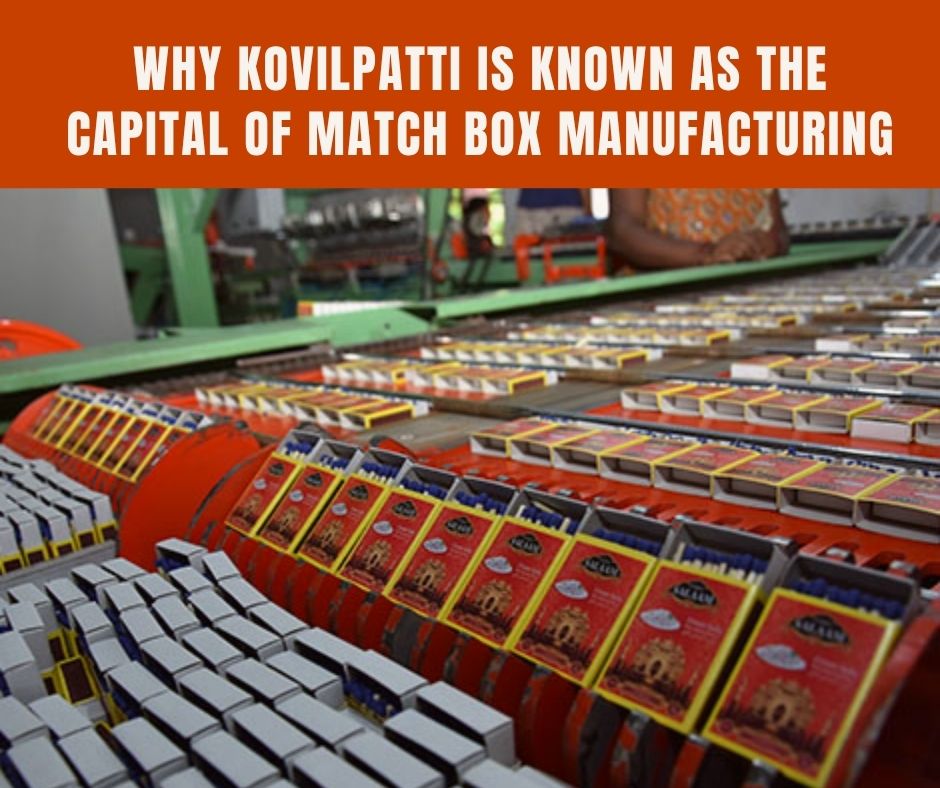
Kovilpatti, one of the most humble industrial towns in Tamil Nadu, holds an unique legacy that continues to level up the major part of India’s safety match production. Often referred to as the Capital of Match box Manufacturing in India, this region has grown from humble beginnings into a globally recognized hub for quality matchsticks.

In this blog, we explore why Kovilpatti is famous for matchsticks, what sets it apart from other manufacturing regions, and how the matchbox industry contributes significantly to Tamil Nadu’s industrial growth. 
Match Box Manufacturing in Kovilpatti
The story of match box manufacturing in Kovilpatti dates back nearly a century. What began as a cottage industry in the early 20th century has evolved into large-scale manufacturing units. This growth wasn’t coincidental; it was the result of several geographical, social, and industrial advantages.

Kovilpatti’s warm climate is perfect for drying matchsticks quickly. Its location along the national highway as well as rail routes offers easy logistics and export opportunities. Most importantly, the region developed a large number of skilled laborers, many of whom come from families that have been involved in matchbox production for generations, Making the best Safety matchbox manufacturers in Kovilpatti.

What’s Special About Kovilpatti’s Match Box Industry?
When people ask, “Why is Kovilpatti famous for matchsticks?”, the answer lies in both tradition and technique.

Unlike fully mechanized setups in other parts of the world, many manufacturers in Kovilpatti still use semi-automatic processes. This enables higher control over quality, especially in the production of safety matches, which require precise chemical coating, friction balance, and moisture control.

Kovilpatti’s match boxes are known for:

1️⃣ Reliable ignition with minimal breakage

2️⃣ Durable splints made from softwood

3️⃣ Eco-conscious production methods

4️⃣ Competitive pricing for both domestic and export markets
Tamil Nadu’s Matchbox Industry and Kovilpatti’s Role
Tamil Nadu is the powerhouse of India’s matchbox manufacturing sector, and Kovilpatti leads the way. The Kovilpatti industrial profile is incomplete without highlighting its role in the matchstick trade.

The region contributes significantly to:

☑️ National safety match production volume

☑️ Employment in rural and semi-urban sectors

☑️ Matchstick exports to Southeast Asia, Africa, and the Middle East

Today, over 70% of India’s safety match production is believed to come from Tamil Nadu, with leading matchbox manufacturers and exporters in Kovilpatti being home to hundreds of small-scale units and several large-scale exporters, including Quenker Matches.

The Indian matchbox industry overview consistently shows Kovilpatti as a superior name, because of its consistent output, reliable quality, and newer and advanced innovations made by its manufacturers.
What uplifts Kovilpatti match box suppliers?
Beyond numbers, the match box manufacturers in Kovilpatti plays a vital role in the community:

Employment for over 50,000 workers, many of them women

Upliftment of rural families through micro-enterprises

Legacy skills passed through generations

This isn’t just an industrial zone, but it is a living place. Workers understand the difficulties of coating, splint drying, and packing. Supervisors, on the other hand, have learned by watching their elders. Entrepreneurs reinvest in their communities, keeping the cycle of industry and livelihood alive in the Indian safety match industry.
Who is the Leading Match box Manufacturer?
In the middle of Kovilpatti’s thriving manufacturing landscape, Quenker Matches stands out for its focus on quality, sustainability, and global standards, making the best safety match exporters.

✔️ We use premium-grade splints and non-toxic chemical blends to ensure safety and consistency.

✔️ Our manufacturing process is ISO-compliant, with quality control at every stage—from raw material selection to packaging.

✔️ We cater to domestic wholesalers, institutional buyers, and export partners across several regions.

Our aim is to preserve the traditional craftsmanship of Kovilpatti while adapting to modern expectations and international safety regulations. This perfect balance makes us a trusted partner for anyone seeking dependable matchbox solutions.

Quick Facts About Kovilpatti’s Matchbox Industry

Fact
Details

About
Capital of Matchbox Manufacturing in India

Location
Kovilpatti, Thoothukudi District, Tamil Nadu

Industry Origin
Early 1900s

Main Product
Safety Matches

Major Export Destinations
Africa, Southeast Asia, Middle East

Number of Matchbox Units
Over 400+ small and large units

Employment Generated
Approx. 50,000+ direct and indirect jobs

Key Raw Materials
Softwood splints, phosphorus, potassium chlorate, paraffin wax

Type of Manufacturing
Semi-automatic and manual methods

Leading Brands
Quenker Matches and other legacy manufacturers

What Does the Future Hold of Matchbox Industry?
The demand for Indian safety match industry may have plateaued in urban centers, but global and rural markets continue to rely heavily on them—especially in regions with limited access to electricity or cooking gas.

In response, manufacturers in Kovilpatti are:

Exploring eco-friendly packaging

Improving worker safety and automation

Entering premium product markets with designer matchboxes, scented sticks, and more

With innovation on one side and deep-rooted experience on the other, Kovilpatti is well-positioned to maintain its title as the Capital of Matchbox Manufacturing in India.
Conclusion
Kovilpatti’s journey from a local trade center to a global matchbox manufacturing powerhouse is a story of resilience, skill, and sustainable growth. From traditional hand-coating to modern export practices, the town has stayed relevant without losing its core.

At Quenker Matches, we’re proud to be a part of this legacy and to deliver products that reflect the best of what Kovilpatti has to offer.
FAQs About Matchbox Manufacturing
1. Why is Kovilpatti called the capital of matchbox manufacturing?
Because of its unmatched production volume, skilled workforce, and industrial ecosystem built around safety match manufacturing.

2. What types of matches are made in Kovilpatti?
Primarily safety matches, with some manufacturers producing wax safety matches, book matches, and specialty variants.

3. How big is the matchbox industry in Tamil Nadu?
Tamil Nadu produces over 70% of India’s matchboxes, with Kovilpatti playing a central role in both domestic and export markets.

4. What makes Quenker Matches different?
Quenker Matches combines traditional match-making techniques with modern production standards to deliver high-quality, safe, and durable products.

5. Where can I buy safety matches from Kovilpatti?
You can explore and order directly from trusted manufacturers like Quenker Matches through our catalogues or by contacting our sales team.

Posted by quenker-editor
Blog Matchbox Safety Matches Safety Matches Exporter

What Are Safety Matches? Everything You Need to Know

Introduction
Safety matches continue to play an essential role in everyday life even in an era of gas lighters and electric igniters. Their simplicity, reliability, and affordability make them a preferred choice across households, outdoor settings, and industries. Unlike lighters that can malfunction or run out of fuel, safety matches offer a no-fail ignition tool that works without batteries or maintenance. In short, safety matches remain relevant today because they’re safe, cost-effective, and universally accessible qualities that high-tech alternatives still struggle to fully replace. 

In this blog, we will explore everything about safety match boxes!
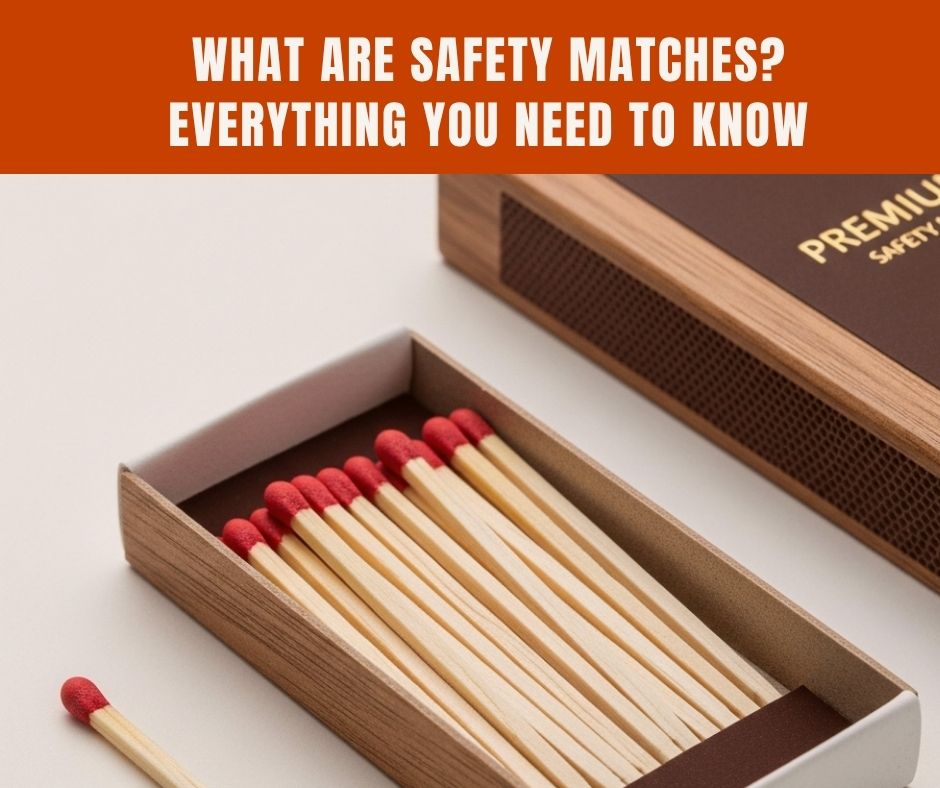
What are Safety Matches?
Safety matches are a type of matchstick designed to ignite only when struck against a specially prepared striking surface, usually found on the matchbox itself. This safety feature prevents accidental ignition during handling, transport, or storage. The match head contains chemicals like potassium chlorate, while the striking surface holds red phosphorus keeping the reactive components separate until intentionally combined. 

Composition of Safety Matches
Match Head Contains:

Potassium chlorate – Acts as the oxidizing agent
antimony sulfide or sulphur – Works as the fuel
Glue or starch – Works as a binder
Color pigments – For color identification
Filler material – To stabilize the mixture

Striking Surface Contains:

Red phosphorus – Key igniting agent
Powdered glass – Provides friction
Binder (e.g., gum arabic or starch) – Holds the striking compound in place

The History of Safety Matches
The first real safety match was created in 1844 by a Swedish scientist named Gustaf Erik Pasch. He came up with the idea to keep the reactive chemicals separate, putting potassium chlorate in the match head and red phosphorus on the surface where you strike the match. This design greatly reduced the risk of accidental ignition.

Later, Swedish industrialist Johan Edvard Lundström refined Pasch’s invention in the 1850s, making it commercially viable. His version became the foundation of modern safety matches and helped establish Sweden as a global leader in match production.

Since then, the safety match has been revamped with technological advances in materials, manufacturing, and packaging. But the principle behind safe ignition through chemical separation has remained constant. Today, safety matches are produced around the world, most notably in countries like India, where Kovilpatti is one such town that has gained notoriety for bulk match exports.
How Do Safety Matches Differ from Strike Anywhere Matches?
The main difference between safety matches and strike-anywhere matches lies in how and where they can be ignited. 

Safety matches can only be ignited by striking them against a specially prepared surface, typically located on the side of the matchbox, which contains red phosphorus. On the other hand, strike-anywhere matches have all the necessary chemicals in the match head itself, allowing them to light on any rough surface.
Quick Comparison: Safety Matches Vs Regular Matches

Criteria
Safety Matches
Regular Matches (Strike-Anywhere)

How it lights
Only on matchbox surface
Can light on any rough surface

Safety level
Safer – less chance of accidental fire
Less safe – can light by mistake

Where chemicals are
Split between match head and box
All chemicals in the match head

Best used for
Homes, hotels, exports
Camping, emergency use

Cost
Cheaper 
Usually costlier

Shipping safety
Very safe for packing and transport
Needs more care when packing

Which Matches Should You Choose?
If you want something safe, affordable, and easy to use in bulk, safety matches are the best choice. They’re perfect for homes, restaurants, exports, and daily use because they only light on the matchbox, which helps prevent accidents.

If you need matches for outdoor use or emergencies, strike-anywhere matches can help. They light on any rough surface but are riskier and cost more.

For most people and businesses, safety matches are the safer and more cost-effective option.
How Do You Make A Safety Match?
Making a safety match involves a carefully controlled process that combines chemical preparation, precision machinery, and strict quality checks. Here’s a simple step of how it’s done:
Step-by-step Process of making Match Boxes
1. Preparing the Matchsticks

Wooden sticks (usually from softwood) or cardboard strips are cut to size and dried.
The sticks are polished and sometimes soaked in ammonium phosphate to prevent afterglow.

2. Dipping in Paraffin Wax
The sticks are dipped in wax to help them burn smoothly and steadily after ignition.

3. Forming the Match Head

The tip of each stick is dipped into a paste that contains chemicals like potassium chlorate (oxidizer), sulfur or antimony sulfide (fuel), glue, and coloring agents.
This forms the match head, which is then dried.

4. Making the Striking Surface

The sides of the matchbox are coated with a blend of red phosphorus, powdered glass, and a binding agent.
This surface creates the friction needed to ignite the match when struck.

5. Assembling the Matchbox

Matchsticks are arranged in bundles and placed inside printed matchboxes.
Final inspection is done to ensure the matches light properly and safely.

6. Packaging and Shipping
Boxes are sealed, packed in cartons, and prepared for local or international shipping.
Read More: The Lifecycle of the Safety Matchsticks
Types of MatchBoxes Available Today
Today’s matchbox industry offers a wide variety of options to meet the needs of households, businesses, and export markets. These matchboxes differ in size, material, packaging style, and intended use. Here are the most common types available:
Cardboard Safety Matches
Cardboard safety matches are the most common type used in homes and hotels. They are lightweight, low-cost, and ideal for bulk production. These matches are perfect for safe, everyday ignition.

Key Features:

Economical and easy to store
Available in pocket-size and standard box formats
Widely used for domestic and export markets

Wax Safety Matches
Wax safety matches have wax-coated sticks, making them moisture-resistant and longer-burning. Ideal for damp climates and outdoor use. They’re popular in coastal and tropical regions.
Key Features:

Water-resistant and slow-burning
Great for outdoor, kitchen, or emergency use
Higher durability than regular wooden matches

Household Safety Matches
These matches are designed for daily use in homes for lighting stoves, candles, or incense. Easy to strike and reliable in function. They come in various box sizes and stick lengths.
Everyday Essentials:

Designed for regular domestic use
Available in mini, standard, or jumbo sizes
Reliable strike rate with safety coating

Barbeque Safety Matches
Barbecue matches feature long sticks and a bigger flame, perfect for lighting grills, ovens, or fireplaces. They provide extra reach and safety for cooking or heating.
Perfect For:

Outdoor cooking, barbecues, or fireplaces
Safe distance between flame and fingers
Longer matchsticks offer better control

Veneer Safety Matches
These matches, made from thin wood veneer, are strong and consistent. They burn evenly and are commonly chosen for decorative or high-end packaging.
What Makes Them Special:

Sleek, uniform sticks for a refined look
Used in high-end packaging and gifting
Burn evenly with smooth ignition

Wooden Safety Matches
These are classic matches made from solid softwood sticks. Durable and reliable, they are used both at home and in commercial settings.
Key Features:

Solid build and steady flame
Suitable for both indoor and outdoor lighting
Long shelf life and durable in bulk

Custom-Branded Matchboxes
Tailor-made for businesses, these matchboxes carry logos, branding, or custom designs. Ideal for restaurants, hotels, events, and promotional giveaways.

Features:

Fully customizable in size, color, and design
Excellent for brand promotion or corporate gifting
Available in multiple match types (cardboard, wooden, waxed)

Advantages of Safety Matches
Safety matches offer several practical benefits that make them the preferred choice for homes, businesses, and international exports. 

One of the biggest advantages is controlled ignition, they only light when struck on the matchbox, reducing the risk of accidental fires during handling, storage, or shipping.  Their cost-effectiveness makes them ideal for mass production and bulk use. They are also versatile and widely available, with various types like cardboard, wax-coated, and wooden matches suited to different environments. 

In addition, safety matches are lightweight, easy to store, and eco-friendly, often made from recyclable materials. 
Know the Benefits of Safety Matches Over Lighters
How to Use and Store Safety Matches Safely
Using Safety Matches:

Always strike the match away from your body and flammable items.

Use the designated striking surface on the matchbox only.

Hold the match at a slight angle to guide the flame’s direction.
After use, ensure the match is completely extinguished before discarding.

Always keep matches out of reach of children and pets.

Storing Safety Matches:

Store matches in a cool, dry place, away from moisture and humidity.

Store them away from heat sources such as stoves, direct sunlight, or appliances.
Use airtight or sealed containers for long-term storage, especially in bulk.

Don’t place matchboxes near chemical or flammable liquids.

For export or transport, ensure matchboxes are securely packed and labeled properly.

Looking for Premium Safety Matches?
If you are a wholesaler, distributor, or purchasing officer looking for good-quality safety matches, India is the destination. Indian safety matches are safe, durable, cost-effective, and meet international safety standards. Their reliable performance, diverse packaging options, and competitive pricing have made them popular among customers in the Middle East, Africa, Southeast Asia, and Europe.
Why Indian Matches are in Global Demand

Affordable production with skilled labor and cost-effective materials
Wide variety of match types to suit different climates and needs
Consistent quality ensuring reliable ignition and long shelf life
Compliance with international safety and environmental standards

Packaging, MOQ, and Export Flexibility
One major reason international buyers love Indian safety matches is the flexibility offered in:

Packaging Options

Pocket-size, mini, kitchen, and jumbo boxes
Bulk cartons for commercial and retail distribution
Custom-branded matchboxes for private labeling
Eco-friendly and moisture-resistant packaging options

Minimum Order Quantities (MOQ)

Low MOQs for small businesses or new importers
High-volume supply for established distributors
Trial orders available to test product before bulk purchase

Export Support

Hassle-free logistics and documentation for global shipping
Options for customs clearance support and FOB/CIF pricing
Flexible lead times based on destination and order volume

Who is the Leading Indian Safety Matches Exporter?
When it comes to trustworthy safety match exporter and manufacturer from India, Quenker Matches is one of the leading names in the global market. Hailing from Tamil Nadu, the safety match-making hub of India, Quenker Matches combines experience of the past with the latest manufacturing processes to deliver quality products at reasonable prices. 

What sets Quenker apart is its ability to fulfill diverse international demands with flexible packaging, low MOQs, and quick global shipping. Exporting to African, Middle Eastern, and South East Asian countries, Quenker is known for custom-packaged box matchboxes, rigorous quality checks, and export-focused service. If you are looking for eco-friendly home matches or water-resistant wax matches, Quenker Matches offers reliable, scalable solutions that are valued by importers across the globe.
Conclusion
Safety matches remain a trusted, safe, and affordable choice for everyday and industrial use worldwide. For top-quality matches that meet global standards and offer flexible packaging and export options, Quenker Matches is your reliable partner.

Contact Quenker Matches today to get premium safety matches that light up your business with safety and excellence!

Posted by quenker-editor
Safety Matches Exporter
Blog Safety Matches Safety Matches Manufacturer

Why Indian Safety Matches Are Trusted Across Nigeria, South Africa, and Beyond?

Rise of Indian Safety Matches Manufacturers
India is the biggest exporter of safety matches in the world, and countries like Nigeria and South Africa trust Indian matches more than any others. Why? Because Indian manufacturers have a long history of making matches that are safe, work well, and don’t cost too much.
This blog will explain why people in Africa rely on Indian-made matches. We’ll look at how they perform, how they’re packed to stay dry and safe, how affordable they are, and how Indian companies are making matches in ways that are better for the environment. All these reasons make Indian safety matches the top choice wherever people need a reliable spark.

Quality Matchstick Manufacturing: Precision from Start to Finish
India’s match manufacturing industry is built on a foundation of strict quality control and advanced production techniques. Each step in the manufacturing process, from harvesting the raw wood to final packaging, is designed to ensure that every matchstick lights instantly and burns evenly.
Why this matters:

Consistent ignition: Indian safety matches are known for lighting on the first strike, a critical feature regardless of humidity or weather conditions.

Durability: The wooden splints used are sourced and treated to resist breaking during handling and transport.

Variety: Odorless and smokeless variants cater to households and industries that prioritize clean and comfortable burning.

Moisture-resistant packaging: Especially important for tropical climates like Nigeria, Ghana, and Tanzania, Indian manufacturers use specialized packaging to keep matches dry and functional even in high humidity.

Economical Pricing with Uncompromised Quality
One of the major advantages Indian exporters offer is the ability to produce safety matches in massive volumes at competitive prices, without compromising on quality. This balance of cost and quality has been a decisive factor for many importers across Africa and the Middle East.
Key benefits for importers:

Bulk availability: Large-scale manufacturing capabilities mean India can meet demands for thousands or millions of matchsticks with ease.

Stable pricing: Predictable costs help retailers and distributors plan inventory and pricing strategies efficiently.

Flexible packaging: From basic bulk cartons to customized branded boxes and private labels, Indian exporters accommodate diverse buyer preferences.

How Indian Matches Compare Globally
The quality and pricing advantage is evident when we compare Indian safety matches with products from other exporting countries.

Feature
India
Other Exporters

Strike Rate
95–98%
80–85%

Packaging Customization
High
Moderate

Cost per 1000 sticks
Low
Medium to High

Minimum Order Quantity (MOQ)
Flexible
Often Restrictive

Compliance with Safety Norms
Strong
Variable

Key Markets for Indian Safety Matches
Nigeria: An Expanding Safety Matches Market with Unique Challenges
With a population exceeding 200 million, Nigeria represents one of the largest consumer bases for safety matches in Africa. Urbanization continues to grow rapidly, but a significant portion of the population still relies on matches for cooking, lighting, and other daily needs.
South Africa: Africa’s Leading Importer of Quality Matches
South Africa stands out as a premium market where consumers prioritize quality and safety. Indian matches’ consistent ignition and clean burning qualities align well with South African buyers’ expectations, making India a preferred supplier.
Ghana, Benin, Togo, Tanzania: Growing Demand Across West and East Africa
These countries are experiencing steady growth in demand for safety matches, driven by rising populations and expanding urban centers. Indian exporters benefit from their strong distribution networks and product adaptability, serving both rural and metropolitan customers effectively.
UAE: A Crucial Re-export Hub for Safety Matches
The United Arab Emirates plays a strategic role as both a consumer and a re-exporter of safety matches. Indian matches imported into the UAE often find their way to other Middle Eastern and African markets, amplifying India’s global reach.
Nepal and Yemen: Emerging Markets in South Asia and the Middle East
India’s proximity and trade agreements make it a natural supplier for countries like Nepal and Yemen, where safety matches remain essential household items.
Consistent Quality You Can Test and Trust
Quality consistency is vital for importers, as substandard matches can lead to:

Damage to brand reputation

Increased consumer dissatisfaction and complaints

Risk of regulatory penalties due to non-compliance

Indian manufacturers mitigate these risks through multiple layers of quality assurance:

Multi-stage quality control: Each phase, from drying the wooden splints to applying chemical coatings, undergoes rigorous checks.

Ignition testing: Matches are tested to guarantee a uniform strike rate.

Moisture control: Specialized packaging protects the product from damp conditions, which is critical for tropical markets.

Eco-Friendly Practices Aligning with Modern Buyer Values
Today’s consumers and retailers are increasingly eco-conscious, making sustainability an important consideration for match exporters.

Indian manufacturers are responding by adopting:

Renewable wood sourcing: Using timber from managed and sustainable forests.

Non-toxic chemicals: Avoiding harmful substances to ensure user safety.

Biodegradable packaging: Reducing environmental impact.

Green manufacturing: Utilizing solar power and energy-efficient machinery.

These measures not only help exporters meet global environmental standards but also enhance brand appeal in eco-aware markets.
Ready to Start Importing Indian Safety Matches?
If you’re planning to import safety matches, here are some practical tips:

Choose exporters experienced in your target market: They understand local regulations and distribution challenges.

Look for SGS or ISO certifications: These verify manufacturing and quality standards.

Consider private-label options: Custom branding can differentiate your product.

Ensure clear communication and flexible logistics: To keep supply chains smooth and responsive.

Final Thoughts
From flame consistency and climate-proof packaging to pricing that makes sense and certifications that speak volumes, Indian safety matches manufacturers have proven themselves across borders.
In the kitchens of Lagos, the stores of Soweto, and the markets of Nairobi, Indian matches are more than utility—they’re a trusted tool. And as sustainability, quality, and reliability take center stage in global trade, India’s flame shows no sign of flickering out.
Ready to strike a partnership that lights up your market? Quenker Matches are poised to deliver—just like their matches, every time.

Posted by quenker-editor
Safety Matches
Blog Safety Matches Safety Matches Manufacturer

Safety Matches from India: Lighting the Middle East Safely

India has long been a trusted source of safety matches, with kovilpatti emerging as a global hub for matchstick manufacturing. As demand for safe, reliable, and customized matches continues to grow in the Middle East, Indian manufacturers are stepping in to meet this need. This blog explores how the Indian safety matches export industry is lighting up homes and businesses across the Middle East—while maintaining strict international quality and safety standards.

Why the Middle East Needs Safety Matches
Although technological infrastructure has improved in many parts of the Middle East, the use of safety matches remains prevalent. Matches are preferred in many Arab households and businesses for reasons such as:

Cultural preferences for lighting candles or incense for religious or traditional practices
Rural communities in countries like Yemen or Oman where modern tools are still limited
High-volume hospitality sectors, where hotels and restaurants still offer matches as complimentary items

Despite this high demand, local manufacturing is unable to scale consistently due to challenges like:
✔️ Lack of indigenous raw materials like splints and phosphorus
✔️ Higher operational costs and safety liabilities
✔️ Limited government incentives for hazardous goods manufacturing
✔️ Strict compliance requirements that are easier for exporters to meet

How Indian Manufacturers Support Middle Eastern Production
Here’s how Indian safety matches provide unmatched value:

Scalable manufacturing: High-capacity production units with automated lines can fulfill small to bulk orders seamlessly.

Global logistics support: Indian exporters are well-versed in customs documentation, marine insurance, and port handling in the Gulf.

Cost efficiency: India offers one of the lowest per-unit costs without sacrificing quality, helping importers maintain profit margins.

Versatility in offerings: Indian matches come in many sizes, materials, and branding formats suitable for multiple use cases.

Customization capabilities: Exporters like Quenker Matches provide white-labelling and branding options, ideal for businesses.

Types of Safety Matches We Offer
We have perfected the art and science of match production. Our catalog includes options ideal for retail, hospitality, and personal use in Middle Eastern markets.

Match Type 
Key Features 
Common Applications

Cardboard Matches 
Lightweight, cost-effective, eco-friendly paperboard boxes
Daily household use and FMCG retail

Wax-Coated Matches 
Resist humidity, longer burn time, brighter flame
Coastal areas, humid regions, restaurant kitchens

Veneer Wood Matches 
Premium wooden splints with polished finish
Hotels, luxury brands, export gifting

Barbecue Matches 
Extra-long sticks for safe outdoor ignition
Cafes, outdoor kitchens, grill houses

Hotel/Branded Matches 
Custom packaging with logo and colors
Branding for hotels, resorts, events and bars

We also supply specialized matchboxes for perfumeries, religious stores, and promotional events.
Safety Standards and Guidelines for Using Safety Matches
When exporting to Middle Eastern countries, it’s essential that both exporters and users understand and follow safety standards and guidelines for safety matches. At Quenker, we educate our partners and clients with the following usage guidelines:

Store in a cool, dry place away from ignition sources
Ensure ventilation to reduce humidity-related risks
Keep matches out of children’s reach at all times
Use only on a strike-only surface provided on the box
Dispose of burnt matches in non-flammable containers
Avoid storing in vehicles or containers exposed to direct sunlight

Following these instructions ensures both safe usage and better product shelf life under Gulf weather conditions.
Key Compliance and Certifications
Compliance is a cornerstone of successful safety matches export. We strictly follow domestic and international norms to gain client trust and avoid legal issues at customs and ports. Quenker Matches is proud to hold:
🔹 ISO 9001:2015 – For Quality Management System
🔹CE Marking – Allowing access to GCC and European markets
🔹SGS & Intertek Certifications – Verifying product safety and durability
🔹GSO Standards – Required for entry into Gulf Cooperation Council countries
🔹MSDS Documentation – Ensures chemical safety transparency
“All certifications are updated regularly and included in our export documentation to help importers clear goods without delays.”

Custom Matchboxes for Businesses and Brand Promotion
In the hospitality and event industries, a matchbox is more than a tool—it’s a branding opportunity. We help Middle Eastern businesses stand out with:

Customized packaging with logos, taglines, and brand colors
Multi-language printing (Arabic/English) to suit regional preferences
Small MOQ (minimum order quantity) to cater to boutique needs
Luxury finish options like gold foil, embossing, and matte coating

Quality Over Quantity: Our Matches Manufacturing Culture
We believe that every single matchstick should be dependable. That’s why our focus is not on mass production alone, but on maintaining the highest standards at every stage.

Our Quality Approach:
Each stage of production—from raw material sourcing to packaging—is optimized for consistency and reliability. Our team conducts real-time flame tests, humidity checks, and packing verification to ensure error-free products.

Our Assurance Practices Include:

Kiln-dried splints for even moisture content
Precision chemical coating for smooth ignition
Dust-free, automated packaging units to ensure hygiene
Humidity-controlled storage facilities to extend shelf life
Batch-level inspection and testing before shipment

Conclusion:
As the demand for quality matches in the Middle East continues to rise, trust Quenker Matches—India’s leading safety matches export brand—to deliver. Whether you need standard household matches or premium customized options for your business, we offer dependable solutions with fast shipping and full compliance.
👉 Light up your business with Quenker Matches today! Contact us to explore our product range or contact us for bulk orders and customization options.

Posted by quenker-editor
Safety matches export market
Blog Safety Matches Safety Matches Exporter

Global Safety Matches Export Market: Trends & Leading Exporters

The Rising Demand for Safety Matches in the Global Market
Despite the rise of lighters and electronic ignition devices, safety matches continue to hold a significant place in global trade. Their affordability, reliability, and eco-friendly nature make them indispensable in many regions, particularly in developing countries and industries that require controlled ignition sources. With increasing global demand, safety matches export manufacturers are witnessing new opportunities in the export market.
Introduction
The safety matches industry plays a crucial role in various markets, including household, hospitality, camping, and industrial applications. Over the years, manufacturers have adapted to changing regulations, sustainability concerns, and technological advancements to remain competitive in the safety matches export market.

As global trade expands, the demand for quality safety matches has increased, leading to a surge in exports from key manufacturing countries. Nations with a strong production base, cost-effective raw materials, and well-established trade networks dominate the market.

Let’s explore the major trends in safety matches exports and identify the leading exporters shaping the industry.
Current Trends in the Global Safety Matches Export Market
1. Sustainability and Eco-Friendly Production
One of the most significant trends in the safety matches industry is the shift toward eco-friendly and sustainable manufacturing. With growing environmental concerns, manufacturers are increasingly using biodegradable materials, phosphorus-free ignition compounds, and recyclable packaging.
2. Rising Demand from Developing Countries
Developing nations in Africa, Asia, and Latin America are among the largest consumers of safety matches. In rural areas, where access to lighters and electricity is limited, safety matches remain a staple household item. This demand has driven exporters to focus on supplying high-quality, cost-effective matches to these regions.
3. Growth of Private Label and Custom Branding
With increasing globalization, private label brands are becoming more popular. Retail chains and distributors are partnering with safety matches manufacturers to create customized products under their brand names. This trend has opened new business avenues for exporters looking to cater to international retail markets.
4. Technological Advancements in Matchstick Production
Modern safety match manufacturing involves advanced machinery that enhances efficiency, reduces production costs, and improves product quality. Automated packaging, high-speed match dipping machines, and better chemical formulations have contributed to the industry’s ability to meet export demands efficiently.
5. Regulatory Compliance and Quality Standards
Exporting safety matches requires adherence to international safety and quality standards, such as ISO certification and country-specific regulations. Exporters that comply with these standards have a competitive advantage in securing bulk orders from global buyers.
Leading Exporters in the Safety Matches Market
Several countries dominate the safety matches export market, leveraging their production capacity, raw material availability, and strong international trade relations.
1. India: The Global Leader in Safety Matches Exports
India is the largest exporter of safety matches, with a well-established industry in regions like Tamil Nadu and Andhra Pradesh. The country benefits from low-cost labor, abundant raw materials (such as softwood and red phosphorus), and a strong distribution network.

Key reasons why India leads the market:

Affordable production costs
High-quality safety match varieties (wax matches, wooden matches, and cardboard matches)
Strong presence in African and Middle Eastern markets
Government support for exports through trade policies

2. Sweden: Pioneer in Matchstick Manufacturing
Sweden has a long history in the matchstick industry, being home to some of the most renowned safety match manufacturers. The country produces premium-quality safety matches, primarily catering to European and North American markets.
3. Indonesia: A Strong Player in the Asia-Pacific Market
Indonesia is another key player in the safety matches export market, known for producing high-quality wooden and wax matches. With strong trade ties in Southeast Asia and Africa, Indonesian manufacturers focus on sustainable sourcing of raw materials.
4. China: Mass Production and Global Reach
China, known for its large-scale manufacturing capabilities, is a significant exporter of safety matches. The country’s competitive pricing and vast production facilities allow it to cater to both budget and premium segments of the market.
5. Brazil: Emerging Supplier in the Americas
Brazil has been gaining traction in the safety matches export sector, supplying high-quality matches to South American and European countries. The country benefits from abundant timber resources, making matchstick production cost-effective.
Challenges Faced by Safety Matches Exporters
1. Increasing Competition from Lighter Manufacturers
While safety matches continue to be widely used, the growing preference for lighters and electronic ignition devices poses a challenge for manufacturers. To stay competitive, exporters must focus on quality improvements and innovative packaging.
2. Stringent Trade Regulations
Different countries have varying import regulations, including restrictions on match compositions and packaging. Exporters must ensure compliance with safety norms and environmental guidelines to avoid trade barriers.
3. Fluctuating Raw Material Costs
The prices of raw materials, such as wood, phosphorus, and wax, can impact the profitability of safety matches manufacturers. Sustainable sourcing and cost-effective production techniques are crucial to maintaining a competitive edge.
4. Transportation and Supply Chain Disruptions
Shipping flammable materials like safety matches requires special handling, leading to increased logistics costs. Delays in international shipping, customs clearance, or political instability in export destinations can also affect supply chains.
Future Outlook for the Safety Matches Export Market
Despite challenges, the safety matches industry is expected to grow steadily due to:

Continued demand from rural and developing markets
Increased adoption of eco-friendly and biodegradable matches
Expansion of private label and custom branding opportunities
Technological advancements improving efficiency and export compliance

Manufacturers who adapt to market trends, invest in sustainable production, and comply with international trade regulations will remain at the forefront of the global safety matches export market.
Conclusion
As the global demand for safety matches continues to grow, exporters must adapt to evolving market trends, sustainability requirements, and regulatory standards to stay ahead. Leading exporters such as India, Sweden, Indonesia, China, and Brazil dominate the market, supplying high-quality matches to meet diverse consumer needs.

At Quenker Matches, we take pride in being a reliable safety matches manufacturer and exporter, delivering premium-quality matches that meet international safety and environmental standards. With a commitment to sustainable sourcing, innovative manufacturing, and customized branding, we cater to clients worldwide, ensuring quality, affordability, and reliability in every matchstick.

Contact us today to explore our range of safety matches and expand your market reach with a trusted industry leader.

Posted by quenker-editor
Customised matchsticks for branding
Blog Customised Safety Matches Matchbox Safety Matches

Customised Matchsticks for Branding: A Unique Marketing for Businesses

In a world where marketing is all about making a lasting impression, customised matchsticks offer a unique and memorable way to showcase your brand. Whether you’re in the hospitality industry, event planning, or retail, personalized matchboxes create a powerful branding opportunity that leaves a spark in customers’ minds. Affordable, practical, and stylish, these matchsticks turn everyday essentials into mini billboards for your business. 
Introduction
Branding is no longer just about logos and advertisements; it’s about creating an experience that resonates with customers. Personalized matchboxes for business offer a nostalgic and tangible way to connect with audiences while enhancing brand recall. Whether used in hospitality, events, or retail, branded matchboxes for marketing provide a cost-effective, eco-friendly, and stylish promotional solution.

In 2025, businesses are rediscovering the power of physical branding elements. With customisation options expanding, companies can create unique matchboxes that not only serve as practical tools but also as brand ambassadors. This article explores why customised matchsticks are a powerful branding tool, emerging trends, and how businesses can leverage them for effective marketing.
Why Customised Matchsticks Are a Powerful Branding
Aesthetic Appeal and Practicality
Customised matchsticks are small yet impactful. Their aesthetic appeal and practicality make them an excellent promotional tool for a variety of businesses, including hotels, cafes, bars, and luxury brands. Unlike traditional business cards, which are often discarded, a beautifully designed branded matchbox is kept and used, continuously reinforcing the brand’s presence.
Cost-Effective and Eco-Friendly Marketing
Unlike expensive digital marketing campaigns, customised matchsticks for branding offer a low-cost yet high-impact promotional method. Bulk production reduces costs, making them affordable for businesses of all sizes. Additionally, many manufacturers now produce sustainable and biodegradable matchboxes, aligning with the growing consumer demand for eco-conscious products.
Ideal for Various Industries
Personalized matchboxes for business are versatile and cater to multiple industries:

Hotels & Resorts – Guests appreciate a stylish matchbox as part of their room amenities.
Restaurants & Cafés – Custom matchsticks add a touch of branding to the dining experience.
Event Promotions – Perfect for weddings, corporate events, and brand activations.
Retail & Luxury Brands – Enhances packaging for candles, perfumes, and high-end goods.

Trends in Customised Matchsticks for 2025
1. Sustainable and Biodegradable Materials
With increasing environmental concerns, businesses are choosing eco-friendly matchboxes made from recycled paper, biodegradable wood, and non-toxic match heads. This trend aligns with global sustainability initiatives and enhances a brand’s responsible image.
2. Innovative Designs and Packaging
In 2025, businesses are moving beyond standard matchbox designs. Innovations include:

Unique Shapes – Round, hexagonal, or slide-open boxes for a premium feel.
Minimalist Aesthetics – Elegant typography and clean designs enhance appeal.
Luxury Finishes – Gold foil stamping, embossing, and high-quality printing add exclusivity.

3. Digital Printing and Personalization
Advanced printing technology now allows intricate branding on branded matchboxes for marketing, including:

Full-color digital prints for vibrant and detailed artwork.
QR codes directing customers to websites, discounts, or digital campaigns.
Personalized messages for a more intimate customer engagement.

How Businesses Can Leverage Custom Matchsticks for Branding
Creative Logo Placement and Brand Messaging
A well-designed custom matchbox is a mobile advertisement. Businesses can:

Feature their logo prominently for strong brand recall.
Incorporate a catchy tagline that aligns with their brand voice.
Use contrasting colors and unique typography for visual appeal.

Using Matchboxes as Promotional Giveaways
Instead of traditional promotional flyers, brands can hand out customised matchboxes at trade shows, product launches, and networking events. These matchboxes serve as a functional and memorable giveaway, ensuring that potential customers interact with the brand long after the event.
Enhancing Customer Experience with Premium Packaging
Luxury brands are incorporating personalized matchboxes for business in their packaging strategies. For example, candle and perfume brands include custom matchsticks in their product boxes, adding an element of sophistication and exclusivity.
SEO and Digital Marketing Impact
1. Improving Offline and Online Brand Recall
Even in a digital world, tangible branding tools create strong emotional connections. A well-branded matchbox sparks curiosity, encouraging users to share photos on social media, which amplifies brand reach organically.
2. Integration with Social Media and Influencer Marketing
Businesses are leveraging customised matchsticks for branding in influencer collaborations. By sending unique matchboxes to influencers, brands generate authentic social media engagement. Influencers often feature these matchboxes in aesthetic posts, increasing visibility and brand recognition.
3. QR Codes and Augmented Reality (AR) Features
Adding QR codes to branded matchboxes directs customers to websites, promotional videos, or exclusive discounts. Some brands even incorporate Augmented Reality (AR) experiences, where scanning the matchbox unlocks interactive digital content.
Choosing the Right Matchbox Manufacturer for Customization
Key Factors to Consider
When selecting a matchbox manufacturer, businesses should consider:

Quality of materials – Ensure the matchsticks are safe, durable, and eco-friendly.
Customization options – Look for advanced printing, embossing, and luxury finishes.
Minimum order quantities (MOQs) – Choose manufacturers that cater to small and bulk orders.
Pricing and lead times – Balance affordability with production efficiency.

Importance of Partnering with a Reliable Manufacturer
A reputable safety matches manufacturer ensures:

Consistent product quality for effective branding.
Innovative customization options for standout designs.
On-time delivery to meet marketing campaign deadlines.

Conclusion
In 2025, businesses need creative and cost-effective branding strategies that leave a lasting impression. Customised matchsticks for branding offer a unique blend of nostalgia, practicality, and design innovation, making them a powerful marketing tool. With sustainable materials, premium designs, and digital integrations, matchboxes are more than just functional items – they’re brand storytellers.

By leveraging branded matchboxes for marketing, businesses can strengthen brand recall, engage customers in a tangible way, and enhance their marketing efforts both offline and online. Whether you’re a hotel, restaurant, luxury brand, or event planner, personalized matchboxes for business can set your brand apart in 2025 and beyond.

Posted by quenker-editor
Quenker Matches blog featured image for safety matchbox industry insights
Blog Customised Safety Matches Safety Matches

Why Do Global Brands Trust Our Customized Matchstick Export Services?

Our Customized Matchstick Export Services
The matchstick industry has evolved significantly, shifting from being a mere utility product to a branding tool for global businesses. From restaurants and hotels to luxury brands and retail stores, matchsticks have become a subtle yet powerful way to reinforce brand identity. As the demand for high-quality, customized matchsticks rises, businesses worldwide are seeking reliable customised matchstick exporters who can deliver tailor-made solutions with superior quality and timely global shipping.

At Quenker Matches, we specialize in exporting premium, fully customized matchsticks that meet international standards. As customised matchstick exporters in India, we have built a reputation for providing global custom matchstick boxes that align with different branding needs, safety regulations, and sustainability goals. Our commitment to quality, customization, and seamless export services makes us the trusted choice for brands worldwide.

In this article, we explore why businesses rely on our customised matchstick export services, the importance of customization, and how we ensure a hassle-free global supply chain.
The Growing Demand for Customised Matchstick Exporters
In today’s highly competitive market, businesses need more than just functional products; they need marketing tools that leave a lasting impression. Matchsticks, particularly those with custom designs, have become a popular branding asset across various industries. Here’s why global brands prefer customized matchsticks over generic options:

Brand Visibility – A well-designed matchbox with a brand’s logo, tagline, or artwork helps reinforce brand identity and creates a memorable experience for customers.
Eco-Friendly Appeal – As sustainability becomes a top priority, brands seek global custom matchstick boxes in India made from biodegradable and FSC-certified wood.
Personalized Experience – Customized matchsticks allow brands to align their packaging with their overall marketing strategy, making them a valuable promotional product.

As global matchstick exporters, we understand these evolving needs and offer tailor-made solutions that cater to businesses of all sizes, from boutique restaurants to large multinational corporations.
Why Customization Matters in Matchstick Exports
Customization goes beyond adding a brand logo to a matchbox. It involves selecting the right materials, designing attractive packaging, and ensuring the matchsticks align with the brand’s theme. Here’s how customization plays a crucial role:
1. Unique Branding and Packaging
Businesses want their products to stand out. A well-designed global custom matchstick box not only serves its primary function but also works as a miniature billboard. Whether it’s a high-end restaurant looking for elegant matchboxes or a luxury hotel chain wanting gold-embossed designs, we provide diverse customization options, including:

Custom printing and embossing for logos and designs
Personalized color schemes to match brand aesthetics
Various box sizes and match lengths to suit different industries

2. Sustainability-Focused Solutions
Many brands are shifting towards eco-friendly matchsticks to align with their sustainability goals. As global matchstick exporters in India, we ensure that our products are:

Made from FSC-certified wood, ensuring responsible sourcing
Sulfur-free and non-toxic, making them safe for the environment
Recyclable packaging, reducing carbon footprints

3. Private Label Manufacturing for Exclusive Branding
Private labeling allows businesses to sell matchsticks under their own brand name without handling production. Our customised matchstick exporters service includes:

Exclusive design production for private label matchboxes
Bulk manufacturing with brand-specific packaging
Quality consistency to maintain brand reputation

With these customization options, brands can create a unique identity that resonates with their customers.
Our Commitment to Quality & Compliance
Exporting matchsticks requires strict adherence to international safety standards. As customised matchstick exporters in India, we prioritize:
1. Stringent Quality Control
Quality is at the heart of our operations. Every matchstick undergoes rigorous testing for:

Consistent ignition and burn time
Splinter-free wooden sticks for a smooth finish
Moisture-resistant coatings to ensure durability

2. Compliance with Global Safety Standards
Different countries have varying regulations for matchstick imports. As a responsible global matchstick exporter, we ensure compliance with:

European CE Standards for safety
U.S. Consumer Product Safety Commission (CPSC) guidelines
Custom import regulations for specific countries

By maintaining high safety standards, we guarantee that our global custom matchstick boxes meet the legal requirements of different markets.
Seamless Supply Chain & Logistics Support
A crucial aspect of matchstick export is ensuring timely deliveries without disruptions. Our extensive global supply chain ensures that businesses receive their orders on schedule, no matter where they are.
1. Efficient Production & Bulk Handling
As global matchstick exporters in India, we are equipped to handle:

Small, medium, and large-scale orders
Bulk production while maintaining customization integrity
Consistent quality even for high-volume shipments

2. Robust Logistics & International Shipping
Exporting matchsticks requires expert handling to prevent damage during transit. We partner with reliable global shipping providers to offer:

Safe and secure packaging to prevent breakage
Optimized shipping routes to reduce delivery time
Flexible shipping options, including air, sea, and land transport

3. Custom Clearance & Documentation Support
Navigating export regulations can be complex. Our experienced team ensures smooth processing with:

Accurate documentation for hassle-free customs clearance
Compliance with country-specific import duties and tariffs
Real-time tracking and shipment updates

With our seamless logistics support, businesses can focus on their branding while we handle the export process.
Why Global Brands Trust Us?
With years of experience in the industry, we have built long-term relationships with clients across the world. Here’s why businesses choose us as their preferred customised matchstick exporters:
1. Proven Track Record in the Industry
We have successfully supplied global custom matchstick boxes to leading hotels, restaurants, and corporate brands, ensuring top-tier quality and customization.
2. Expertise in Private Label & Bulk Orders
As global matchstick exporters, we have helped businesses create exclusive private-label matchboxes, meeting unique branding requirements with precision.
3. Unmatched Customer Service & Support
From the initial inquiry to the final shipment, our team provides personalized assistance, ensuring smooth communication and on-time delivery.
4. Competitive Pricing with No Compromise on Quality
We offer cost-effective matchstick export solutions while maintaining the highest quality standards, making us a trusted partner for businesses of all sizes.
Conclusion
In an industry where branding and quality are crucial, choosing the right customised matchstick exporters can make a significant difference. With our expertise in global matchstick exports, high-quality materials, and seamless supply chain management, we ensure that businesses receive custom matchstick solutions tailored to their branding needs.

If you’re looking for reliable, high-quality customised matchstick exporters in India, we are here to help. Contact us today to discuss your requirements and experience world-class matchstick export services designed for global brands.

In the competitive world of matchstick exports, quality, customization, and reliability are key to standing out. At Quenker Matches, we take pride in being one of the most trusted customised matchstick exporters in India, delivering premium global custom matchstick boxes that align with international quality standards and branding needs.

Our commitment to excellence, sustainable sourcing, and seamless global logistics makes us the preferred choice for businesses looking for customized matchstick export services. Whether you need private-label matchsticks, bulk orders, or eco-friendly solutions, we ensure a hassle-free export process with unparalleled quality and service.

If you’re looking for a global matchstick exporter that understands your business needs, Quenker Matches is here to deliver. Contact us today and let’s create matchstick solutions that spark success for your brand.


Posted by quenker-editor
best matchbox manufacturer in India
Blog Safety Matches Safety Matches Manufacturer

Who is the best matchbox manufacturer in India?

Introduction
India is one of the leading producers of matchboxes in the world, supplying high-quality safety matches to domestic and international markets. From household use to commercial applications, matchboxes remain an essential product. For businesses and safety match manufacturers in India, finding the right matchbox supplier is crucial for quality, pricing, and reliability.

But who is the best matchbox manufacturer in India? The answer depends on several factors, including product quality, manufacturing capabilities, certifications, and customer satisfaction. In this article, we will explore the Indian matchbox industry, the key qualities of a top manufacturer, and a list of some of the best matchbox manufacturers in India.
India’s Role in the Global Matchbox Market
India is one of the largest producers and exporters of matchboxes. The country supplies a wide range of safety matches, including wooden and cardboard matchboxes, to markets across Asia, Africa, Europe, and other regions.
Types of Matchboxes Manufactured in India
Indian manufacturers produce different types of matchboxes, including:

Wooden Safety Matches – Common in both domestic and international markets.
Cardboard Matchboxes – Cost-effective and widely used for everyday purposes.
Wax Matches – Ideal for damp and humid conditions, as they light easily.
Promotional Matchboxes – Customized matchboxes used for advertising and branding.

Key Manufacturing Hubs
The primary matchbox manufacturing hub in India is Sivakasi, Tamil Nadu. Known as the “Matchbox Capital of India,” Sivakasi houses several well-established manufacturers that produce top-quality safety matches. Other regions, such as Kovilpatti and Virudhunagar, also have a strong presence in the matchbox industry.
What Defines the Best Matchbox Manufacturer?
Before choosing a matchbox manufacturer, it is essential to consider several factors that set the best manufacturers apart from the rest.
1. High-Quality Standards
A top manufacturer follows strict quality control measures to ensure that the matches burn evenly, strike easily, and remain moisture-resistant. Certifications such as ISO 9001 and BIS (Bureau of Indian Standards) compliance are indicators of a reliable manufacturer.
2. Wide Product Range
The best matchbox manufacturers offer a variety of products, including:

Household safety matches
Long-stick matches for industrial use
Moisture-resistant matches
Promotional matchboxes for branding

3. Large-Scale Production Capacity
A manufacturer with a high production capacity ensures consistent supply for bulk orders. Large-scale production also helps maintain competitive pricing and fast delivery times.
4. Eco-Friendly and Sustainable Practices
With increasing environmental concerns, many top manufacturers use sustainable raw materials and non-toxic chemicals in matchbox production. Using recycled materials and eco-friendly packaging is an added advantage.
5. Strong Export Capabilities
The best manufacturers have a strong global presence, supplying safety matches to different countries. International certifications and compliance with export standards make them reliable partners for businesses looking to expand their market.
6. Competitive Pricing
Cost plays a significant role in selecting a matchbox manufacturer. The best companies provide affordable pricing without compromising quality, ensuring better profit margins for distributors and wholesalers.
Top Matchbox Manufacturers in India
Here are some of the leading matchbox manufacturers in India known for their quality, reliability, and large-scale production:
Quenker Matches
Location: Kovilpatti, Tamil Nadu, IndiaSpecialization: Wooden safety matches, cardboard matchboxes, wax matches, kitchen matches, and long stick BBQ matches.Why Choose Them? Established in 1980, Quenker Matches is known for high-quality safety matches with a strong export network across Asia, Europe, and Africa. Their commitment to quality and customer satisfaction makes them a trusted name in the industry.

How to Choose the Right Matchbox Manufacturer for Your Business?
If you are a safety matches manufacturer in India looking for a reliable matchbox supplier, consider the following points:
1. Check Product Quality
Ensure that the matchboxes are durable, moisture-resistant, and easy to strike. Request product samples before placing a bulk order.
2. Assess Production Capacity
A good manufacturer should meet your demand without delays. Ask about their monthly production capacity and lead times.
3. Look for Certifications
Choose a manufacturer with ISO certification, BIS compliance, and export licenses for quality assurance.
4. Compare Pricing and Bulk Discounts
Cost is a key factor when purchasing in bulk. Compare prices from different manufacturers and check for wholesale discounts.
5. Check Customer Reviews and Reputation
A manufacturer with positive customer reviews and a strong industry reputation is more likely to provide consistent quality and service.
Conclusion
India is home to some of the best matchbox exporter and manufacturers, especially in Sivakasi, Tamil Nadu, a hub for quality safety matches. Choosing the right manufacturer depends on quality, production capacity, pricing, and export capabilities.
If you are a safety matches manufacturer in India looking for a reliable supplier, consider the top names in the industry mentioned in this article. Investing in the right matchbox manufacturer ensures consistent quality, competitive pricing, and long-term business success.
Looking for the best matchbox manufacturer in India? Quenker Safety Matches stands out as one of the leading matchbox manufacturers, known for its commitment to quality, reliability, and innovation. With a strong presence in the safety matches industry, the company offers a wide range of matchbox products, including wooden, cardboard, and promotional matchboxes, catering to both domestic and international markets.
If you’re looking for a trusted matchbox manufacturer to enhance your business, Quenker Safety Matches is the perfect choice. Get in touch today and experience unmatched quality and service!
 

Posted by quenker-editor
safety matches
Blog Matchbox Safety Matches Uncategorized

What Goes Into Producing High-Quality Safety Matches?

Safety matches, an indispensable household item, have evolved over time into a reliable, efficient, and safe solution for creating fire. Behind the simplicity of a matchstick lies a complex manufacturing process that requires precision, high-quality materials, and stringent safety measures. This article delves into the fascinating journey of how safety matches are produced, focusing on the materials, techniques, and processes that ensure they meet high standards.
1. Understanding Safety Matches
Safety matches are designed to ignite only when struck against a specific striking surface, making them safe for domestic use. This controlled ignition mechanism is achieved through the interplay of chemical compositions in the match head and the striking surface. The goal is to prevent accidental ignition, a crucial feature distinguishing safety matches from earlier versions like strike-anywhere matches.
2. Key Components of Safety Matches
The production of safety matches begins with selecting and combining high-quality materials that make up its key components: the matchstick, the match head, and the striking surface.
A. Matchstick Material
The matchstick serves as the body of the match. Typically made from softwood like aspen, birch, or poplar, these woods are chosen for their lightweight, uniform grain, and ability to burn evenly. The wood is treated to prevent splintering and to ensure it burns without excessive smoke or odor.
Steps in Preparing the Matchstick:

Log Selection and Treatment: Logs are debarked and chemically treated to prevent fungal growth and insect infestation.
Splint Production: The logs are sliced into thin veneers, which are cut into matchstick-sized splints.
Polishing: The splints are polished to remove rough edges and ensure uniformity.
Soaking: The sticks are soaked in ammonium phosphate, a fire retardant, to slow down the rate of burning.

B. Match Head Composition
The match head is the most crucial component of safety matches. It contains a carefully balanced mixture of chemicals that produce controlled combustion.

Key ingredients include:

Potassium Chlorate: Acts as the oxidizing agent, supplying oxygen for combustion.
Sulfur and Antimony Sulfide: Fuels the combustion process.
Glass Powder or Sand: Adds friction when striking against the surface.
Dyes and Stabilizers: Provide color and improve shelf life.

The chemicals are blended into a paste and applied to the matchstick tip using automated machinery. Once dried, the match head becomes firm and ready for use.
C. Striking Surface Composition
The striking surface is a specialized coating applied to the matchbox. It plays an essential role in igniting the match while preventing spontaneous combustion.

The striking surface typically contains:

Red Phosphorus: A safer and more stable alternative to white phosphorus.
Powdered Glass: Enhances friction.
Binder and Fillers: Hold the components together.

3. The Manufacturing Process
The production of safety matches involves several stages, from raw material preparation to packaging. Each step is meticulously monitored to maintain quality and safety.
A. Wood Preparation
After the wood is debarked and sliced into splints, it undergoes drying and treatment with fire retardants. The polished splints are then arranged on conveyor belts for further processing.
B. Dipping the Match Heads
The prepared splints are fed into a machine that dips one end of the stick into molten wax. This wax serves as a barrier, preventing the match from absorbing moisture. The matchstick is then dipped into the chemical paste that forms the match head.
C. Drying
The coated matchsticks are placed in drying chambers to harden the match heads. Temperature and humidity are carefully controlled to ensure the chemicals cure properly.
D. Quality Inspection
Every batch of matches is subjected to rigorous testing to ensure consistent ignition, controlled burning, and safety. Common tests include:

Ignition Tests: Ensuring matches ignite only on the intended striking surface.
Burning Duration: Measuring how long a match burns.
Moisture Resistance: Testing for usability in humid conditions.

E. Assembly and Packaging
The dried matches are bundled and inserted into matchboxes. The striking surface is applied to the exterior of the box. The final products are packaged and labeled for distribution.
4. Ensuring Safety and Sustainability
A. Safety Measures
Manufacturers take several precautions to ensure the safety of the production process and the end product:

Use of non-toxic chemicals to minimize health risks.
Regular maintenance of machinery to prevent accidents.
Proper storage of raw materials to avoid unintended reactions.

B. Sustainability Practices
The match industry is increasingly adopting eco-friendly practices:

Sustainable Forestry: Sourcing wood from responsibly managed forests to prevent deforestation.
Recycling: Utilizing sawdust and other by-products in energy production or as raw materials for other industries.
Reducing Carbon Footprint: Investing in energy-efficient machinery and processes.

5. The Role of Innovation
Technological advancements are continuously improving the safety match industry. Automated machines ensure precision, speed, and consistency, while research into alternative materials aims to reduce environmental impact further. Innovations in packaging design also enhance user experience and safety.
6. Global Standards and Certification
Manufacturers adhere to international standards to ensure product quality and safety. These standards regulate:

Chemical compositions to prevent hazardous substances.
Durability and reliability of matches in various conditions.
Proper labeling to inform consumers of usage and safety instructions.

Certifications like ISO 2859-1 (Sampling Procedures for Inspection) and ISO 18664 (Safety of Matches) are commonly sought by manufacturers.
Conclusion
Producing high-quality safety matches is a complex process that blends science, precision, and sustainability. From selecting the finest raw materials to implementing cutting-edge manufacturing techniques, every step is aimed at delivering a product that is safe, reliable, and environmentally responsible. As we continue to light our way with these small yet significant tools, it’s worth appreciating the innovation and dedication behind their creation.

Safety matches remain a testament to how thoughtful design and meticulous craftsmanship can turn simple materials into a household essential that has stood the test of time.

At Quenker Matches, we take pride in crafting high-quality safety matches that combine precision, innovation, and sustainability. Our commitment to excellence ensures that every matchstick is reliable, safe, and environmentally responsible. With a meticulous manufacturing process and a focus on global standards, Quenker Matches continues to light the way for households and industries alike. Choose Quenker Matches for a product that reflects superior quality, safety, and sustainability in every strike.

Posted by quenker-editor