
Introduction
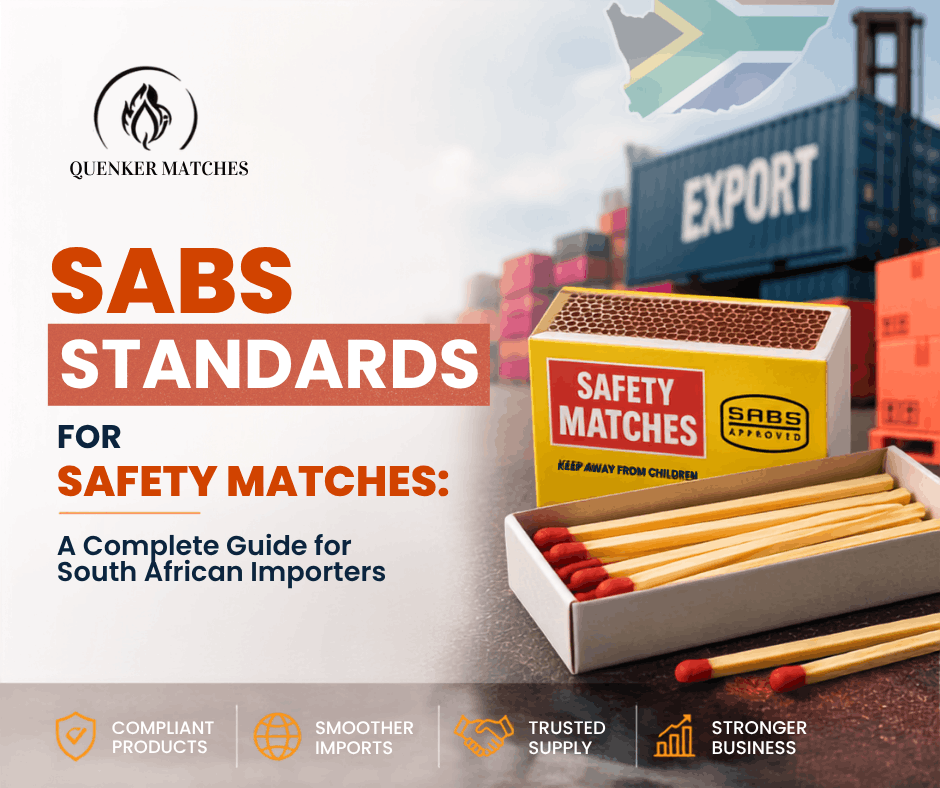
South Africa continues to be a significant market for safety matches, with wholesalers, distributors, retail chains, and procurement managers sourcing products from global manufacturers to meet consumer demand. However, importing safety matches involves more than simply selecting a supplier and placing an order. Understanding SABS Standards for Safety Matches is essential for businesses seeking smooth market entry and long-term success.
This guide explains the key compliance requirements, testing criteria, packaging expectations, labeling regulations, and documentation needed for successful imports. It also highlights how working with an experienced exporter like Quenker Matches can simplify the compliance process.
What Is SABS and Why is it Important for Safety Matches?
The South African Bureau of Standards (SABS) is the national standards authority responsible for developing, promoting, and maintaining standards that support product quality, safety, and consumer protection in South Africa.
For importers, SABS-related compliance helps ensure that products entering the country meet recognized safety and performance requirements. Since safety matches contain combustible materials, they must be manufactured, packaged, transported, and labeled according to established safety guidelines.
Understanding SABS Standards for Safety Matches is important because compliance helps:
- Improve product safety and reliability
- Reduce customs clearance issues
- Minimize shipment rejection risks
- Enhance retailer confidence
- Protect consumers from unsafe products
- Support long-term market credibility
For businesses involved in Safety matches South Africa distribution, compliance is not simply a regulatory requirement, it is a competitive advantage that demonstrates commitment to quality and safety.
How SABS Compliance Reduces Import Risks
Importing non-compliant products can create significant challenges for wholesalers, distributors, and retail suppliers. Even minor compliance oversights may result in costly delays and disruptions.
i) Shipment Rejection Risks
Products that fail to meet required standards may be rejected during inspections or customs clearance procedures. This can lead to financial losses and supply chain disruptions.
ii) Delayed Market Entry
Incomplete documentation or non-compliant packaging can delay shipments, affecting inventory availability and customer commitments.
iii) Retail Listing Challenges
Many retail chains prefer working with suppliers that provide products aligned with recognized quality standards. Compliance helps improve product acceptance in organized retail channels.
iv) Brand Reputation Protection
Distributors and importers depend on consistent product quality. Non-compliant products can damage customer trust and negatively impact brand reputation.
By understanding South African match standards, importers can reduce risks while improving operational efficiency and market confidence.
SABS Standards Applicable to Safety Matches
Although import requirements may vary depending on product specifications and regulatory updates, several core compliance areas are generally applicable to safety matches.
1. Product Safety
Safety matches must ignite only when struck against the designated striking surface. Controlled ignition is a fundamental safety requirement that reduces accidental fires and transportation hazards.
2. Manufacturing Consistency
Uniformity in production is essential. Every matchstick should deliver consistent ignition performance, burn characteristics, and durability.
3. Chemical Composition
The match head composition must be carefully controlled to ensure stability during storage and transportation while maintaining reliable ignition performance.
4. Packaging Integrity
Packaging should protect matches from moisture, damage, and accidental ignition throughout the supply chain.
These factors collectively contribute to compliance with SABS certification expectations and support safe product distribution across South Africa.
Mandatory Testing Criteria
One of the most important aspects of SABS Standards for Safety Matches involves product testing. Testing helps verify that safety matches perform reliably under normal storage and usage conditions.
1. Ignition Performance Testing
Matches should ignite consistently when struck against the designated friction surface. This testing evaluates:
- Ease of ignition
- Strike reliability
- Controlled flame development
- User safety
2. Match Head Composition Testing
The chemical composition of the match head is examined to ensure product stability and safe performance. Testing focuses on:
- Chemical consistency
- Stability during storage
- Controlled ignition behavior
- Manufacturing quality
3. Burning Characteristics Testing
Consistent burning performance is critical for consumer satisfaction and safety. Evaluation typically includes:
- Flame consistency
- Burn duration
- Flame stability
- Safe extinguishing behavior
4. Moisture Resistance Testing
Safety matches may encounter varying environmental conditions during shipping and storage. Testing verifies:
- Product durability
- Shelf-life stability
- Resistance to humidity exposure
- Packaging effectiveness
5. Transportation Safety Assessment
Matches intended for export must withstand transportation and handling without creating safety hazards. Testing may include:
- Packaging durability
- Carton integrity
- Protection against accidental ignition
- Storage stability
These testing procedures help ensure that importers receive compliant safety matches suitable for distribution throughout South Africa.
Packaging Requirements Under South African Standards
Packaging is often overlooked by new importers, yet it plays a critical role in regulatory compliance and product protection.
i) Matchbox Construction
The matchbox should be strong enough to protect contents during storage and transportation. Key requirements include:
- Durable box material
- Secure assembly
- Reliable striking surface
- Consistent product presentation
ii) Moisture Protection
Moisture can significantly affect match performance. Export-quality packaging should provide:
- Humidity resistance
- Product stability
- Extended shelf life
- Better consumer experience
iii) Export Carton Standards
Outer cartons must be designed to withstand international shipping conditions. Recommended features include:
- Strong corrugated cartons
- Proper stacking strength
- Protective packaging materials
- Clear shipping markings
Reliable packaging contributes significantly to compliance with South African match standards and helps reduce damage during transit.
Labelling Requirements for Imported Safety Matches
Accurate labeling is another critical component of safety match import regulations. Proper labeling helps consumers use products safely while enabling authorities to identify product information quickly.
1. Product Identification
Labels should clearly display:
- Product name
- Brand name
- Product quantity
- Match count
2. Manufacturer Information
Importers should ensure packaging includes:
- Manufacturer details
- Country of origin
- Supplier identification
- Contact information where applicable
3. Safety Instructions
Consumer safety information may include:
- Keep away from children
- Store in a cool, dry place
- Use only as intended
- Avoid exposure to moisture
4. Hazard Symbols and Markings
Depending on packaging and transportation requirements, specific handling symbols or hazard markings may be required.
5. Language Concerns
English labeling is generally important for product accessibility within the South African market and facilitates regulatory review processes.
Following proper labeling requirements helps importers avoid issues related to safety match import regulations and improves product acceptance.
Causes of Safety Match Shipment Rejections
Importers frequently encounter avoidable compliance issues that can delay or prevent successful market entry. Some of the most common causes of shipment rejection include:
| Issue | Impact |
| Incomplete Documentation | Missing certificates or records can delay customs clearance. |
| Incorrect Labeling | Non-compliant labels may lead to shipment rejection. |
| Poor Packaging | Damaged or weak cartons can affect product acceptance. |
| Performance Failures | Products that fail safety or ignition tests may be rejected. |
| Supplier Compliance Gaps | Lack of quality or compliance proof can create import risks. |
Understanding SABS Standards for Safety Matches helps businesses proactively address these risks before shipment.
How to Verify a Supplier’s SABS Compliance Documentation
Before placing an order, importers should conduct a thorough review of supplier credentials and compliance records.
Request Product Test Reports
Ask suppliers to provide:
- Quality test reports
- Product specifications
- Performance evaluation documents
- Manufacturing quality records
Review Manufacturing Certifications
Verify whether the supplier operates under recognized quality management systems and export standards.
Examine Packaging Specifications
Ensure packaging complies with transportation and market requirements.
Confirm Export Experience
Experienced exporters often have established processes for preparing documentation and supporting regulatory compliance.
Check Product Consistency
Request samples to evaluate:
- Matchstick quality
- Ignition performance
- Packaging strength
- Product presentation
A reliable supplier of compliant safety matches should be transparent and willing to provide supporting documentation.
Why South African Importers Choose Quenker Matches
For businesses sourcing Safety matches South Africa, choosing an experienced manufacturer can significantly reduce compliance risks.
Quenker Matches, based in Kovilpatti, is a leading manufacturer and exporter of safety matches serving international markets with a strong focus on quality, consistency, and export readiness.
i) Consistent Manufacturing Standards
We follow stringent production processes designed to ensure dependable product quality and performance.
ii) Export-Ready Packaging
Our Products are manufactured with packaging solutions suitable for international shipping and wholesale distribution.
iii) Documentation Support
We assist importers by providing necessary export documentation and product information to facilitate smoother procurement processes.
iv) Product Variety
We offer multiple matchbox configurations designed to meet the requirements of distributors, wholesalers, retail chains, and procurement managers.
v) Global Export Expertise
With extensive export experience, we understand the expectations of international buyers and the importance of delivering compliant safety matches for regulated markets.
For importers seeking a trusted supplier aligned with SABS certification expectations and South African match standards, Quenker provides a dependable sourcing solution.
Importer Compliance Checklist
Use this practical checklist before confirming your next shipment:
- Verify supplier credentials, request product specifications, and review test reports.
- Confirm packaging standards, check labeling compliance, and validate country-of-origin information.
- Review export documentation, inspect product samples, and confirm shipping requirements.
- Maintain compliance records, verify quality consistency, and ensure alignment with safety match import regulations.
Completing this checklist can significantly reduce compliance risks and improve import success rates.
Final Words
As demand for Safety matches South Africa continues to grow, importers must prioritize regulatory compliance to ensure smooth customs clearance, reliable distribution, and long-term business success.
Understanding SABS Standards for Safety Matches helps businesses navigate testing requirements, packaging expectations, labeling obligations, and supplier verification procedures. Compliance not only reduces shipment rejection risks but also strengthens retailer confidence and consumer trust.
For importers, distributors, wholesalers, and procurement managers, partnering with an experienced exporter is one of the most effective ways to simplify compliance and maintain supply chain reliability.
Import smarter, reduce risks, and secure compliant safety matches with Quenker Matches!