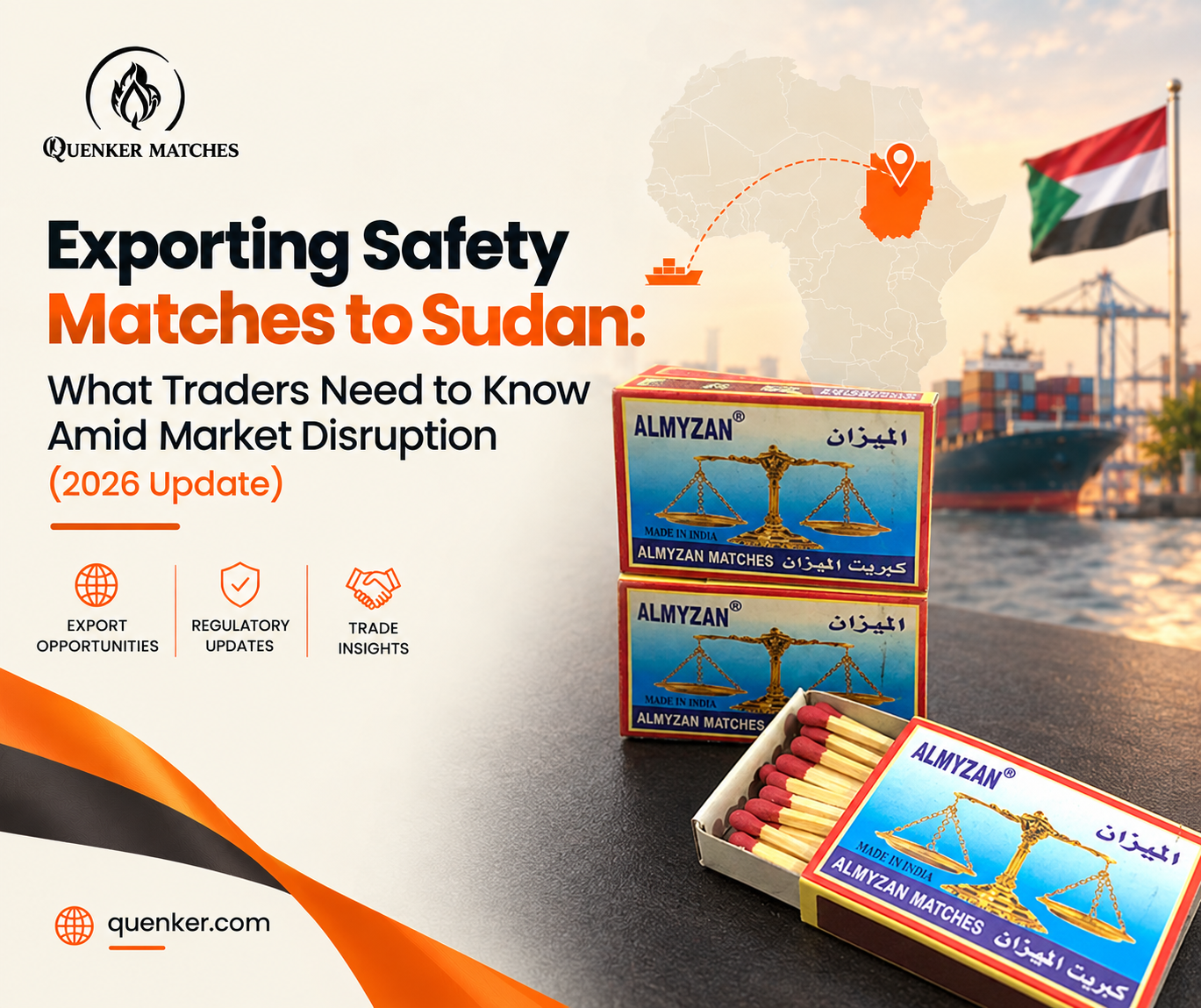
Exporting Safety Matches to Sudan in 2026: What Traders Need to Know Amid Market Disruption
Sudan remains a commercially important market for essential household and FMCG products, but importing goods in 2026 requires more preparation than in previous years. Conflict-related disruption, changing customs procedures, banking constraints, foreign-exchange uncertainty and shipping challenges can affect how quickly a shipment moves from the exporter to the buyer.
For traders planning safety matches export to Sudan, the key issue is not simply finding a competitively priced product. Importers and exporters must also verify documentation, cargo-declaration procedures, payment channels, shipping schedules and current customs requirements before production and loading.
This guide explains what Sudanese importers, wholesalers, distributors, FMCG procurement teams and international traders should know before arranging a safety-match shipment in 2026.
What Has Changed for Safety Match Traders in Sudan in 2026?
One of the most important changes is Sudan’s mandatory Advance Cargo Declaration (ACD) system. Sudan Customs requires an ACD for imports, transshipment and in-transit cargo from January 1, 2026. Shipping guidance also indicates that exporters must obtain the relevant ACD reference before cargo is loaded at the origin port.
This makes shipment preparation more important. Exporters and buyers should coordinate the required cargo information well before the vessel’s loading date instead of treating documentation as a final-stage activity.
At the same time, Sudan’s broader trade environment remains affected by conflict and infrastructure disruption. Therefore, traders should expect greater uncertainty around transit schedules, inland transportation, customs processing and delivery timelines.
What Should Traders Know Before Importing Safety Matches into Sudan?
The first step in import safety matches Sudan planning is to establish exactly what the importer and exporter are responsible for. Before confirming an order, the buyer should verify:
Product description and applicable customs classification
Required import permissions or approvals, where applicable
Current customs and standards requirements
ACD requirements
Documentation required by the shipping line
Port of discharge
Inland delivery arrangements
Payment and foreign-exchange procedures
Cargo insurance requirements
Sudan Customs’ published import procedures refer to documents including invoices, bills of lading, packing lists, certificates of origin where applicable, delivery orders and other supporting documents depending on the shipment.
Because requirements can change, traders should obtain confirmation from Sudanese Customs or the relevant authority for their specific shipment rather than relying solely on an older supplier checklist.
Sudan Import Documentation for Safety Matches
Documentation accuracy is particularly important when arranging safety matches export to Sudan in 2026. A mismatch between commercial documents, cargo information and shipping records can create avoidable delays.
A typical shipment may involve:
Document
Purpose
Commercial Invoice
Identifies product, value, quantity and commercial terms
Packing List
Provides carton, package and shipment details
Certificate of Origin
Establishes the country of origin where required
Bill of Lading
Records the sea transportation details
Freight Invoice
Supports freight-value information where applicable
ACD documentation
Supports Sudan’s advance cargo declaration process
Insurance document
Provides evidence of cargo coverage where required
The ACD system is particularly important in 2026. Sudan’s official ACD platform confirms the declaration is mandatory for shipments destined for Sudan, while major shipping lines have issued operational guidance requiring the ACD number before loading.
For this reason, importers should work with their exporter and freight forwarder early enough to ensure that product, consignee, cargo, value and shipping information is consistent across the documentation.
How Can the 2026 ACD Requirement Affect Your Shipment?
The Advance Cargo Declaration changes the shipment timeline because cargo information needs to be prepared before loading rather than after the shipment has already left the origin.
For import safety matches Sudan shipments, buyers should therefore share accurate information with the exporter, including:
Importer and consignee details
Product description
Quantity and packaging configuration
Cargo value
Origin
Destination
Shipping information
Relevant commercial documents
The practical lesson is simple: do not wait until the container is ready at the port to begin documentation coordination.
An exporter experienced in international shipments can help organize product and commercial information in a format suitable for the buyer’s freight-forwarding and customs process. However, the importer remains responsible for confirming the latest local requirements applicable to its transaction.
Shipping and Logistics Risks When Exporting to Sudan
Shipping to Sudan in 2026 requires more contingency planning than a conventional export market.
Port Sudan remains a major maritime gateway, but traders must consider vessel availability, routing, transshipment, port procedures and inland transportation when planning delivery.
The wider conflict environment can also create unpredictable changes in transportation and supply chains. For safety matches wholesale Sudan orders, importers should therefore:
Confirm the intended port of discharge.
Check the latest vessel schedule before booking.
Confirm whether transshipment is involved.
Establish responsibility for inland transportation.
Allow contingency time for customs and port clearance.
Confirm cargo-insurance coverage.
Coordinate ACD preparation before loading.
For safety matches, packaging is also important because cartons can experience handling, storage and extended transit conditions. Quenker Matches offers customizable matchbox dimensions, stick counts, head colours and packing configurations for international bulk orders. Buyers can confirm the required packaging specifications, carton configuration and shipping requirements before production.
Payment, Currency and Trade Risks in 2026
Payment planning deserves the same attention as shipping.
Sudan’s banking environment continues to operate under changing foreign-exchange rules. The Central Bank of Sudan maintains dedicated 2026 policies and foreign-exchange regulations, highlighting the importance of checking current banking requirements rather than relying on previous payment arrangements.
For a safety matches supplier Sudan transaction, both parties should confirm:
Accepted payment currency
Buyer’s bank and payment route
Availability of foreign currency
Payment terms
Bank processing requirements
Documentary requirements
Any applicable compliance restrictions
Why Product Quality and Packaging Matter During Market Disruption
Market disruption increases the value of consistency. A shipment delayed during transit or customs clearance should still arrive with products that meet the agreed specifications.
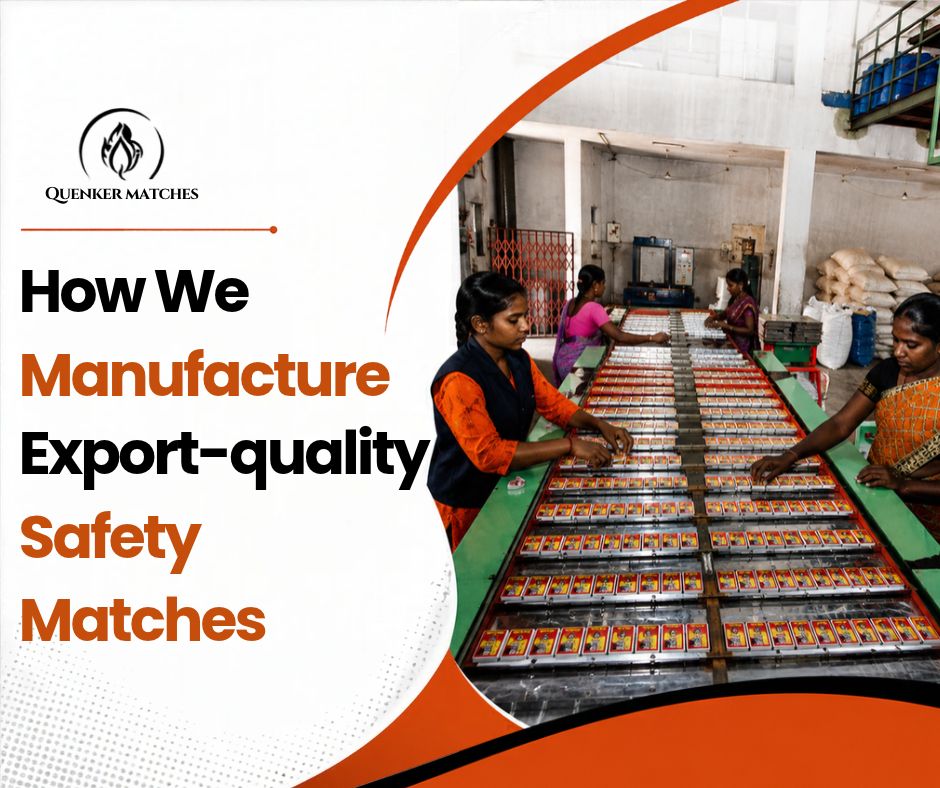
Quenker Matches has positioned its Sudan export offering around bulk supply, customized packaging and export-oriented product specifications. Its published product information includes matchboxes measuring approximately 51 × 35 × 14 mm, with around 40–45 sticks per box, customizable head colours and multiple packing configurations. The company also states that batches undergo in-house quality inspection before shipment.
For wholesalers and distributors, these details matter because consistent box dimensions, stick quantities, packaging and product performance make it easier to plan retail distribution and bulk inventory.
Choosing the Right Safety Matches Exporter for Sudan
Selecting a safety matches exporter Sudan partner should involve more than comparing the lowest quotation. Traders should assess:
Manufacturing experience
Export-market experience
Product consistency
Quality-control procedures
Packaging options
Customization capability
Bulk-order capacity
Documentation coordination
Communication during shipment preparation
Ability to meet agreed specifications
For safety matches wholesale Sudan procurement, these factors can reduce the risk of receiving inconsistent products or encountering avoidable packaging and documentation problems.
Quenker Matches offers customized safety matches and export-oriented packaging for international buyers. Its Sudan-focused product offering is designed for importers and wholesalers requiring bulk quantities and specifications suited to their market.
Before You Ship: 10-Point Sudan Safety Match Export Checklist
Before finalizing import safety matches Sudan arrangements, traders should confirm:
Product specifications: Verify box dimensions, stick count, match type and packaging.
Importer eligibility: Confirm that the Sudanese buyer has the necessary import permissions and registrations.
Customs requirements: Check current product-specific requirements with the relevant authority.
ACD: Confirm that the Advance Cargo Declaration is completed correctly before loading.
Commercial documents: Cross-check invoice, packing list, origin and shipping information.
Port and route: Confirm the latest vessel schedule, port and transshipment arrangements.
Insurance: Review coverage for the selected route and cargo.
Payment: Confirm the banking channel, currency and payment terms before production.
Compliance screening: Check relevant parties, banks and current sanctions or trade restrictions.
Final confirmation: Reconfirm requirements with Sudanese Customs, the importer, bank and freight forwarder immediately before shipment.
This checklist is especially important in 2026 because regulations and operational conditions can change faster than traditional export procedures.
Why Quenker Matches for Sudan Buyers?
For businesses looking for a safety matches supplier Sudan buyers can work with for customized and bulk requirements, Quenker Matches combines manufacturing experience with international export capability.
We offer customizable matchbox specifications, multiple packaging configurations and quality inspection before shipment. For traders arranging safety matches export to Sudan, the objective should be more than securing a low product price.
A successful shipment requires product consistency, accurate documentation, realistic logistics planning, reliable communication and careful payment and compliance checks.
Final Words
For safety matches wholesale Sudan buyers, the safest approach is to confirm current import requirements, prepare documentation early, complete ACD procedures before loading, verify payment channels and coordinate closely with shipping and customs partners.
If you are planning safety matches export to Sudan, Quenker Matches can discuss your required product specifications, bulk quantity, packaging and export requirements and help you prepare your order for international shipment.
Planning a shipment? Contact Quenker Matches to discuss your required matchbox specifications and request a customized quotation for your Sudan order.