Category: Wooden Safety Matches

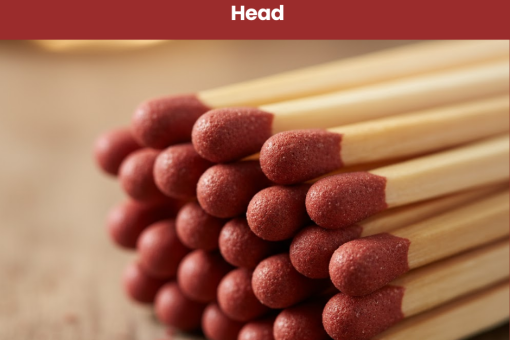
The Science Behind a Wooden Matchstick Head
Blog Wooden Safety Matches

Wooden Matchstick’s Head Made Up Of What? Here’s the Answer

A small spark can change everything. 

Yes. The Wooden Matchsticks are being used every day, to light a stove, a candle, or even a campfire. But most people don’t really think about how they work. We see the little colored tip, but what is inside it, and how does one quick strike turn it into a flame so fast?

This guide explains, in simple terms, what a wooden match head contains, why those materials matter, and how quality manufacturers keep them safe and reliable. Let’s begin.
What is a Safety Match head made of?
Every match head is a carefully balanced mixture designed to ignite fast, burn steadily, and remain safe in storage. Although the head may look tiny, several critical ingredients work together to create that controlled spark you rely on.

Below is the common matchstick chemical composition found in high-quality commercial wooden safety matches:
1. Potassium Chlorate: The Oxygen Provider
Potassium chlorate is the main oxidizer. It supplies oxygen rapidly when the match is struck, which fuels combustion. Without this ingredient, there would be no instant flame.
2. Sulfur or Antimony Sulfide: The Fuel that Burns
A match needs fuel to burn. Sulfur or antimony sulfide, as a primary matchstick chemical composition acts as the primary fuel that reacts with the oxidizer, creating the flame. This ingredient also stabilizes ignition so the match lights smoothly instead of flaring dangerously.
3. Glass Powder: The Friction Agent
Tiny particles of glass help generate heat when rubbed against the striking surface. This friction sparks the ignition. It is safe in controlled amounts and ensures the match lights only when intended.
4. Binders: The Glue That Holds It All Together
Starch or gum binders hold the other ingredients in place so the match head will never crumble. A good binder ensures uniform shape, smooth striking, and long-term durability even during transport.
5. Coloring Agents: For Identification & Quality Control
The red, black, green, or blue match head colors people recognize come from safe pigments. These dyes also help manufacturers and distributors identify different product types easily.
6. Additional Stabilizers
Quality producers add small stabilizers to:

Reduce excess smoke
Maintain a steady flame
Improve shelf life
Control moisture effects

With the right matchstick chemical composition, safety match materials, a single strike produces quick ignition, a clean burn, and reliable performance.
Why These Matchsticks Materials Matter
Now that you know what goes inside the head, let’s look at why these ingredients are used and why material quality is crucial for wooden safety matches.
✅ Reliable Ignition
The oxidizer, friction agent, and fuel are balanced to light quickly even with gentle striking, important for consumers and industries that use matches daily.
✅ Controlled Flame
High-quality blends ensure that matches burn steadily, not too fast or unpredictably. This makes wooden safety matches suitable for home, hotel, kitchen, and outdoor use.
✅ Low Smoke, Low Odor
Cheap matches may crackle, smoke heavily, or give off odor. Premium compositions burn cleaner, making them safe for indoor lighting.
✅ Strength & Transport Safety
Correct binder ratios prevent the head from breaking off and reduce accidental friction ignition. For bulk buyers and exporters, this is a key quality element.
✅ Consistency & Long Shelf Life
Uniform pellet size and controlled formulas ensure every match in a box works the same way essential for hospitality, FMCG, and industrial buyers.

In short,  what seems like a simple wooden safety match is actually a precise formulation. Better materials mean safer, sharper, and more reliable ignition.
Safety & Eco-Friendly Composition: What Modern Buyers Must Know
Many people ask whether match heads are toxic. Here is the reassurance:

Modern matches DO NOT use white phosphorus which were banned decades ago due to health risks.
Globally accepted safety match materials are used in responsible factories.
Eco-friendly dyes and controlled sulfur content ensure safe household use.
Production follows safety norms that protect workers and end users.

Quenker Matches in India ensure match heads with safety match materials are formulated to be:

✔️ Non-toxic for household use

✔️ Stable and friction-safe during transit

✔️ Moisture-protected for tropical climates

✔️ Globally compliant for export standards

So yes, today’s branded wooden safety matches are designed to be safe for responsible use.
Inside the Matchstick Manufacturing Process
Understanding the matchstick manufacturing process helps buyers and industry entrants see why quality varies across manufacturers.

Here’s a simple breakdown:

Wood Selection & Splint Cutting: Good producers use durable wood like Imported Poplar or Indian Malabarica.
Splint Treatment (Carbonized or Non-Carbonized): Carbonizing improves burn stability and reduces afterglow.
Chemical Mixing: Exact ratios of oxidizer, fuel, glass powder, and binder are mixed for consistent performance.
Dipping Process: The wooden splints are dipped to form the match head, precision here ensures quality.
Drying & Hardening: Controlled drying ensures perfect hardness without brittleness.
Boxing & Packaging: Moisture-proof, export-grade packaging protects match heads during transit.

As global demand rises, importers prefer suppliers who maintain scientific control over each stage of the matchstick manufacturing process.
Quenker matches Safe and Reliable Wooden Matchsticks
Based in Kovilpatti, Tamil Nadu, India’s heartland for match production, Quenker Matches is known for export-quality manufacturing, strict quality controls, and customized match head colors.

Why global buyers trust Quenker:

High-grade chemical blends
Smooth ignition, steady burn
Moisture-safe packaging
Custom colors for branding
Bulk export experience & load-optimized packing
Strong splints poplar and malabarica options

For businesses looking for stable supply, brand consistency, and safe, long-burning wooden safety matches, Quenker stands as a preferred partner across global markets.
Final Words
For those seeking safe, export-quality Wooden Matchsticks crafted with precise formulations and strict quality control, Quenker Matches is your trusted partner. With years of expertise in global manufacturing and supply, Quenker Matches guarantees consistent performance, safety, and reliability in every strike, making them a preferred choice for importers and distributors worldwide.
🥇 Partner with Quenker Matches, Leading safety Matches Exporter in India
Frequently Asked Questions
1. What is the head of a wooden matchstick made of?
The match head is made from safety match materials such as potassium chlorate, sulfur or antimony sulfide, glass powder, binders, and safe coloring agents.
2. Are wooden matchsticks safe to use?
Yes. Modern wooden safety matches are made with non-toxic, approved materials and do not contain harmful white phosphorus.
3. Why does a match ignite when struck?
Friction against the strike surface creates heat, triggering a reaction between fuel and oxidizer in the match head, producing a flame.
4. How long do wooden safety matches last?
With good storage and quality manufacturing, wooden matches can stay reliable for years without losing ignition quality.
5. Where are wooden safety matches commonly used?
They are used in homes, hotels, restaurants, temples, outdoor camping, and by retailers and bulk buyers worldwide.

Posted by quenker-editor
Wooden Matchsticks - Quenker Matches
Blog Matchbox Wooden Safety Matches

Why Wooden Matchsticks Are Still in Demand

Insights from a Leading Wooden Matchbox Manufacturer
In a world that increasingly embraces modern technology, some traditional items continue to maintain their relevance. Wooden matchsticks are a prime example of such a product. Despite the availability of lighters and other advanced ignition tools, wooden matchsticks remain a staple in households, industries, and cultures across the globe. This blog explores why Wooden Matchbox Manufacturers are still in high demand, even as the world becomes more technologically advanced.
1. Eco-Friendly Benefits of Wooden Matchsticks
In recent years, there has been a growing focus on sustainability and eco-friendly products. Wooden matchsticks are an excellent choice for environmentally conscious consumers due to the following reasons:

Biodegradable: Unlike plastic or metal lighters, wooden matchsticks naturally decompose without leaving harmful residues.

Non-toxic ignition: They are made from natural wood and do not release harmful chemicals when ignited.

Renewable material: Most wooden matchsticks are made from sustainable softwood, ensuring minimal environmental impact during production.

2. Reliability and Simplicity: Wooden Safety Matches
While modern gadgets may require charging or batteries, wooden safety matches work with just a simple strike. This makes them highly reliable, especially in situations where power or fuel is unavailable:


Always ready to use: Unlike electronic lighters, wooden Safety matches don’t rely on batteries or fuel.

Simplicity: They are easy to use and require no technical expertise.

Works in harsh conditions: Whether it’s windy, cold, or wet, wooden matchsticks are still highly effective when stored properly.

These qualities make wooden safety matches an indispensable item for outdoor enthusiasts, travelers, and anyone who values reliability in their tools.
3. Cultural and Religious Importance of Match Stick Wood
Wooden matchsticks have long been ingrained in many cultures, particularly in rituals and religious ceremonies:

Lighting lamps and incense: In countries like India, match stick wood is used for lighting ceremonial lamps and incense sticks during religious practices.

Symbol of purity: The natural wood is often seen as a purer, more sacred alternative to modern ignition sources.

Festivals and rituals: During significant festivals like Diwali, wooden matchsticks are preferred for their association with tradition.

4. Affordability and Accessibility of Wooden Matches
Another reason why wooden matches remain popular is their affordability and widespread availability:

Cost-effective: Wooden matchsticks are inexpensive to produce, making them accessible to people of all income levels.

Readily available: From local markets to major retailers, these matchsticks are easy to find, even in remote locations.

Minimal upkeep required: Unlike lighters, which require refueling or replacement, wooden matchsticks are single-use and do not require maintenance.

Also Read: Wooden Safety Matches Vs Cardboard Safety Matches: Which one is good?
5. Versatility Across Different Industries
Beyond personal use, long wooden matches play a crucial role in several industries, especially when purchased in bulk through long wooden matches wholesale suppliers:

Food and hospitality industry: Used in kitchens to ignite ovens and stoves, as they are a safe and easy way to start fires.

Camping and outdoor recreation: A preferred tool in survival kits due to their reliability and ease of use.

Tobacco industry: In the tobacco industry, long wooden matches are often paired with cigars and pipes, offering a slow, controlled burn that enhances the smoking experience.

Purchasing long wooden matches wholesale ensures that businesses in these industries can access a cost-effective, high-quality supply of matches to meet their needs.
6. Wooden Matchsticks in Survival and Emergency Kits
Survivalists, campers, and hikers often turn to wooden matchsticks for their reliability and ease of use in emergency situations:

Lightweight: They don’t add much weight to your gear, making them ideal for travel.

Durable packaging: Matchboxes are often designed to be waterproof or weather-resistant, ensuring their longevity.

Versatile tool: In emergency scenarios, wooden matchsticks can be used for starting fires, signaling, or even cooking.

7. Opportunities for Custom Matchboxes and Branding
Wooden matchsticks also present unique opportunities for businesses to engage in branding and customization:

Promotional tools: Custom matchboxes with a brand’s logo are often used in hotels, restaurants, and cafes as part of their brand identity.

Gifts and collectibles: Wooden matchsticks can be packaged as part of souvenir sets, especially in tourist destinations.

Corporate gifts: Businesses use custom-branded matchboxes as eco-friendly promotional items.

FAQ 
1. What are wooden safety matches?
Wooden safety matches are small sticks made of wood with a match head that ignites when struck against a special surface.
2. What wood is used for safety matches?
Usually, soft woods like aspen or poplar are used because they are easy to cut and burn evenly.
3. How long do wooden matches burn?
On average, wooden matches burn for about 10 to 15 seconds.
4. Can I buy wooden matches in bulk?
Yes, suppliers offer wooden matches in bulk for wholesale or commercial use in different sizes.
5. Do wooden matches expire or go bad over time?
They don’t expire quickly but can lose effectiveness if exposed to moisture or humidity.
Conclusion: Buy Now at the Best Safety Matches Price
In conclusion, wooden matchsticks continue to be in high demand due to their eco-friendly benefits, simplicity, cultural importance, and affordability, especially when considering the safety matches price. At Quenker Matches, we are committed to providing high-quality wooden matchsticks that meet the highest standards of safety, reliability, and sustainability.

Get in touch with us today to experience the reliability and affordability of premium wooden matchsticks!

Posted by quenker-editor
safety matches
Blog Cardboard Safety Matches Wooden Safety Matches

Cardboard Matches vs. Wooden Matches: Which Is the Better Choice?

We are all familiar with using the matchboxes to light the flames, ignite the chimneys and cigarettes, etc. Considering the old-school usage and environmental concerns, using the matchboxes will be easier and produce gasses with fewer toxic fumes.

Among these matches, they are classified into several categories, which are cardboard matches and wooden matches. Based on their usages and their purposes, the matchboxes can be categorized.

This blog will explain to you the categories of the matchboxes, what type of matchboxes can be used, how they are classified, and the pros and cons of those match products.
Cardboard Matches and Wooden Matches – The Difference
Before using the cardboard and wooden matches it is better to learn the overview of the cardboard and wooden matchsticks. These are categorized based on the sage and safety factors of the matchboxes, such as the base materials, match heads and the striking surfaces.

Here are the cardboard matches, which will be used for easier and safer use, whilst the wooden matchsticks are easier to use and they produce a uniform level of flames with better efficiency and safety.
Structure of the Matchsticks
Wooden Matches are made up of wood, which are wooden sticks. The wooden materials are specially extracted from either pine or aspen trees.

On the other hand, cardboard matches are made of thick paper or cardboard, which will lighten for some time.
Emission of the Flames
The wooden matches do emit fire for a prolonged time, as the match heads are made up of thicker materials, and these match heads are made up of sulfur and phosphorus.

Meanwhile, the cardboard matches are ineffective compared to the wooden matchsticks which will be extinguished in less duration. They will not emit flame uniformly when compared to wooden matchsticks, as they are easily subjected to moisture
Igniting the Matchsticks
For igniting the cardboard matchsticks, it is recommended to fold the cover strip over the striking surface and pinch the matchsticks between the stripes and the covers, which will help these matchsticks enhance safety by preventing tear-off.

But for igniting the wooden matchsticks, there is no need to do further processes, as the wood and the match heads are made up of more robust materials so that it can be done with a single strike, and thus, it will get ignited rapidly.
Recycling of the Matchsticks
One of the best benefits of cardboard matchsticks is that they are more reliable and easily recycled. As they are sent for recycling purposes, it will be helpful to manufacture the matchsticks with recycling materials. Also, this will cut down the manufacturing costs from the regular prices.

Wood is a natural resource that will quickly decay underground within a few days. So, you do not need to be worried about the environment. In some cases, the wood is also recycled; this will be useful for avoiding landfills
Holding the Matchsticks
The cardboard Matchsticks are made with lighter materials, which are wisely helpful for quick use and provide better usability. Yet, they cannot produce brighter and long-lasting flames, making them not easier to hold with a grip.

On the other hand, wooden matchsticks consist of more robust wood materials, which are coated with wax, which will give the users a better grip, and the flames will burn efficiently and for a longer time.
Usage of Matchsticks based on Categories
Use of Wooden Matchsticks

The Wooden Matchsticks are widely used to ignite the fire for more enormous chimneys, stoves and heavier boilers.
These wooden sticks are primarily used in various industries, such as applying glue by melting them with fire.
For aesthetic purposes, wooden matchsticks are used in craft-making for decorative purposes, making some aesthetic accents, etc.
The Wooden matchsticks can ignite the campfire in the forests, as the matchsticks produce the flames longer than usual.
Another primary benefit of using cardboard matches is that they are widely used in woodworking, where they can apply stains to small areas to bring the finished quality.

Use of Cardboard Matchsticks

The Cardboard Matchsticks are widely used in lighting the stoves in restaurants, households, candles and cigarettes, etc.,
As they are made of lighter materials, they do not remain brittle so that the matchsticks will burn with a single strike.

Cardboard matches are also used in pharmaceutical industries, as they produce lighter flames, which are safer.

Additionally, cardboard matches are widely used in agriculture, food processing and chemical manufacturing, as they are safer than wooden matches.

In the more prominent chemical industries, using cardboard matchsticks is advisable, as they will not burn for longer and will get extinguished because of the moisture around them.

Closure Thoughts
Both the wooden and cardboard matchsticks are helpful in various aspects, as they have different unique properties. For lighting heavier machinery such as ovens, boilers, etc, it is recommended to use wooden matchsticks.

On the other hand, cardboard matchsticks are used in chemical, agriculture, and food processing industries, where the products are easily sensitive to fire, and these cardboard matchsticks will get quickly extinguished.

In a nutshell, even though cardboard matchsticks are safer to use, for more practicality, it is better to use wooden matchsticks, as they provide easier ignition and the flame will be burnt uniformly. For a permanent solution, it is advisable to use wooden matchsticks.

Accordingly, the demand for wooden matchsticks is rising worldwide, so matchbox manufacturers prefer wooden matchsticks. Several wooden match exporters worldwide provide the best quality matchsticks to various countries.


Posted by quenker-editor
Wooden Matches
Blog News Wooden Safety Matches

Comparing the Environmental Impact of Wooden Matches vs. Lighters

Concerning environmental safety is now a challenging task for every human being, as new inventions and the industrial revolution have made various impacts on the ecosystem.

Focussing on those criteria, Manufacturers have started to prepare the products with environmental concerns or the raw materials will pollute less.

Some business firms still use conventional products that last long periods and do not significantly impact the environment. Here safety matches are one of the environmentally friendly products, and this blog will say how impactful it is when comparing wooden matches and lighters.
Impact of Wooden Matches over Lighters

The usage of safety Matches and lighters creates the impacts from their respective sides, yet the amount of effects created to the environment and human beings is the primary criterion.
The wooden matches are made up of either wood or paper, which causes a slighter impact on the environment. Though wooden matches do pollute by emitting smoke, they are well-biodegradable and easily disposed of.
These matchboxes are to be carefully stricken on the rubbing surface to ignite a fire, but it lasts only for some time compared to the lighters. The making of the wooden matches does involve the destruction of trees, which will lead to deforestation, even though they are environmentally friendly.
Meanwhile, Lighters are made up of plastics and glass and contain fuel, which will cause more pollution and result in excess landfills. They are not disposed of and remain in the land for more years. The quick burning of the lighters will make the process easier, yet the users should use them carefully.
The usage of lighters and matchboxes will depend on people’s usage. If environmental friendliness and safety concerns are the main objectives, Matchboxes are considerable. On the other hand, if convenience and easy usage are primary objectives, lighters are fine.

What causes more impact on comparing each other?
Matchboxes and their impacts
Matchboxes are generally made up of wood or paper, which is a natural resource; however, to extract the wood for requirements, you need to cut down the trees. The more trees are cut, the quicker deforestation will happen. Yet, the usage of matchsticks is more user-friendly and contributes less to polluting the environment.

Another advantage of matchsticks is that they are a natural resource, so they decompose inside the soil without harming the ecosystem. Henceforth, there are very few possibilities for affecting the animals and plants; thus, they do not cause pollution or landfills.
Lighters – Convenient yet hazardous
Matchboxes will have more waste as they may not ignite appropriately, so it will lead to a loss of matches. To meet this requirement, they invented the Lighters, which are convenient to use, make it easier for users, and ignite the fire more easily.

However, there is a darker side to using this convenient product, which will result in higher hazards. These lighters are made up of either plastics or metals and filled with LPG fuel, which helps the lighters to burn more efficiently and uniformly. But once these lighters are used, they will be disposed of. This will result in massive landfills, which will take more years to decay.

Yet the manufacturing of matchsticks involves the destruction of trees; it will be less polluting when they are compared to using the lighters.
Usage of Lighters and Matchboxes
Yet, Matchboxes and lighters have different methods; they are useful in various aspects. Even though they have multiple hazards, they also have some advantages. Here are the benefits of using these duos.
Usage of Matchboxes
Even though the matchboxes are conventional methods, there are various methods of using these matchboxes and several applications are still used with these matchboxes.

–Matchboxes are still used to light the barbeques, larger stoves, and chimneys.

–The matchbox plays an essential role in igniting the candles; you do not need to worry about the fuel.

–The matchboxes will also play an essential role in giveaways, as they can be done by customisation of matchboxes, especially on occasions and functions.
Usage of Lighters
–The active lighters in use have various applications, which will be helpful for different purposes. Here are these features.

–The lighters are generally used for lighting cigarettes, pipes, etc, as they are compact in size and an easy way to light a fire.

–You do not need to waste the matchsticks for inappropriate firing. Just one click is enough to ignite the fire.
Ways to Reduce the Environmental Impact
Both wooden matches and lighters are more beneficial in various aspects, yet there are some environmental impacts. So, the manufacturers should find alternative methods to balance the damage to the ecosystem. Here are a few ways.

As the manufacturer’s cut down the trees to make the matchsticks, they also should take the initiative to plant the trees. Also, they should make the matchsticks more eco-friendly and burn instantly.

Similarly, manufacturers making lighters should focus on the environmental concern as the primary one, as the lighters create more impact on the ecosystem. Yet lighters cannot be abandoned as they will also be more beneficial for various applications. The way to reduce the effect is to recycle the waste so that the material costs will be lower and pollution can also be controlled.
Closure Thoughts
The Matchbox manufacturers manufacture the matchboxes by focusing on the safety of the ecosystem. Accordingly, the matchboxes are made with concern and are easily degradable.

Even though various modern techniques are available to ignite a fire, matchboxes are still in use, as most fireplaces, such as stoves, ovens, chimneys, campfires, etc, are easily ignited by matchsticks.

Matchsticks will be more beneficial to the environment, as you do not need to worry about wastage because of their biodegradable nature, despite the use of lighters causing more hazards to the environment.

Posted by quenker-editor